Complete Guide to Visiting the Paris Catacombs

Travel With Kinsley contains affiliate links and is a member of the Amazon Services LLC Associates Program, which means I may receive a cute little commission if you purchase through my links, at no extra cost to you. Please read full disclosure for more information.
Thinking about visiting the Paris Catacombs?
Beneath the charming city of lights lies a haunting yet awe-inspiring underworld—the Paris Catacombs. Housing the remains of more than six million people, this intricate network of tunnels offers a unique glimpse into the city’s darker history.
If you’re planning a visit to France, this detailed guide will cover everything you need to know, from its fascinating history to how to prepare for your visit.
A Brief History of the Paris Catacombs
The story of the Paris Catacombs begins in the late 1700s, during a time when the city’s overcrowded cemeteries posed severe health risks. To address these concerns, city officials transferred bones from cemeteries to former limestone quarries beneath Paris.
Over time, these underground tunnels were transformed into an ossuary—an eternal resting place for millions of Parisians.
Fast forward to today, the Catacombs have become one of Paris’s most intriguing tourist attractions. With rows of carefully arranged skulls and bones lining its walls, it’s both eerie and mesmerizing, offering visitors a rare look into Paris’s past.
How to Get to the Paris Catacombs
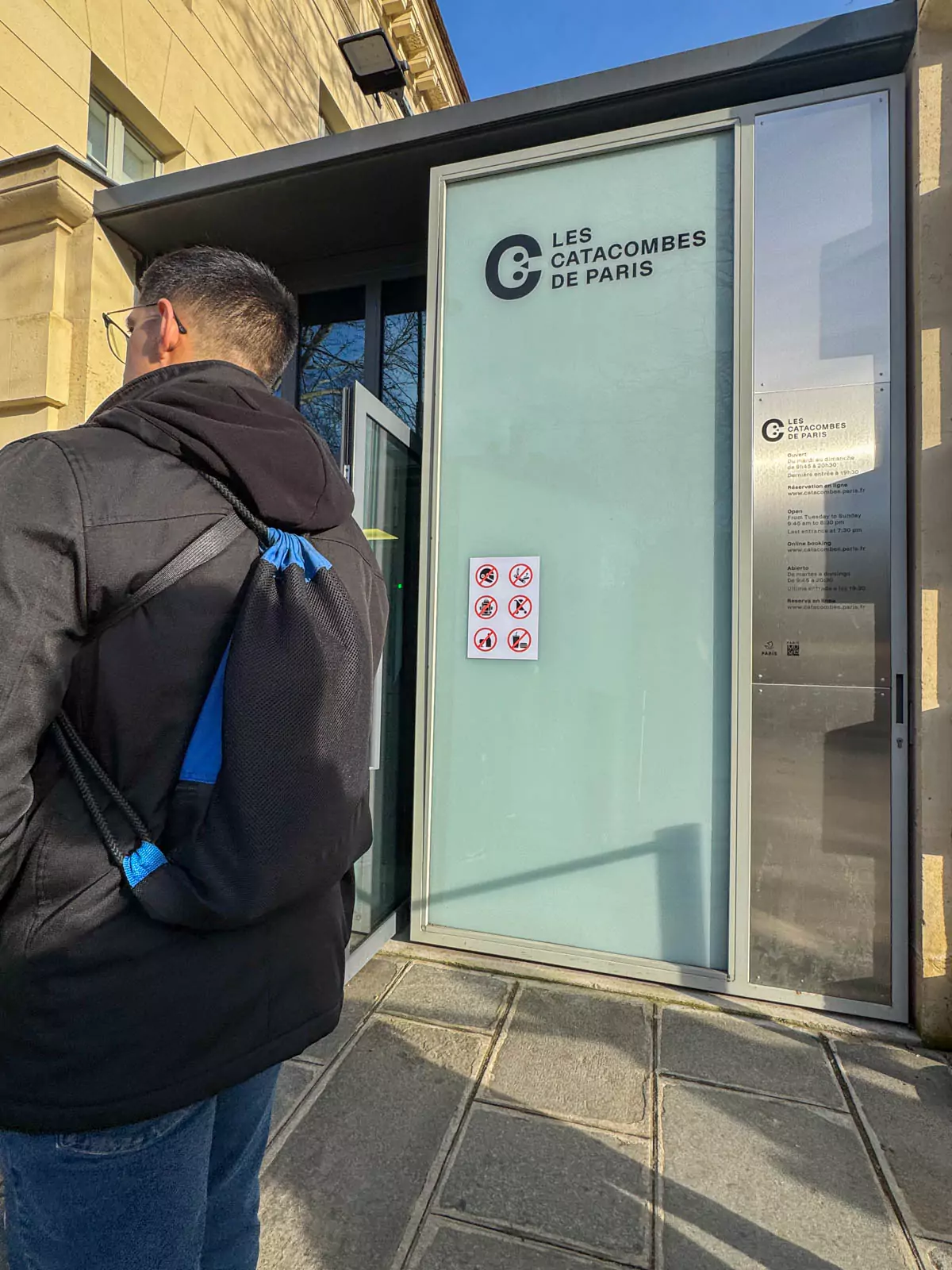
The Paris Catacombs are located in the 14th arrondissement, and their main entrance is at 1 Avenue du Colonel Henri Rol-Tanguy, 75014 Paris. Despite being a modest entrance, it leads to a remarkable and vast underground world.
Nearest Metro and RER Stations
- Denfert-Rochereau Station
- Metro Lines 4 & 6
- RER Line B (connects to Charles de Gaulle Airport)
The entrance is just a 2-minute walk from the Denfert-Rochereau metro station, making it highly accessible by public transport.
Walking Distance from Landmarks
- Notre-Dame Cathedral – 30-minute walk (3 km)
- Luxembourg Gardens – 15-minute walk (1.5 km)
- Montparnasse Tower – 20-minute walk (1.7 km)
Taxi or Ride-Sharing
A taxi or Uber ride from central Paris landmarks like the Eiffel Tower or Champs-Élysées will take around 15–20 minutes, depending on traffic. Keep in mind that the Catacombs’ exit is a few blocks away from the entrance, so plan your return trip accordingly.

Tickets and Entry Information
Due to the limited capacity (only 200 visitors are allowed inside at a time), securing tickets in advance is essential. Here’s what you need to know about ticketing:
Booking in Advance
Yes, it’s highly recommended! Skip potentially hours-long standby lines by booking online. Tickets can sell out, especially during peak tourist seasons like spring and summer.
If last-minute tickets aren’t available, look for guided tours, which often include skip-the-line access and exclusive perks like entry to restricted areas.
Want more tips like this? Don’t miss my guide on How to Avoid Lines at Versailles—because no one likes waiting in a queue.
Where to Buy Tickets
- On-Site Ticket Office: Limited availability, expect long lines.
Ticket Prices
Standard Entry:
- Adults: €31
- Reduced rate (students, job seekers, large families): €25
- Children (5-17 years): €12
- Free for kids under 5
Tip: Guided tours typically range from €50–€100 but provide additional value, such as access to exclusive areas.
Operating Hours
- Tuesday – Sunday: 9:45 AM – 8:30 PM (last entry at 7:30 PM)
- Closed Mondays & public holidays (January 1, May 1, December 25).
For smaller crowds, visit early in the morning or during late afternoons.
Accessibility
Note that the Catacombs are not wheelchair accessible due to 131 steep steps down and 112 steps back up. Large bags, strollers, and bulky items are also prohibited.
💡 Pro Tip: The tunnels maintain a cool temperature of around 14°C (57°F) year-round. Dress warmly and wear sturdy, comfortable shoes.

What to Expect Inside the Paris Catacombs
Once inside, prepare to experience an unparalleled mix of history, architecture, and a hint of the macabre. Here’s a breakdown of what awaits you:
1. The Descent – 131 Steps Down
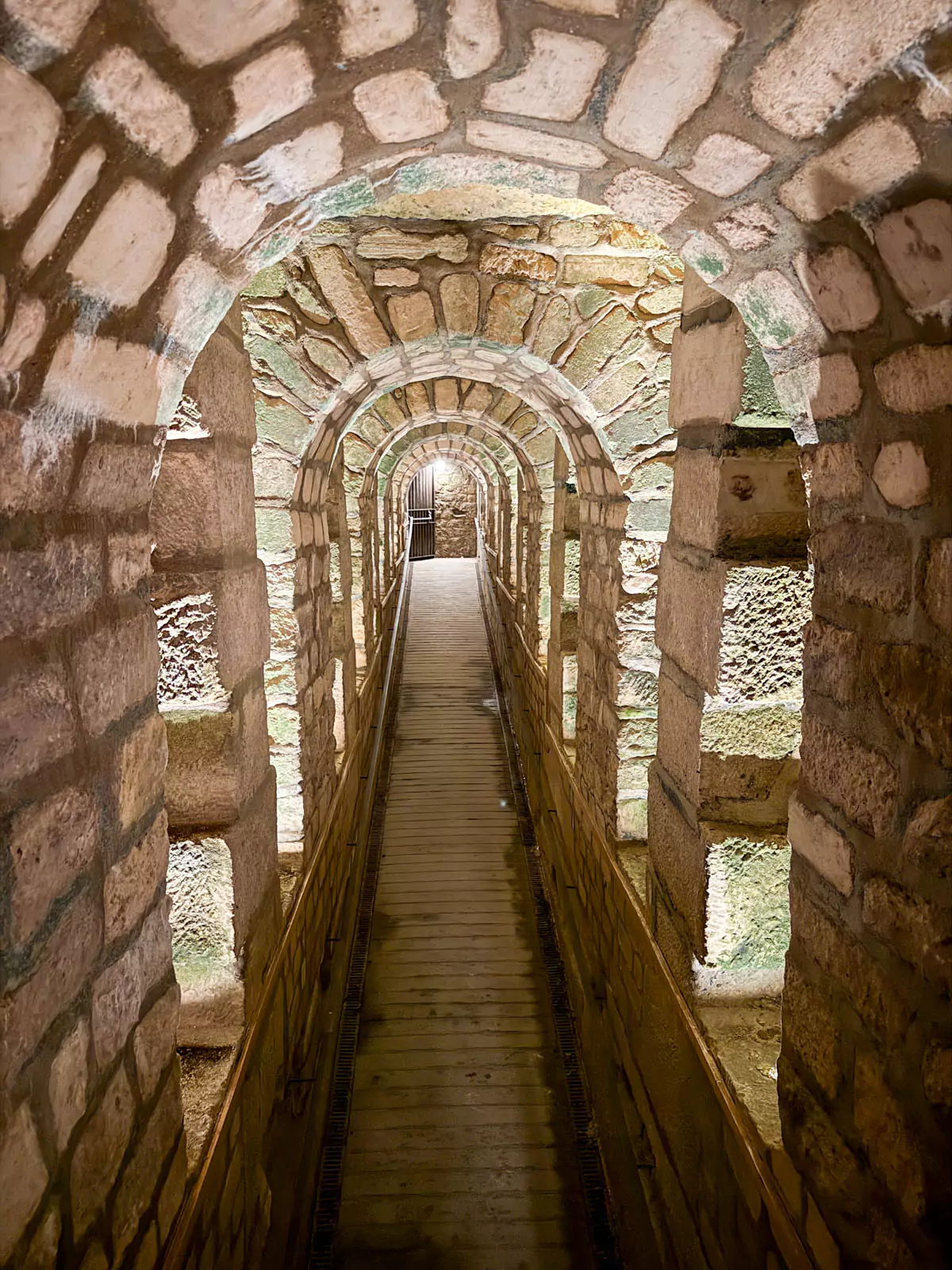
The tour begins with a steep staircase taking you 20 meters underground. It’s a quick but slightly challenging descent, so hold onto the handrail if needed.
2. The Limestone Tunnels Before the Ossuary
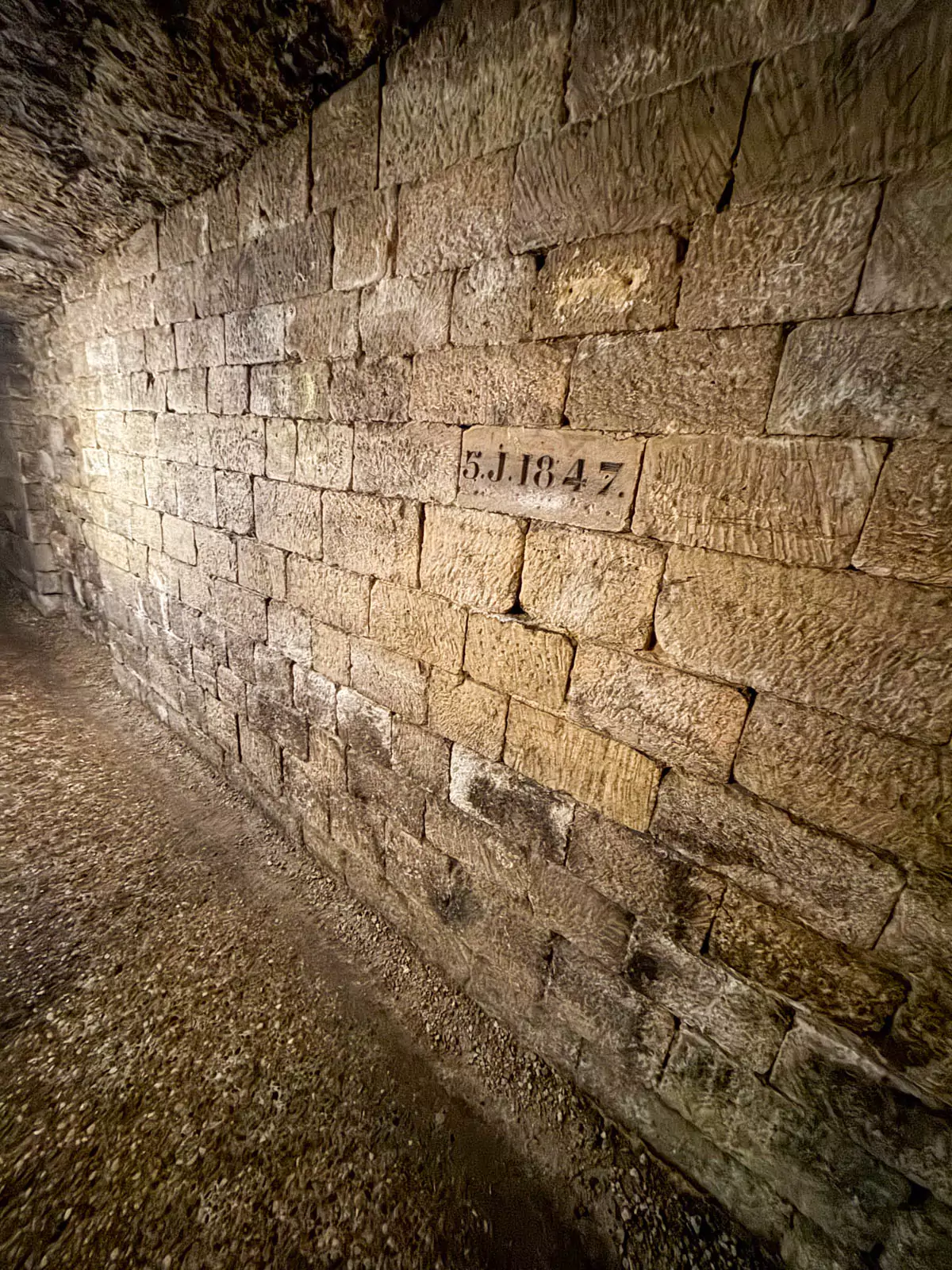
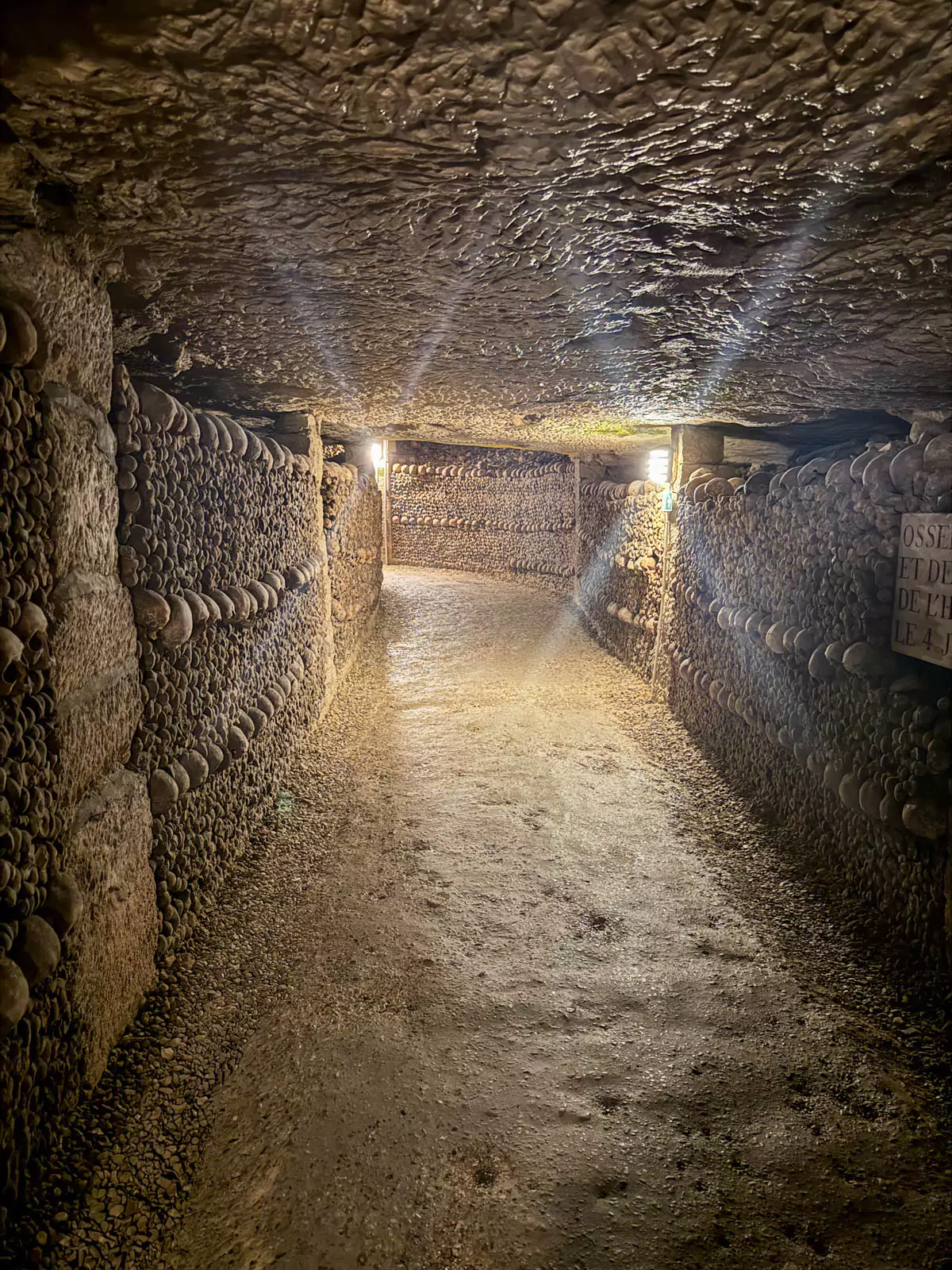
Before reaching the ossuary, you’ll meander through dimly lit limestone tunnels. Originally limestone quarries used during the city’s early development, these tunnels are now silent witnesses to centuries of history.
3. The Ossuary: “Empire of Death”
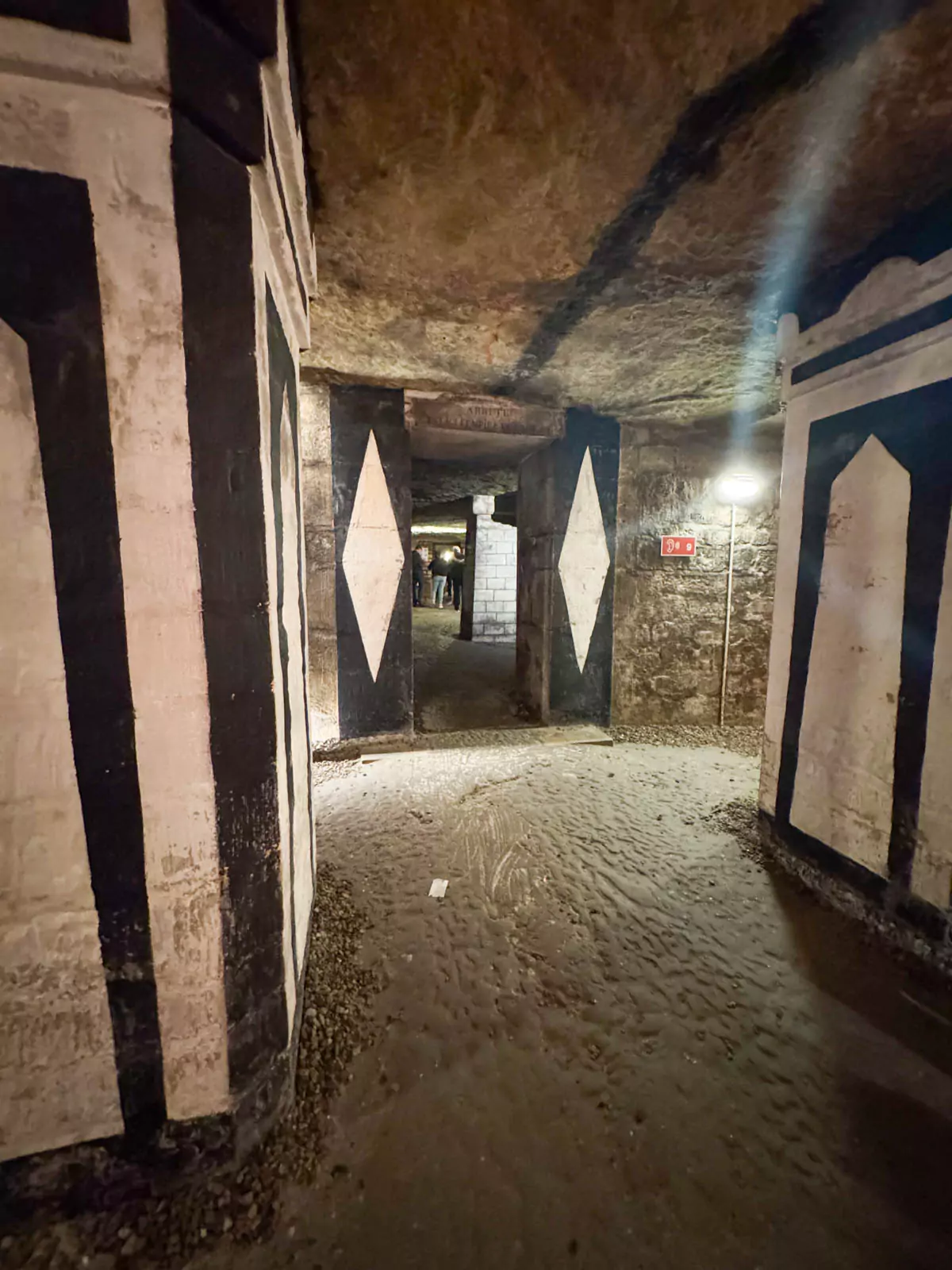
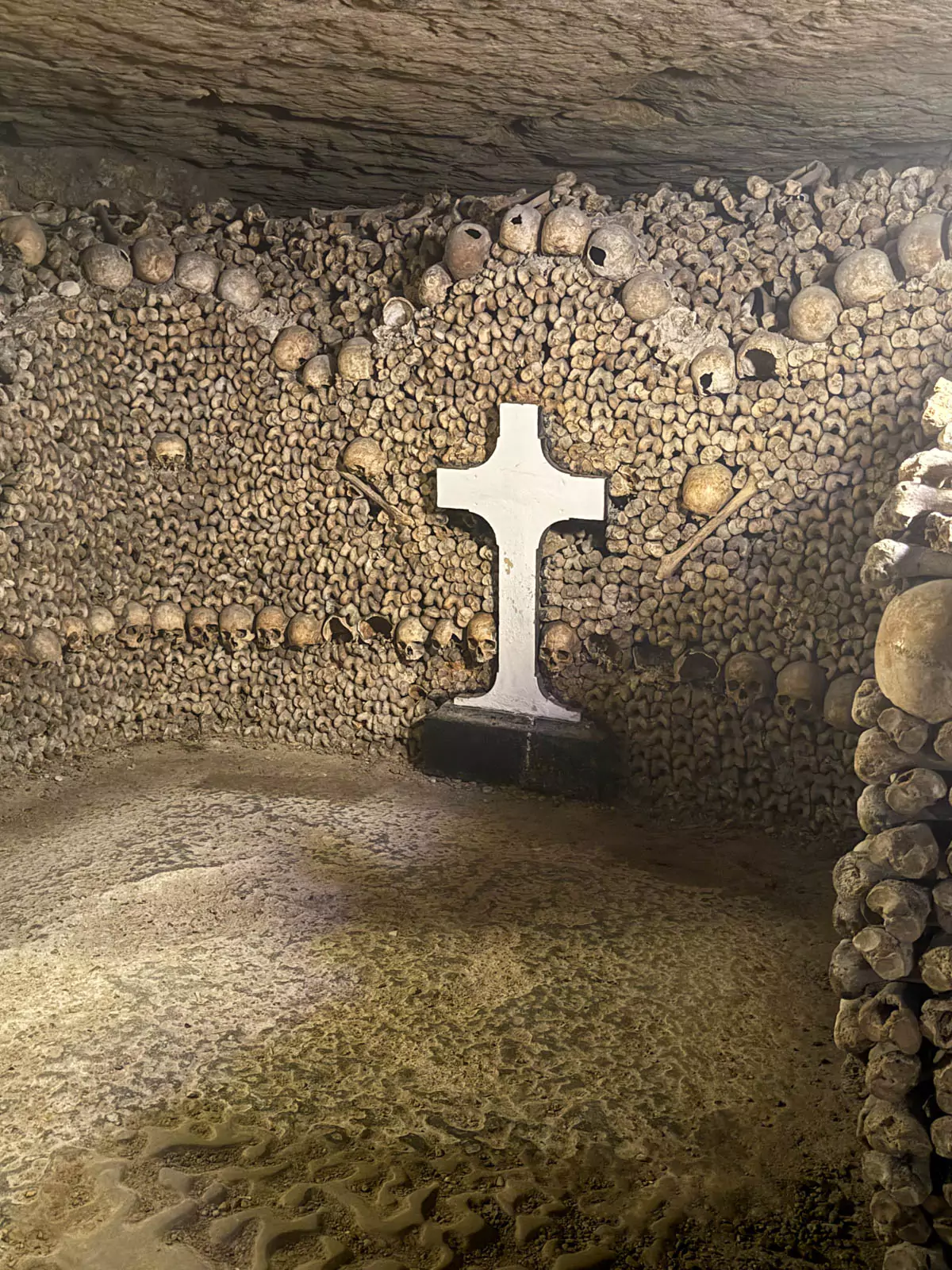
At the entrance to the ossuary, a chilling inscription reads, “Arrête! C’est ici l’empire de la mort.” (Stop! This is the Empire of Death.)
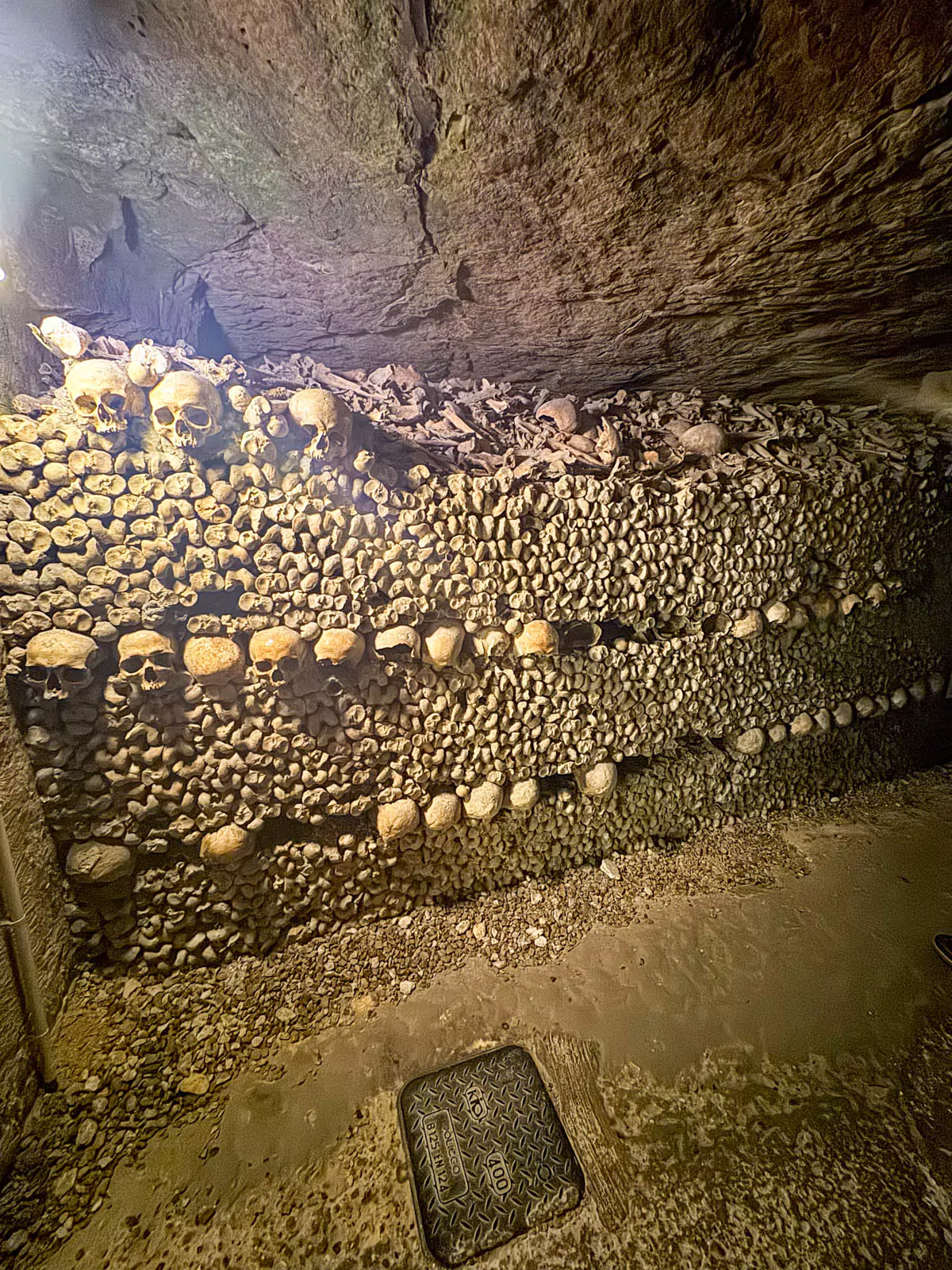
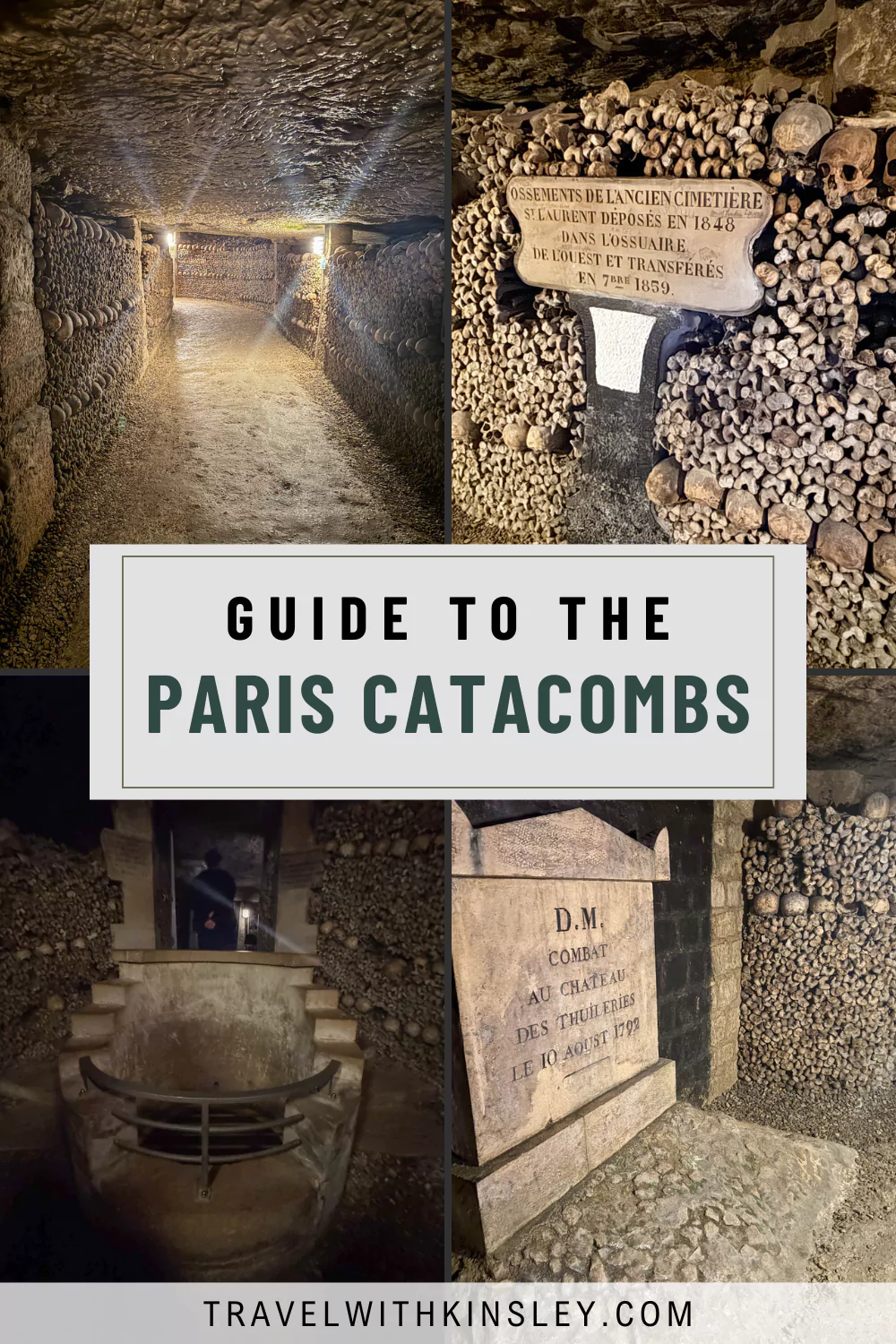
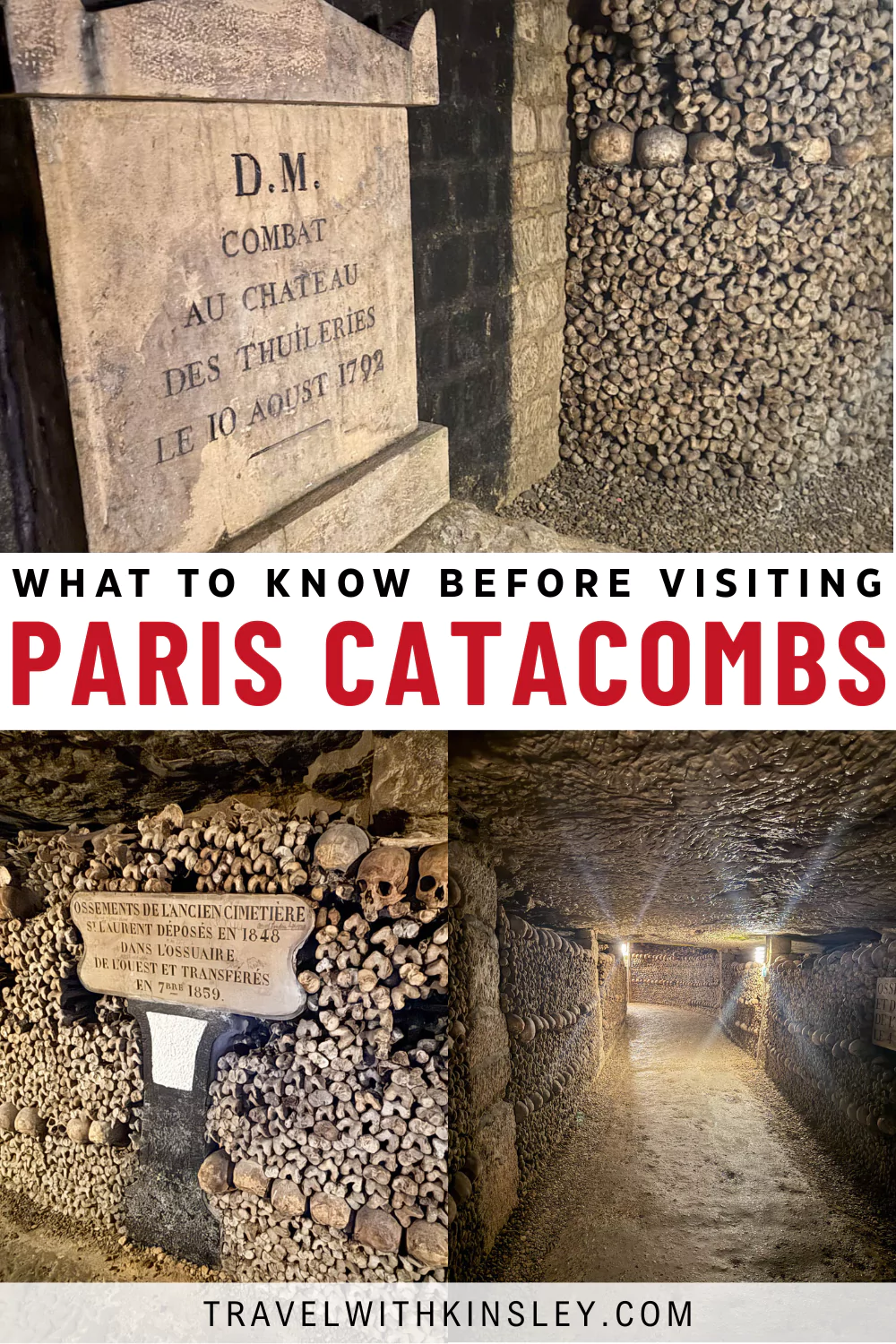
Inside, you’ll find walls of neatly stacked bones and skulls arranged in patterns. These remains date back to the 18th century and form a maze that spans around 1.5 kilometers.

Must-See Sections
- The Barrel of Bones – A cylindrical tower of stacked human bones and skulls.
- The Sarcophagus of Passion – A stunningly arranged section that serves as a poignant reminder of the historical events tied to this site.
- Famous Inscriptions – Creative displays curated with a macabre beauty.
4. The Exit – 112 Steps Up
The tour ends with another steep staircase leading back to the surface. Unlike the entrance, the exit is a few blocks away, so make sure you know how to navigate back if needed.
Tips for a Great Visit
- Arrive Early to beat the crowds.
- Bring Warm Clothing as the tunnels are consistently cool.
- Carry a Small Bag Only since bulky items aren’t allowed.
- Book Guided Tours if you want to learn deeper historical context or access private areas.
Practical FAQs for Visiting the Paris Catacombs
How long does a visit to the Paris Catacombs take?
A standard self-guided visit takes about 45 minutes to 1 hour. If you’re on a guided tour, it can last 1.5 to 2 hours.
Do I need to book tickets in advance?
Yes! Due to the limited number of visitors allowed at a time (200 people max), tickets often sell out, especially in peak season. Book online at the official website or through a skip-the-line tour operator.
What is the best time to visit to avoid crowds?
Visit early in the morning (before 11 AM) or late in the afternoon (after 5 PM) to avoid peak crowds. Weekdays are less busy than weekends.
Are the Catacombs scary?
The dim lighting, skull-lined walls, and eerie silence can be unsettling, but they aren’t designed to be a haunted attraction. If you’re claustrophobic or afraid of the dark, this may not be the best experience for you.
Is photography allowed inside the Catacombs?
Yes, but flash photography and tripods are strictly prohibited. Respectful photography is encouraged as the Catacombs are a memorial site.
Are the Catacombs wheelchair accessible?
No. Due to narrow passageways, uneven surfaces, and 243 total steps (131 down, 112 up), the site is not accessible for wheelchairs, strollers, or those with mobility issues.
What should I wear when visiting the Catacombs?
- Comfortable, sturdy shoes (uneven and damp pathways).
- A light jacket or sweater (temperature stays at 14°C / 57°F year-round).
Can children visit the Catacombs?
Children under 10 years old are not recommended to visit due to the dark and potentially disturbing environment. Children under 14 must be accompanied by an adult.
Where do I exit after the tour?
The exit is located a few blocks away from the entrance at Rue Rémy Dumoncel. Be prepared to walk back to the main road or metro station.
Can I bring food or drinks inside?
No, eating and drinking are prohibited inside the Catacombs.
Looking for more unforgettable historical sites in Paris? Explore my post on Things to Do in Paris, where I include off-the-beaten-path ideas too. Add one of these highly rated Paris city tours to your itinerary—you won’t regret it.
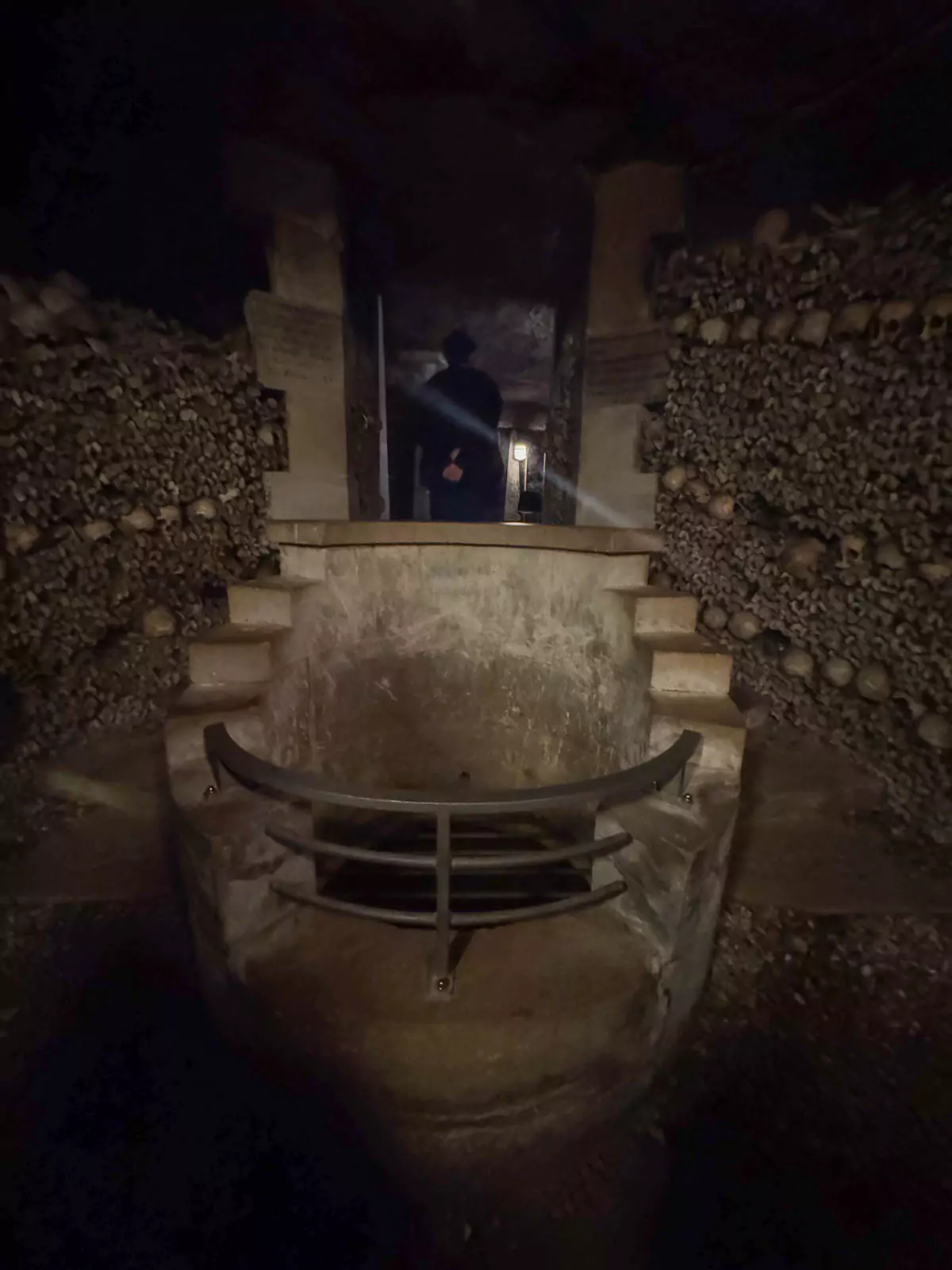
The Paris Catacombs offer a hauntingly memorable experience that goes far beyond typical sightseeing. Beneath the bustling streets lies a vast network of tunnels filled with centuries-old bones—an underground world that reveals a unique and often overlooked chapter of Parisian history.
Walking through the dimly lit passageways, you’ll encounter intricately arranged remains that speak to how the city once dealt with death, overcrowded cemeteries, and public health. It’s both eerie and awe-inspiring, giving travelers a powerful reminder of the city’s past and an unforgettable glimpse into its depths.
If you’re looking for a peaceful place to stay near the Arc de Triomphe, we absolutely loved our time at Hidden Hotel—a boutique stay with serious charm.
P.S. If you’re looking for more Dark Tourism, then be sure to check out a visit to Pompeii, Italy, the Auschwitz Memorial or the Dachau Memorial.
Like this post? Share it on Pinterest!
 |
 |
More Paris Inspiration
- How to Avoid Lines at Versailles: Tips for a Stress-Free Visit
- Moulin Rouge Paris: Dinner and Show Experience – Everything You Need to Know
- What It’s Really Like to Have Champagne at the Top of the Eiffel Tower
- Dark Tourism Sites in Paris: Exploring the City’s Eerie Past
- Is the Paris Pass Worth It? Why You Might Want to Skip It
