Dark Tourism Sites in Paris: Exploring the City’s Eerie Past

Travel With Kinsley contains affiliate links and is a member of the Amazon Services LLC Associates Program, which means I may receive a cute little commission if you purchase through my links, at no extra cost to you. Please read full disclosure for more information.
Paris is known for its romantic streets, iconic landmarks, and world-class cuisine, but beneath the beauty lies a darker history.
If you’re fascinated by macabre history, haunted sites, and eerie legends, these dark tourism spots in Paris will take you on a journey through the city’s most chilling stories.
1. The Paris Catacombs
📍 Location: 1 Avenue du Colonel Henri Rol-Tanguy, 75014 Paris
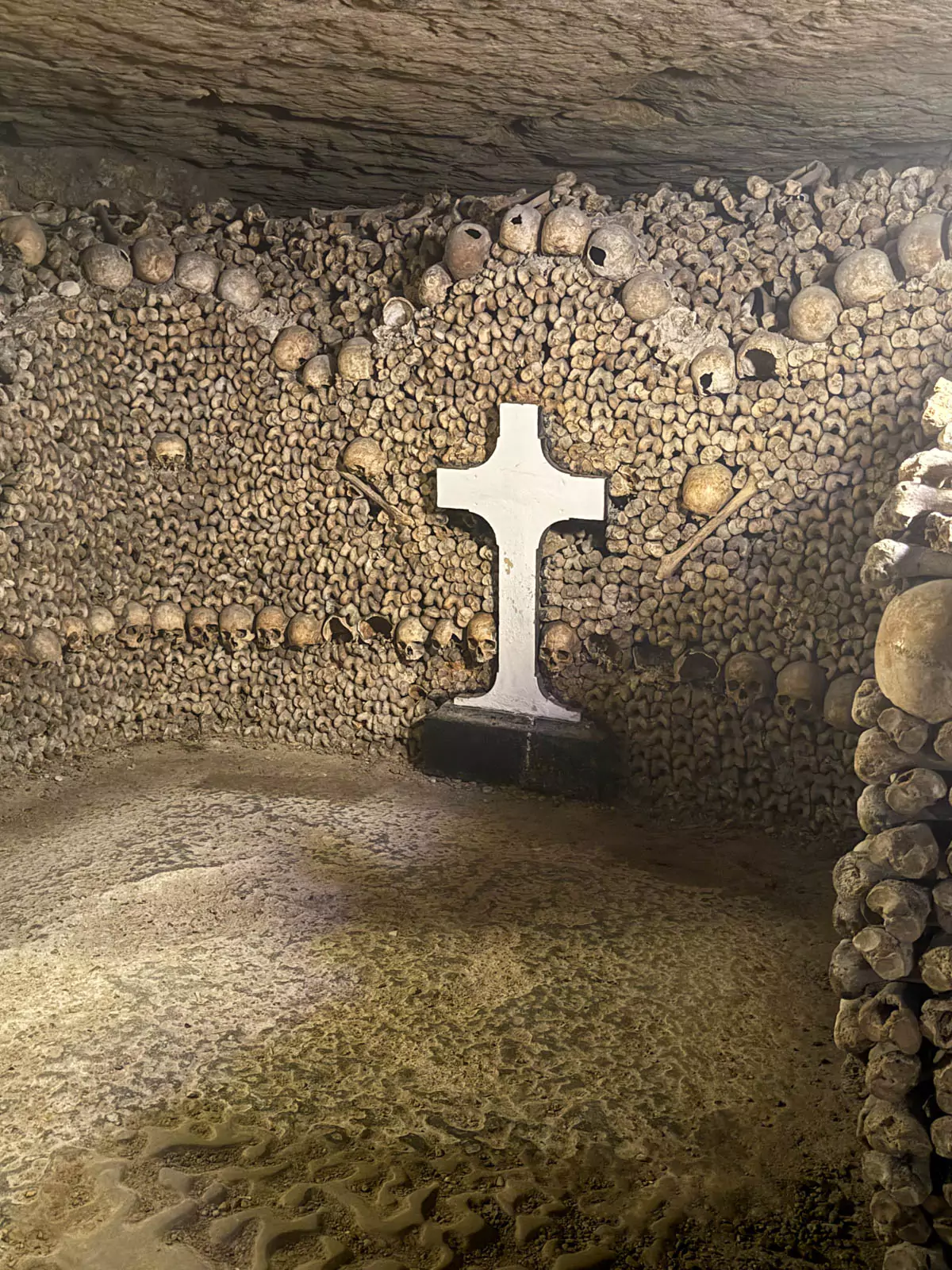
The Paris Catacombs are undoubtedly the most famous dark tourism site in the city.
This underground ossuary holds the remains of over six million Parisians, transferred here in the late 18th century due to overflowing cemeteries.
The dimly lit tunnels lined with stacked skulls and bones make for an eerie but fascinating visit.
2. Père Lachaise Cemetery
📍 Location: 16 Rue du Repos, 75020 Paris
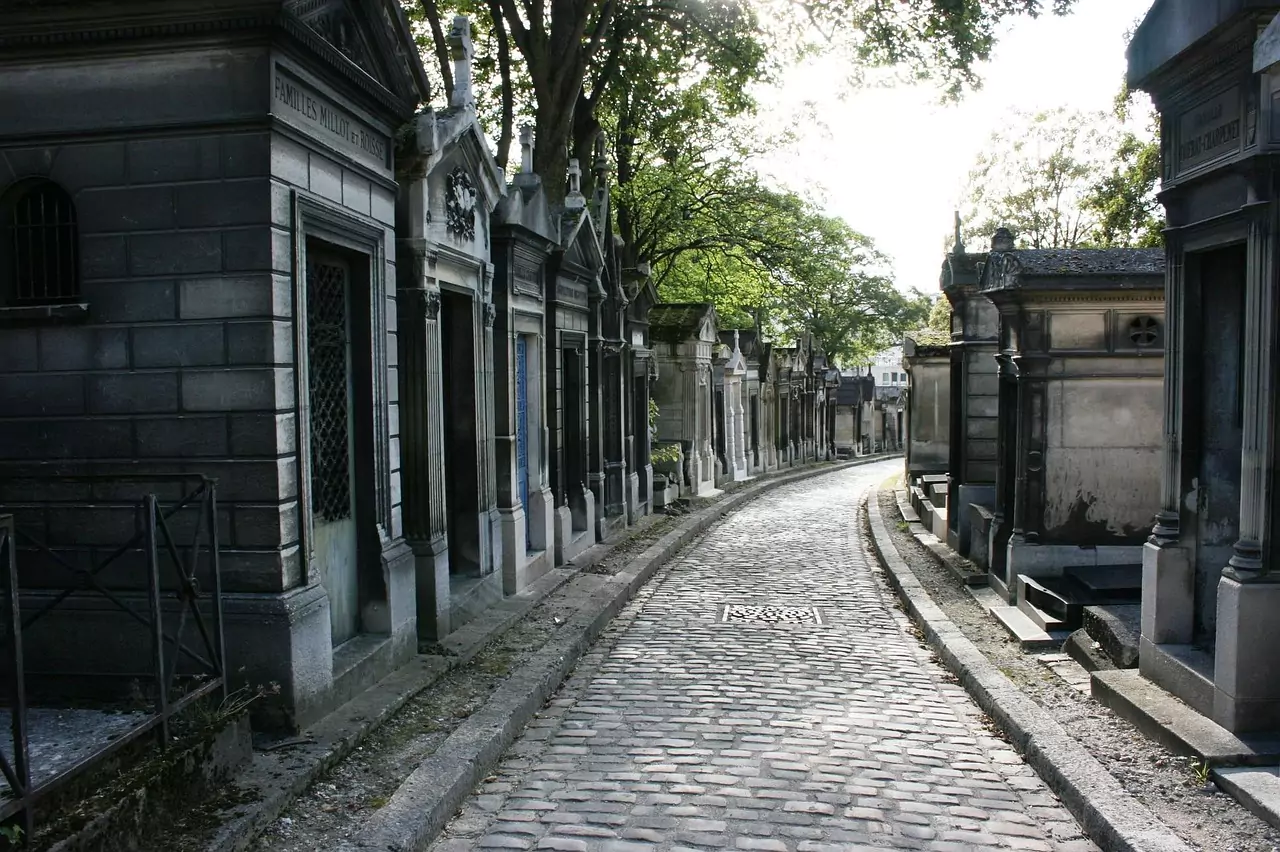
As Paris’ largest and most famous cemetery, Père Lachaise is the final resting place of some of the world’s most influential artists, writers, and musicians, including:
- Jim Morrison (The Doors)
- Oscar Wilde
- Édith Piaf
- Marcel Proust
The cemetery is filled with ornate tombs, Gothic mausoleums, and ivy-covered gravestones, making it a hauntingly beautiful place to explore.
Some visitors have claimed to see ghosts or feel a strange presence near certain graves, especially at Jim Morrison’s tomb.

3. The Conciergerie: Marie Antoinette’s Prison
📍 Location: 2 Boulevard du Palais, 75001 Paris
Before her execution during the French Revolution, Marie Antoinette spent her final months in The Conciergerie, once a royal palace turned prison. Visitors can see:
- Marie Antoinette’s cell, preserved to reflect its grim conditions.
- Revolutionary courtroom, where prisoners were sentenced to death.
- Memorial to the victims of the Reign of Terror, remembering the thousands of people guillotined during the Revolution.
Over 2,700 people were sentenced to the guillotine here, including King Louis XVI and Queen Marie Antoinette.

4. The Execution Spot at Place de la Concorde
📍 Location: Place de la Concorde, 75008 Paris
During the French Revolution, this square became one of the most infamous execution sites in history. Here, a massive guillotine stood, where over 1,100 people were executed, including:
- King Louis XVI (1793)
- Queen Marie Antoinette (1793)
- Maximilien Robespierre (1794)
Today, the guillotine is gone, and a Luxor Obelisk from Egypt stands in its place, but the history of bloodshed lingers.
Some claim they can still hear the sounds of the guillotine blade falling at night.

5. The Montmartre Cemetery
📍 Location: 20 Avenue Rachel, 75018 Paris
While less visited than Père Lachaise, Montmartre Cemetery is just as eerie, featuring ornate tombs, stone crypts, and haunting sculptures. It is the final resting place of:
- Edgar Degas (artist)
- Dalida (famous singer, whose grave is said to be haunted)
- Émile Zola (novelist)
The cemetery is built over an old mass grave used during the French Revolution.
6. The Phantom of the Opera’s Underground Lake (Palais Garnier)
📍 Location: Palais Garnier, 8 Rue Scribe, 75009 Paris
The Paris Opera House (Palais Garnier) is famous for its extravagant architecture, but underneath it lies a real underground lake, which inspired Gaston Leroux’s novel “The Phantom of the Opera.”
- The lake was discovered in the 19th century, and today, firefighters use it for diving practice.
- Some believe a ghost haunts the opera house, just like in the famous novel.
In 1896, a chandelier mysteriously fell, killing a person—just like in The Phantom of the Opera. See some photos of the lake.
7. The Tower of Nesle (Legends of Murderous Queens)
📍 Location: Quai de Conti, 75006 Paris
The Tower of Nesle is linked to one of Paris’ darkest medieval legends. In the 14th century, Queen Marguerite of Burgundy and her sisters-in-law were accused of having secret lovers. The Queen allegedly ordered her lovers thrown into the Seine River to keep her secret.
- The scandal became known as “The Tour de Nesle Affair.”
- Some believe their ghosts haunt the site, which no longer exists but was once located near the Pont des Arts.
The affair led to major political upheaval and even inspired the Game of Thrones-style power struggles in medieval France.
Final Thoughts on Dark Tourism Sites in Paris
Beyond the romance and glamour, Paris is filled with chilling history, tragic tales, and eerie legends.
Whether you’re exploring the skulls of the Catacombs, haunted cemeteries, or execution sites, these places reveal a darker, more mysterious side of the city.
Which dark tourism site in Paris would you visit first? Let me know in the comments!
