Visiting Kiyomizu-dera in Kyoto: What to Know Before You Go

Travel With Kinsley contains affiliate links and is a member of the Amazon Services LLC Associates Program, which means I may receive a cute little commission if you purchase through my links, at no extra cost to you. Please read full disclosure for more information.
If there’s one temple in Kyoto that feels larger than life, it’s Kiyomizu-dera.
Sitting high on a hillside with sweeping views of the city, this iconic spot isn’t just about history—it’s about that *wow* moment when you step onto its famous wooden stage and see the world unfold below.

What is Kiyomizu-dera?
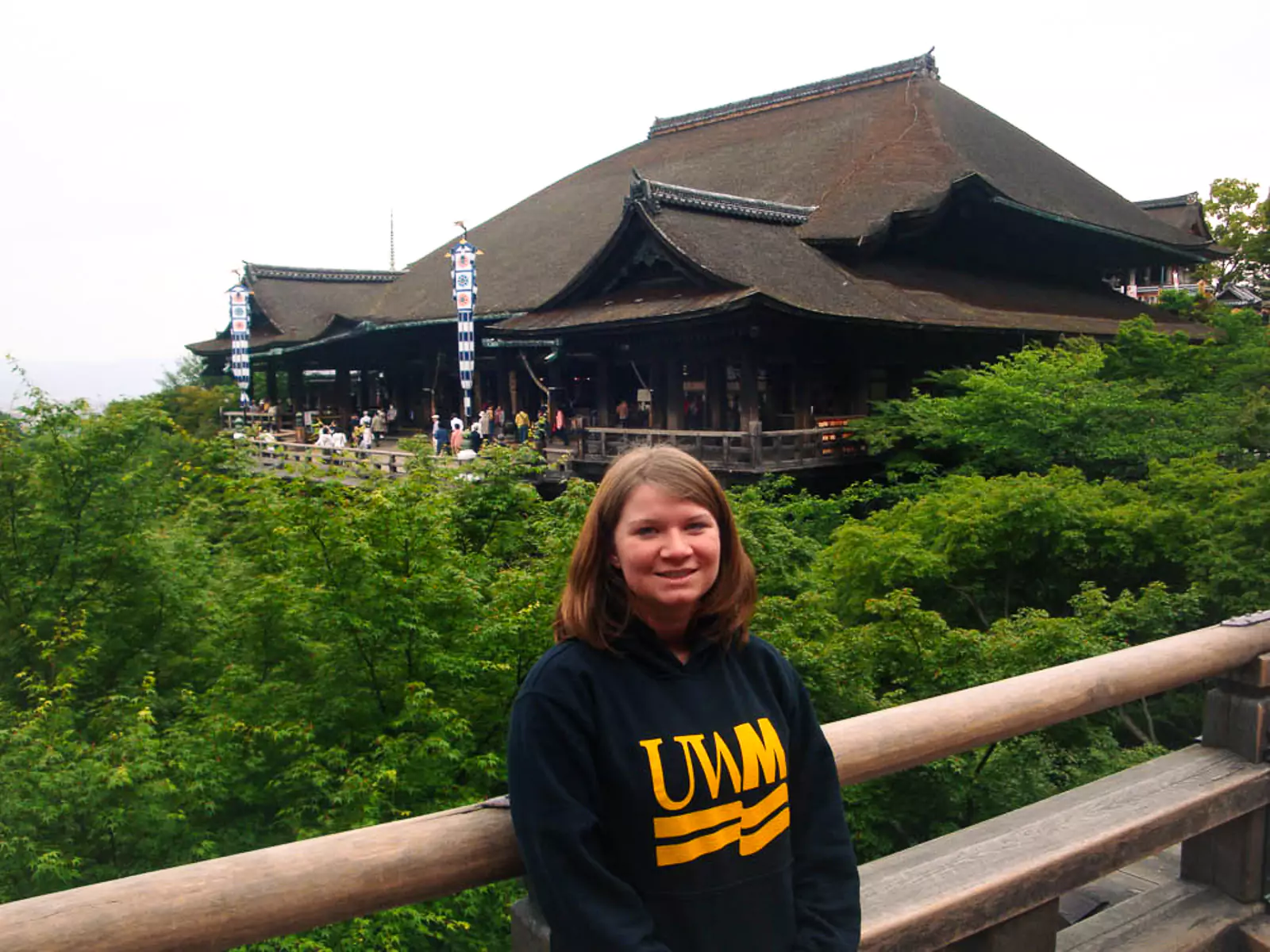
Kiyomizu-dera is one of Kyoto’s most famous temples and a UNESCO World Heritage Site.
Its name means “Pure Water Temple,” and it’s best known for its massive wooden stage that juts out over the hillside, offering sweeping views of the city and surrounding cherry and maple trees.
For centuries, it has been a place of prayer, beauty, and cultural significance—making it a must-see on any trip to Kyoto.
Where is Kiyomizu-dera?
Kiyomizu-dera is located in eastern Kyoto, in the Higashiyama District. It’s set high on Otowa Mountain, just a 10–15 minute walk uphill from the charming Ninenzaka and Sannenzaka streets.
These stone-paved lanes lined with tea houses, shops, and traditional townhouses make the journey to the temple part of the adventure.

A History of Kiyomizu-dera
The temple was founded in 778, though most of the current structures date back to 1633, when the Tokugawa shogunate rebuilt much of it. Kiyomizu-dera was historically tied to the Hosso school of Buddhism, one of Japan’s oldest. Over the years, it’s become both a sacred site and a symbol of Kyoto’s cultural heritage.
One unique fact? The wooden stage was built without using a single nail. Instead, it relies on intricate joinery techniques—an incredible feat of craftsmanship that has held strong for centuries.

When is the best time to visit Kiyomizu-dera?
Kiyomizu-dera is beautiful year-round, but it really shines during two seasons:
- Spring (March–April): Cherry blossoms frame the temple, and the hillside becomes a sea of pink.
- Autumn (November): Fiery red and orange maple leaves surround the wooden stage.
If you prefer smaller crowds, aim for early mornings on weekdays. Evening light-up events during spring and autumn are also magical, with the temple dramatically illuminated against the night sky.

Highlights and what to see at Kiyomizu-dera
Wooden Stage
The star of the temple is its massive wooden stage, which extends 13 meters over the hillside. From here, you get panoramic views of Kyoto and the forest below. This is the photo spot everyone comes for—and it’s worth the hype.
Large Pagoda
A striking three-story vermillion pagoda. It contrasts beautifully with blue skies in summer and fiery leaves in fall.
Small Pagoda
Often less crowded and equally photogenic. Together, the pagodas highlight the temple’s layered skyline.

Jishu Shrine
A Shinto shrine inside the temple grounds dedicated to love and matchmaking. Try walking between the “love stones” with your eyes closed—legend says success brings luck in love.

Bell Tower
Home to a large bronze bell traditionally rung on New Year’s Eve. The carpentry and paintwork are worth a closer look.

Gardens
Footpaths wind past ponds, lanterns, and seasonal plantings. A calm counterpoint to the main hall.
Otowa Waterfall
At the base of the main hall, three streams flow from the Otowa waterfall—drink from a ladle to receive blessings of longevity, academic success, or love.

How long do you need at Kiyomizu-dera
Plan to spend 1.5 to 2 hours exploring Kiyomizu-dera and its grounds. If you also want to wander the nearby Higashiyama District, add another couple of hours for shopping, snacking, and soaking up the place.
- Temple only: 60–90 minutes for the main hall, stage, pagodas, and waterfall.
- Temple + Higashiyama stroll: 2–3 hours to include Sannenzaka/Ninenzaka shops and tea houses.


How to visit Kiyomizu-dera
- By bus: From Kyoto Station, take Bus 100 or 206 to Gojo-zaka or Kiyomizu-michi. Walk uphill ~10 minutes.
- By train: Kiyomizu-Gojo (Keihan Line) or Gion-Shijo stations; ~20-minute walk.
- Hours: Typically 6:00–18:00; extended hours during seasonal illuminations.
- Entry fee: ~¥500 for the main precinct.
- What to wear: Comfortable, grippy shoes for the steep, sometimes slick approaches.
Tip: Arrive right at opening for soft light and fewer people, then wander down through Sannenzaka and Ninenzaka for sweets, ceramics, and tea before the tour groups arrive.
More Japan Things for Your Trip
