Must See Temples and Shrines in Kyoto

Travel With Kinsley contains affiliate links and is a member of the Amazon Services LLC Associates Program, which means I may receive a cute little commission if you purchase through my links, at no extra cost to you. Please read full disclosure for more information.
Kyoto is often called the heart of Japan’s culture and history—and for good reason. This former capital is home to some of the country’s most iconic shrines and a long list of must-see temples.
Whether you’re here for the architecture, the gardens, or the traditions that still shape daily life, Kyoto is the perfect place to dive deep into Japan’s spiritual side.
Kyoto, Japan, has over 1,600 Buddhist temples and around 400 Shinto shrines. With so many to choose from, it’s easy to get overwhelmed!
Read on for my Kyoto temple guide!

Kiyomizu-dera Temple
Perched on a hillside with breathtaking views over Kyoto, Kiyomizu-dera is famous for its wooden stage that extends from the main hall, offering panoramic views of cherry blossoms in spring and fiery maple leaves in autumn.
Founded in 778, this UNESCO World Heritage Site is known for its Otowa Waterfall, where visitors drink from three streams said to bring health, success, and love.
Don’t miss the Jishu Shrine within the temple complex, dedicated to the deity of love and matchmaking, and try the ritual of walking between the “love stones” to test your romantic fortune!

Heian Shrine
Built to celebrate Kyoto’s founding as Japan’s capital, Heian Shrine is a striking recreation of the Heian Imperial Palace.
Its massive vermilion torii gate and beautiful Shin’en Garden, with ponds and weeping cherry blossoms, make it a popular destination. The shrine hosts the Jidai Matsuri (Festival of the Ages) each October, a grand procession showcasing Japan’s history in elaborate costumes.
The shrine’s garden is particularly spectacular in spring, with its iconic Taihei-kaku Bridge and a calm pond, offering a picturesque setting for photography and quiet reflection.
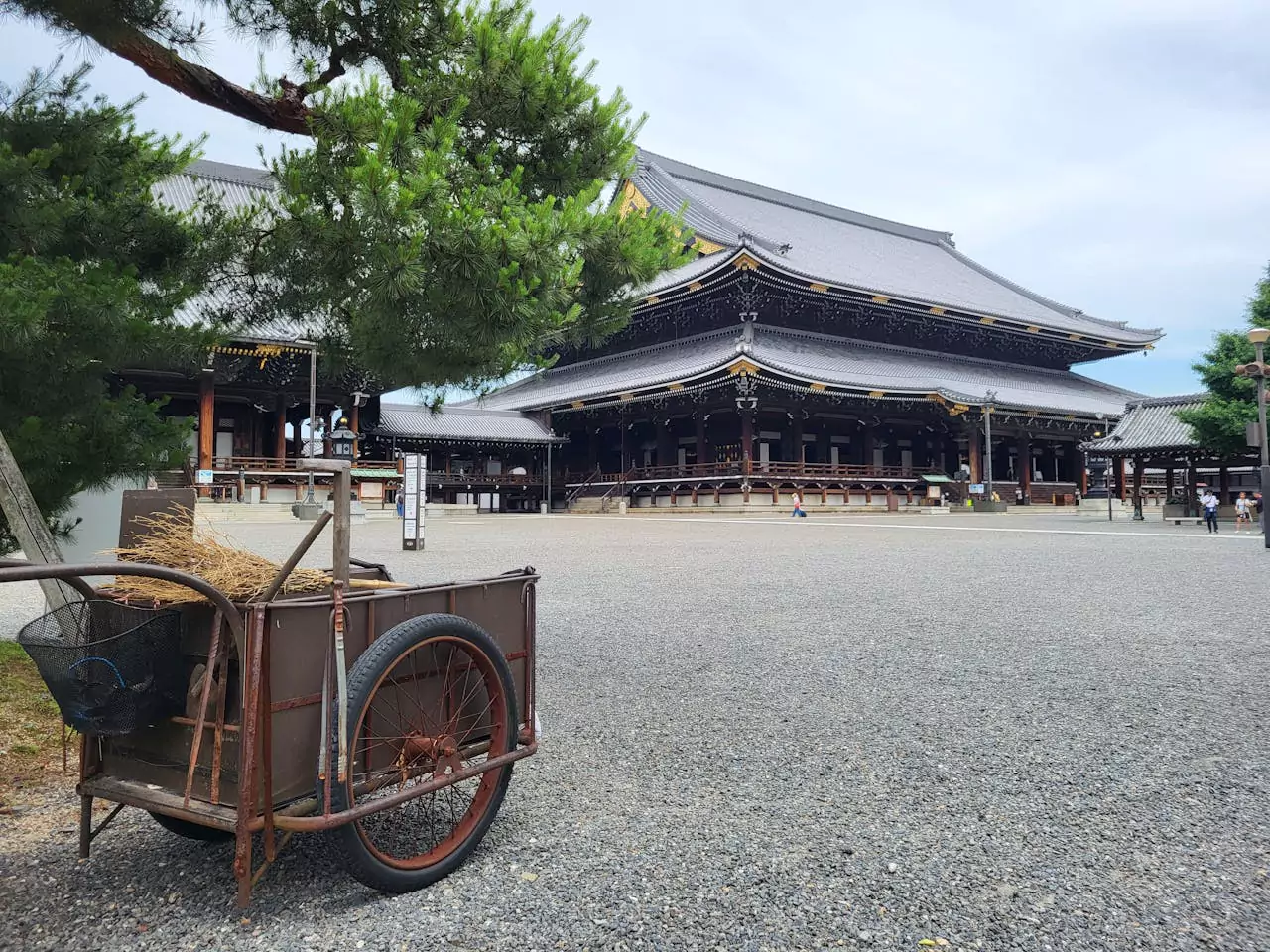
Higashi Honganji Temple
Located just a short walk from Kyoto Station, Higashi Honganji Temple is one of the main temples of the Jodo Shinshu Buddhist sect.
Known for its vast wooden Goeido Hall, dedicated to founder Shinran Shonin, Higashi Honganji is a peaceful escape with grand architecture and historical significance.
The temple displays ropes made from donated human hair, a testament to the devotion of its followers who helped rebuild the temple. The nearby Shosei-en Garden, with its tranquil pond and seasonal flowers, is a serene extension of the temple experience.

Other Kyoto Temples to Add to Your List
Kinkaku-ji Temple
Also known as the Golden Pavilion, Kinkaku-ji is one of Kyoto’s most famous landmarks. Its gold-leaf exterior glimmers against the pond and surrounding gardens—especially stunning in autumn or winter.
Kodai-ji Temple
This temple is known for its elegant gardens, teahouses, and nighttime illuminations. A peaceful stop, especially if you’re wandering the Higashiyama district.

Sanjusangendo Temple
Home to 1,001 statues of Kannon, the goddess of mercy, Sanjusangendo is both awe-inspiring and unique. The scale alone will leave you speechless.

Nanzen-ji Temple
A large Zen temple complex with gorgeous gardens and subtemples. Don’t miss the striking red brick aqueduct that cuts through the grounds—it’s a popular photo spot.

Ginkaku-ji Temple
Known as the Silver Pavilion, Ginkaku-ji offers a quieter, more reflective vibe compared to its golden counterpart. Its moss garden and sand landscapes are especially beautiful.
Other Lesser-Known Gems
- Eikan-dō: Crowded in autumn, but otherwise a peaceful temple with stunning gardens.
- Daigo-ji: A huge complex with everything—gardens, pagodas, ponds, and statues. Hike up to Kami-Daigo for extra quiet.
- Manpuku-ji (Uji): Belongs to the Ōbaku sect, with an expansive temple layout.
- Kanga-an: Tiny but unique, with dragon ceiling art and unusual Buddha statues.
- Sennyū-ji and Kaikō-ji: Quiet spots with remarkable statues.
- Zuikō-ji, Hōtō-ji, and Sekihō-ji: Near Fushimi Inari, with thatched roofs, pagodas, and stone Buddha statues in bamboo groves.
- Shisen-dō, Tanukidani-san Fudō-in, Konpuku-ji, Enkō-ji, and Nobotoke-an: A cluster of five temples worth exploring together.
- Yoshimine-dera: Outside the city but worth the trip for its sweeping grounds.
- Ohara Temples: Sanzen-in is popular, but Raigō-in and Shōrin-in are much quieter.
- Hōrin-ji: Famous for its hundreds of Daruma statues.
- Entsū-ji: A moss and rock garden with Mt. Hiei as borrowed scenery.
- Myōman-ji: Features a striking pagoda-like structure.
- Blood-Ceiling Temples: Genkō-an, Yōgen-in, and Shōden-ji all use floorboards from Fushimi Castle as their ceilings—a haunting reminder of samurai history.
