Visiting the Roman Forum + Palatine Hill: Hours, Tickets, + More

Travel With Kinsley contains affiliate links and is a member of the Amazon Services LLC Associates Program, which means I may receive a cute little commission if you purchase through my links, at no extra cost to you. Please read full disclosure for more information.
Planning on visiting the Roman Forum and Palatine Hill on your next trip to Rome?
You’re in luck because I’m sharing all the details about visiting the Roman Forum and Palatine Hill in this travel guide.
Rome’s historic center, a UNESCO World Heritage Site, features three iconic monuments: the Colosseum, Palatine Hill, and the Roman Forum.
The Colosseum is an ancient amphitheater known for gladiatorial games, Palatine Hill was the residence of Roman emperors with their grand palaces, and the Roman Forum served as the official center of Roman public life, hosting important political, religious, and social activities.
After sharing my two-day itinerary for Rome, I was inspired to put together some guides of the activities Zack and I did on our trip.
When you start planning your own trip to Italy, this guide to the Roman Forum and Palatine Hill will help you plan out your time.
Here, you’ll find everything you need to plan an unforgettable visit to the Roman Forum and Palatine Hill, including information on tickets, opening hours, its rich history, and the top attractions to explore during your trip.
What is the Roman Forum
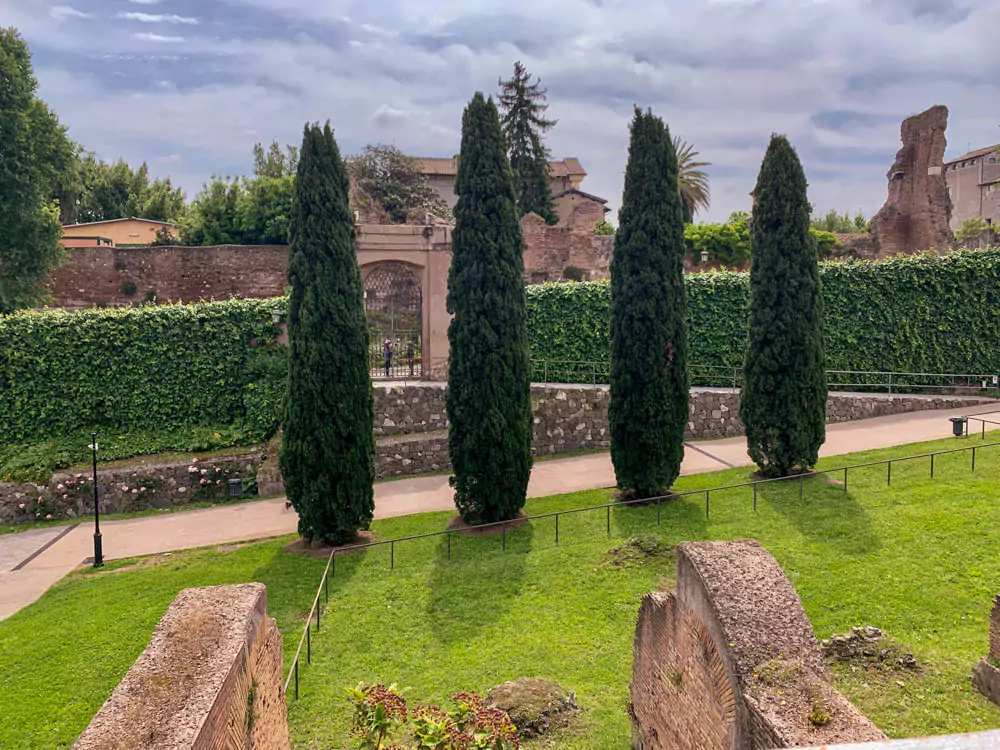
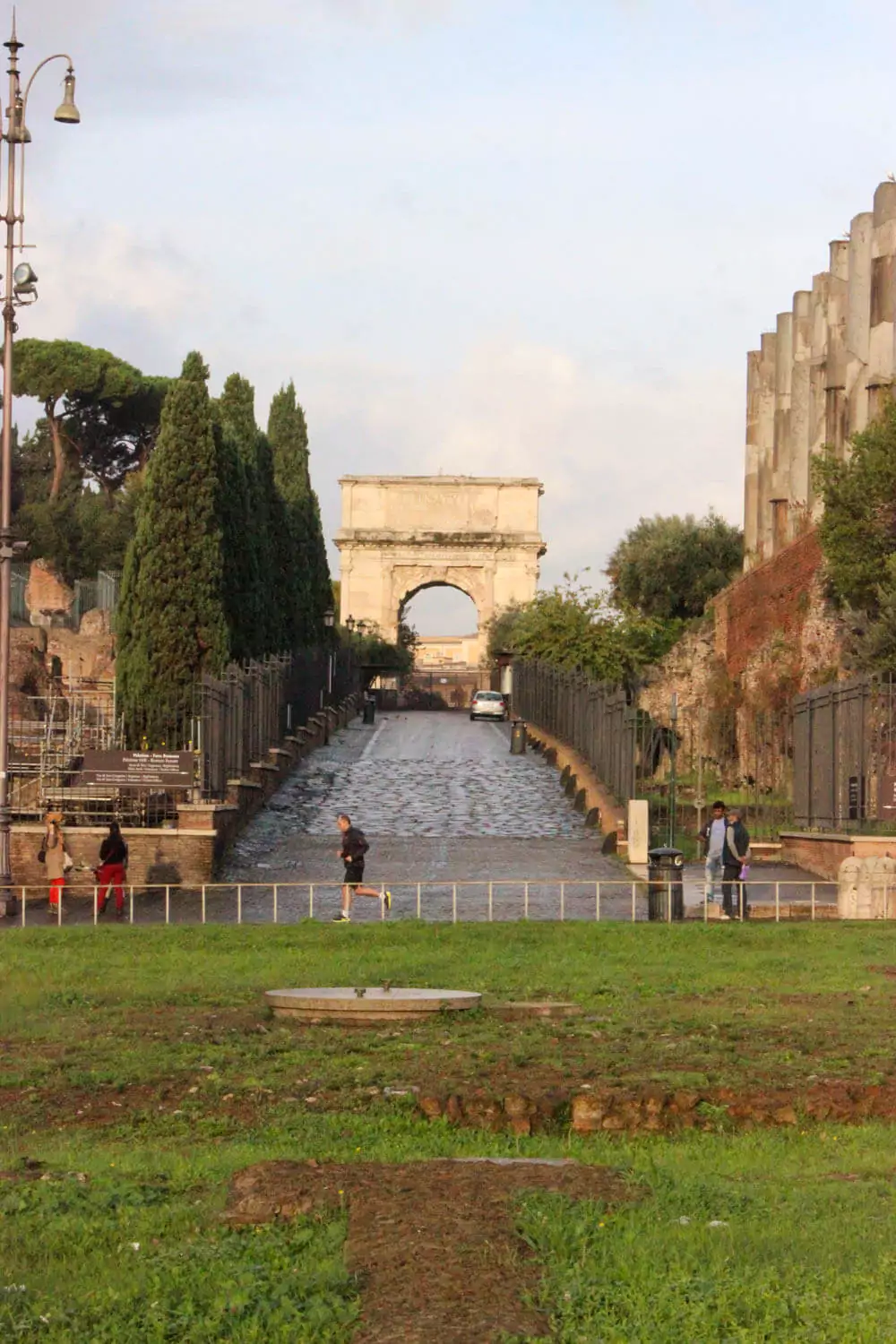
The Roman Forum, located in the heart of Rome, was the center of public life in ancient Rome.
It served as a marketplace, political hub, and site for public speeches, trials, and religious ceremonies.
Surrounded by important government buildings, temples, and monuments, the Forum was the epicenter of Roman civilization for centuries.
Today, it is an archaeological site filled with ruins of ancient structures, offering a glimpse into the Roman Empire. Visiting the Forum provides insight into the history, culture, and daily life of ancient Rome.
History of the Roman Forum and Palatine Hill
The Roman Forum was the center of ancient Rome’s political, religious, and social life.
Established in the 7th century BC, it evolved from a simple marketplace into a complex of temples, basilicas, and public spaces.
Key events, such as Julius Caesar’s funeral and political assemblies, took place here.
The Forum remained central to Roman life until the empire’s decline in the 5th century AD. Over time, it fell into ruin but was excavated in the 19th and 20th centuries.
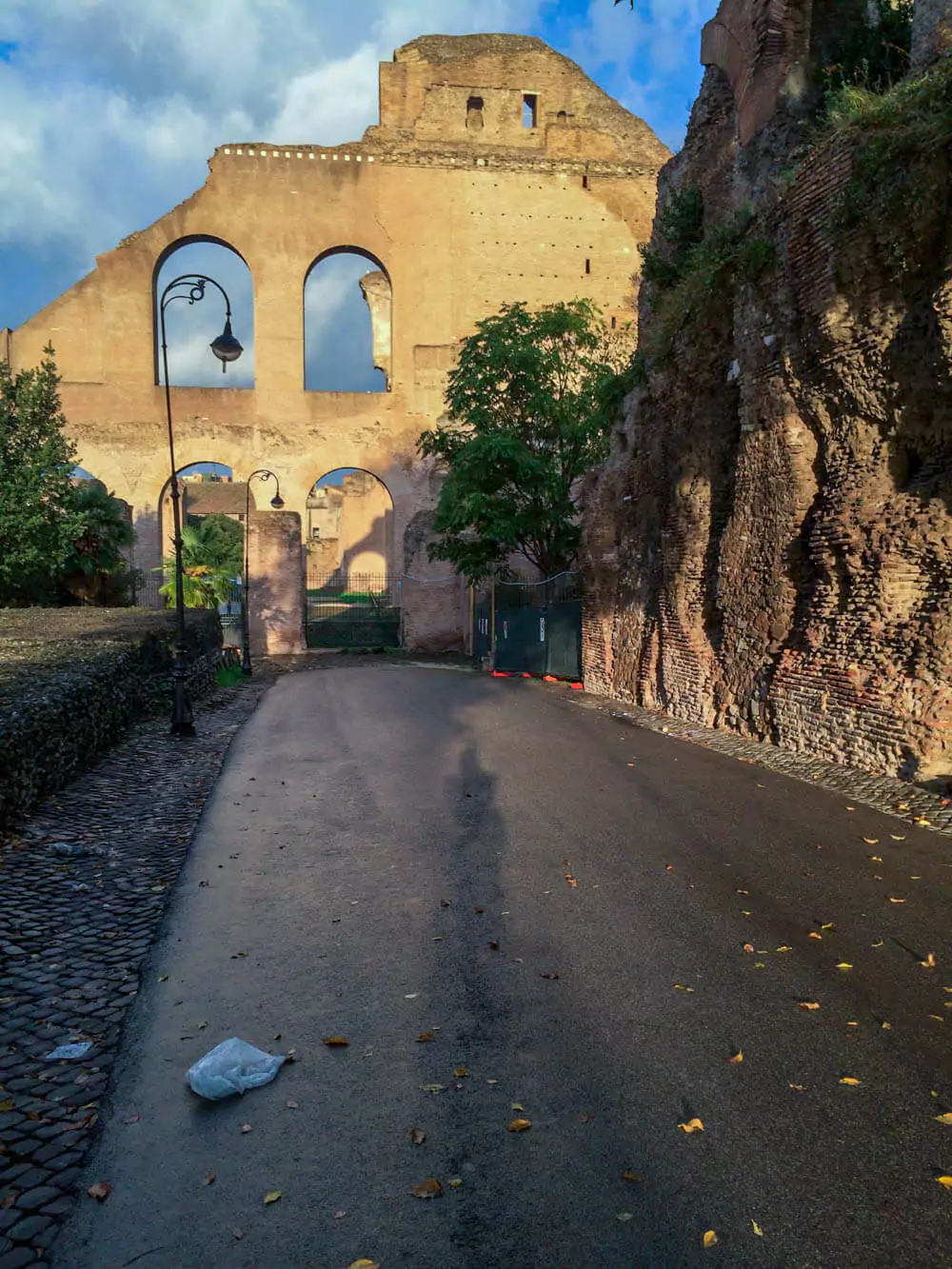
Palatine Hill is one of the Seven Hills of Rome and holds significant historical and mythological importance. It is one of the most ancient parts of Rome and is traditionally considered the birthplace of the city.
According to legend, it was here that Romulus founded Rome in 753 BC. The hill became the residence of Rome’s elite, including emperors, and was the site of several grand palaces, such as the Palace of Domitian.
Over time, it transformed into a symbol of imperial power and luxury. Today, Palatine Hill is an archaeological treasure.
Is the Roman Forum worth visiting?
Yes, the Roman Forum is definitely worth visiting!
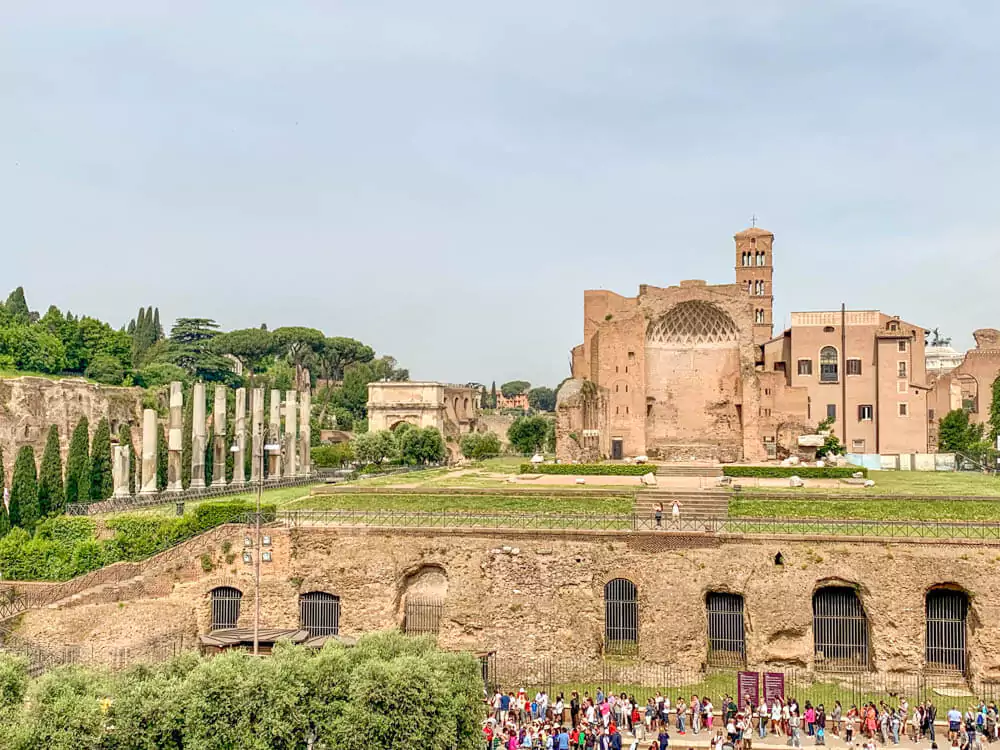
The ruins of temples, arches, and public spaces provide a tangible connection to the past, allowing you to walk through history.
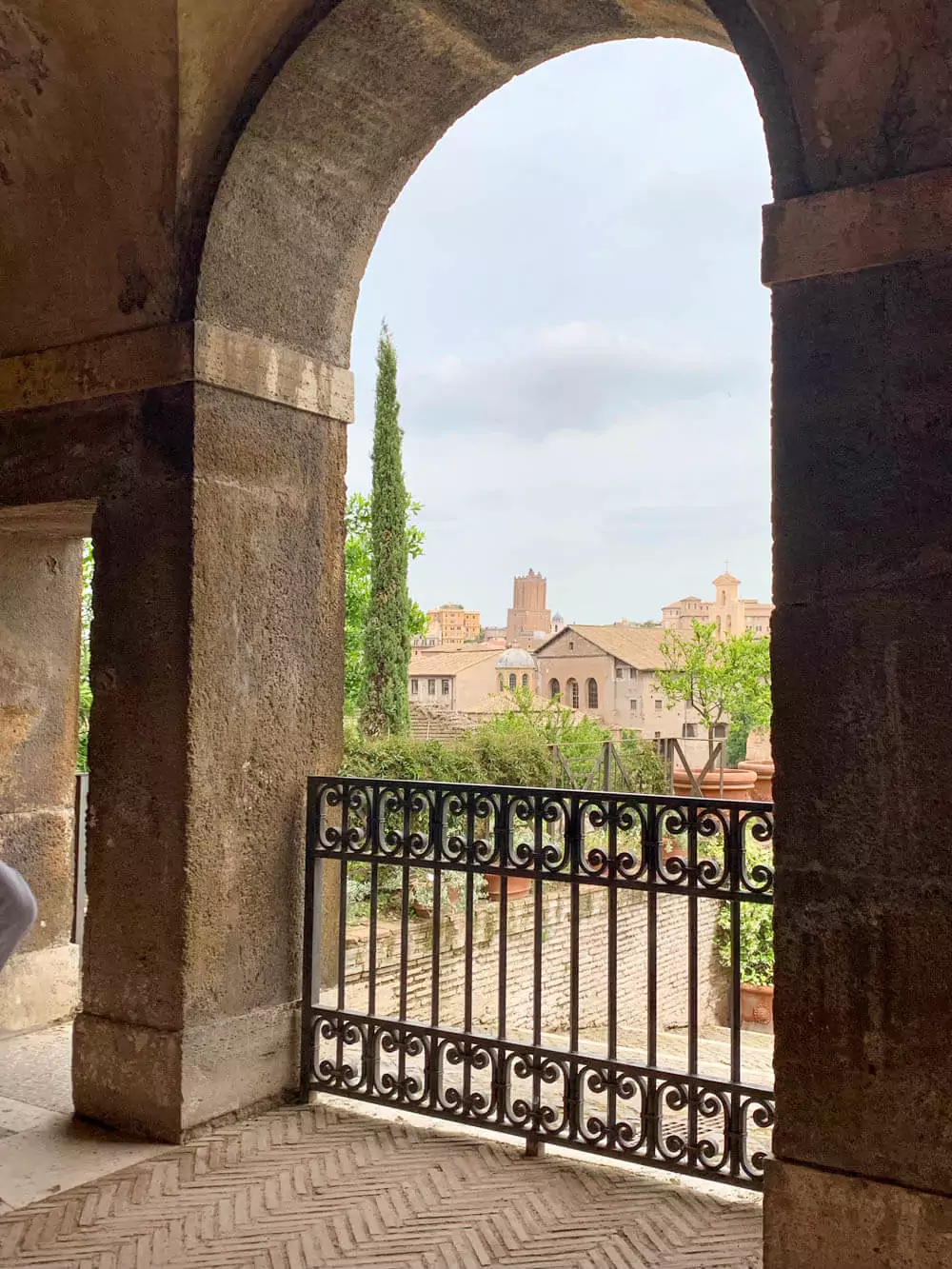
For anyone interested in Roman history, architecture, or archaeology, the Forum is a must-see. The views from the site are also incredible!
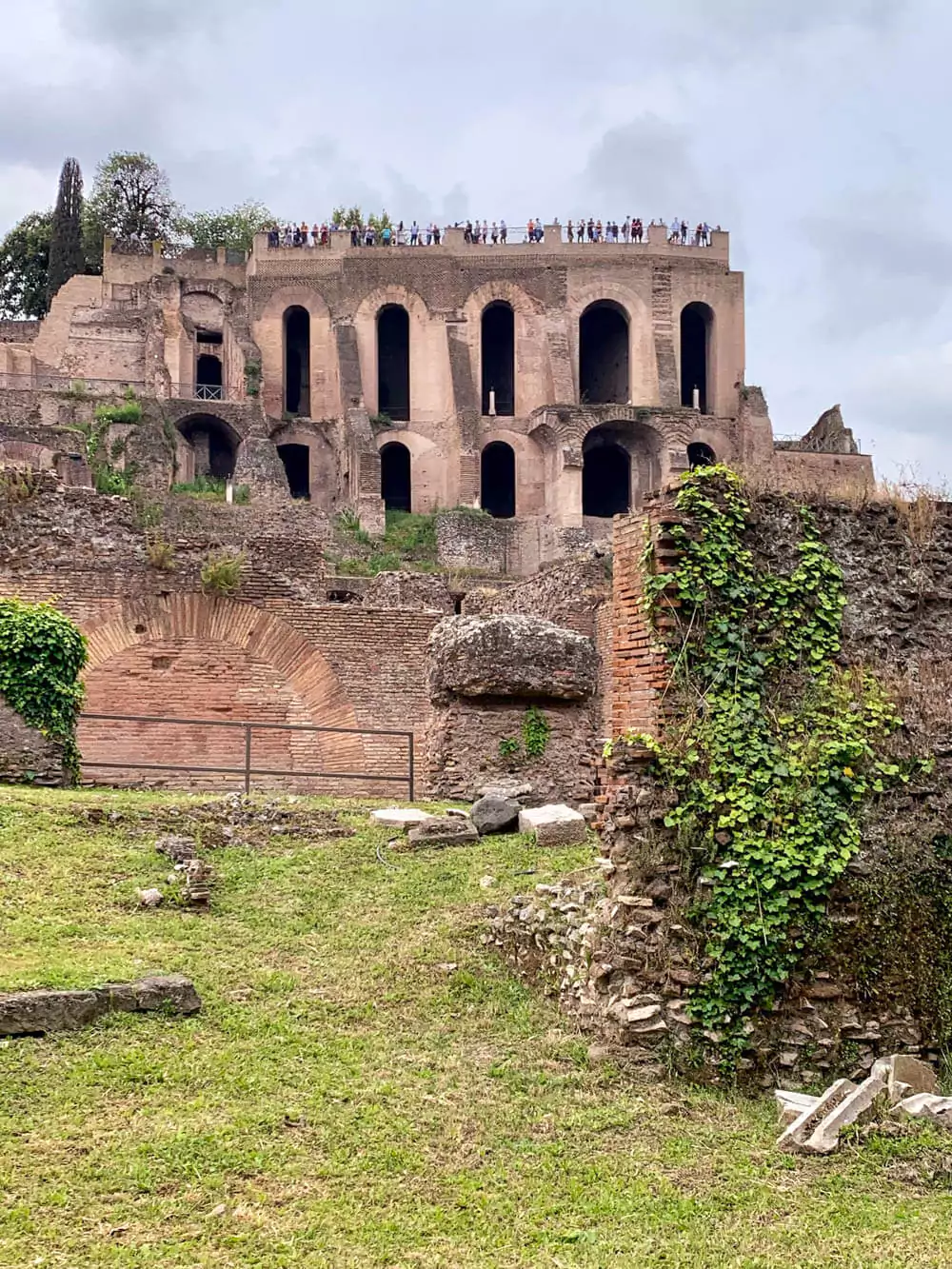
What to know before visiting the Roman Forum and Palatine Hill
Is the Roman Forum crowded?
The Roman Forum can get quite crowded, especially during peak tourist season (spring and summer) and around midday.
Mornings and late afternoons are generally less busy.
Weekends and holidays also tend to attract larger crowds.
To avoid the busiest times, consider visiting early in the day or closer to closing time.
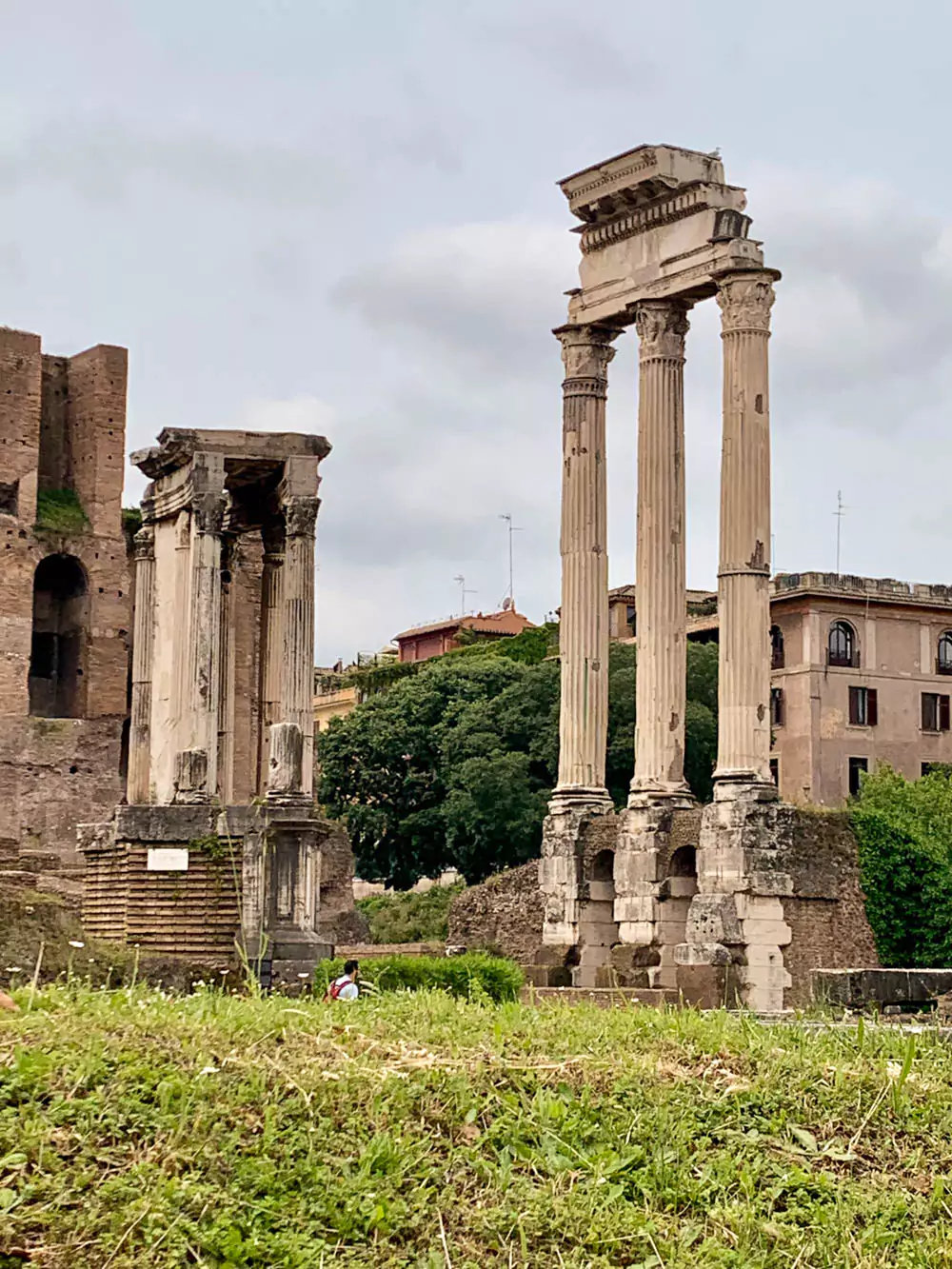
Can you just walk around the Roman Forum?
Yes, you can walk around the Roman Forum, but you need a ticket to enter the site.
Once inside, you’re free to explore the ruins at your own pace. The site is mostly outdoors, so you can stroll through the ancient streets, visit the ruins of temples, arches, and other structures, and take in the views.
The pathways are well-marked, and there are informational signs that provide context for the historical sites you’re seeing.
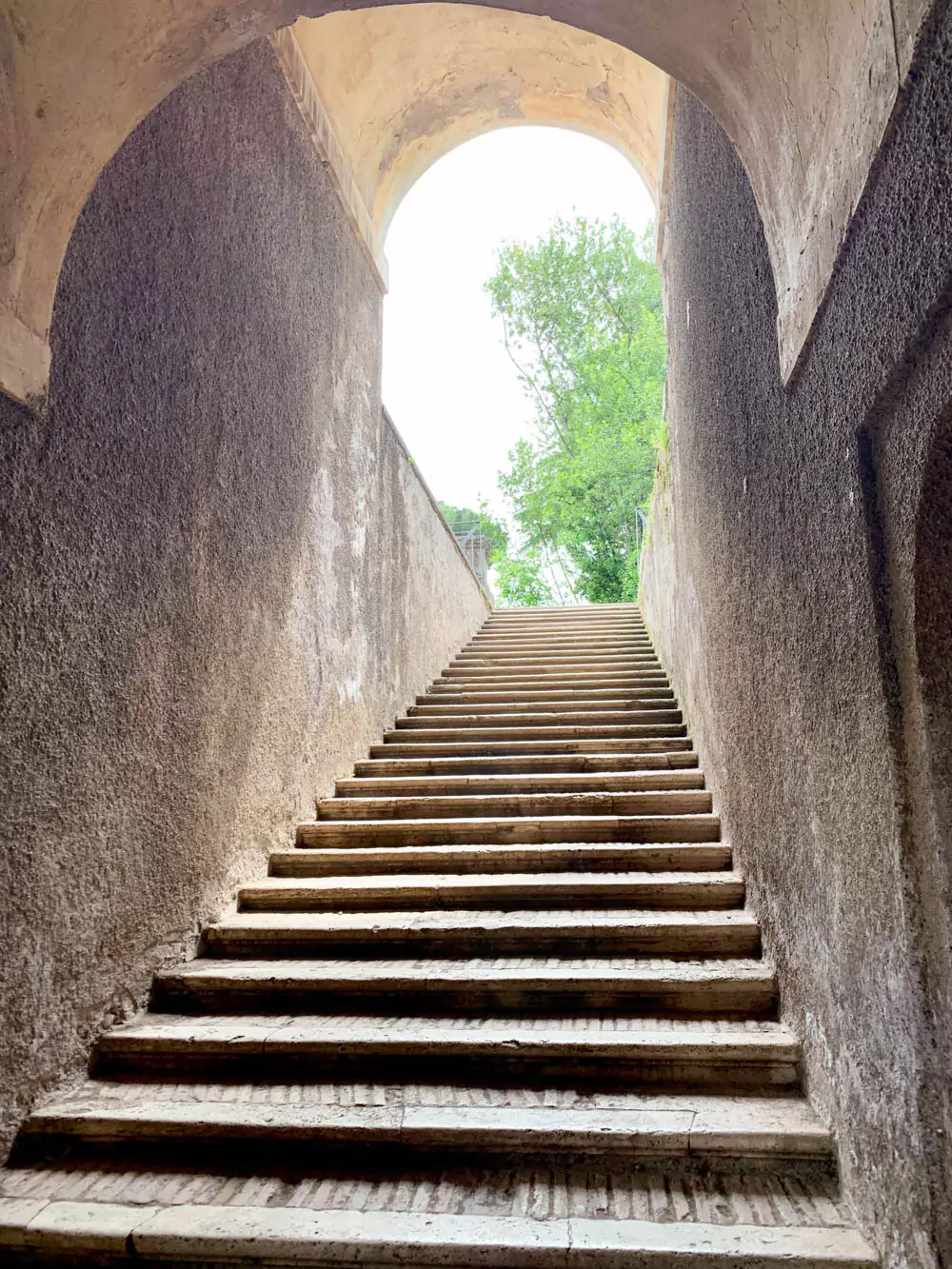
How long should you spend at the Roman Forum?
You should plan to spend about 2 to 3 hours at the Roman Forum to fully explore the site.
If you’re particularly interested in ancient history or architecture, you might want to spend a bit more time, especially if you’re taking a guided tour or reading about each site as you go.
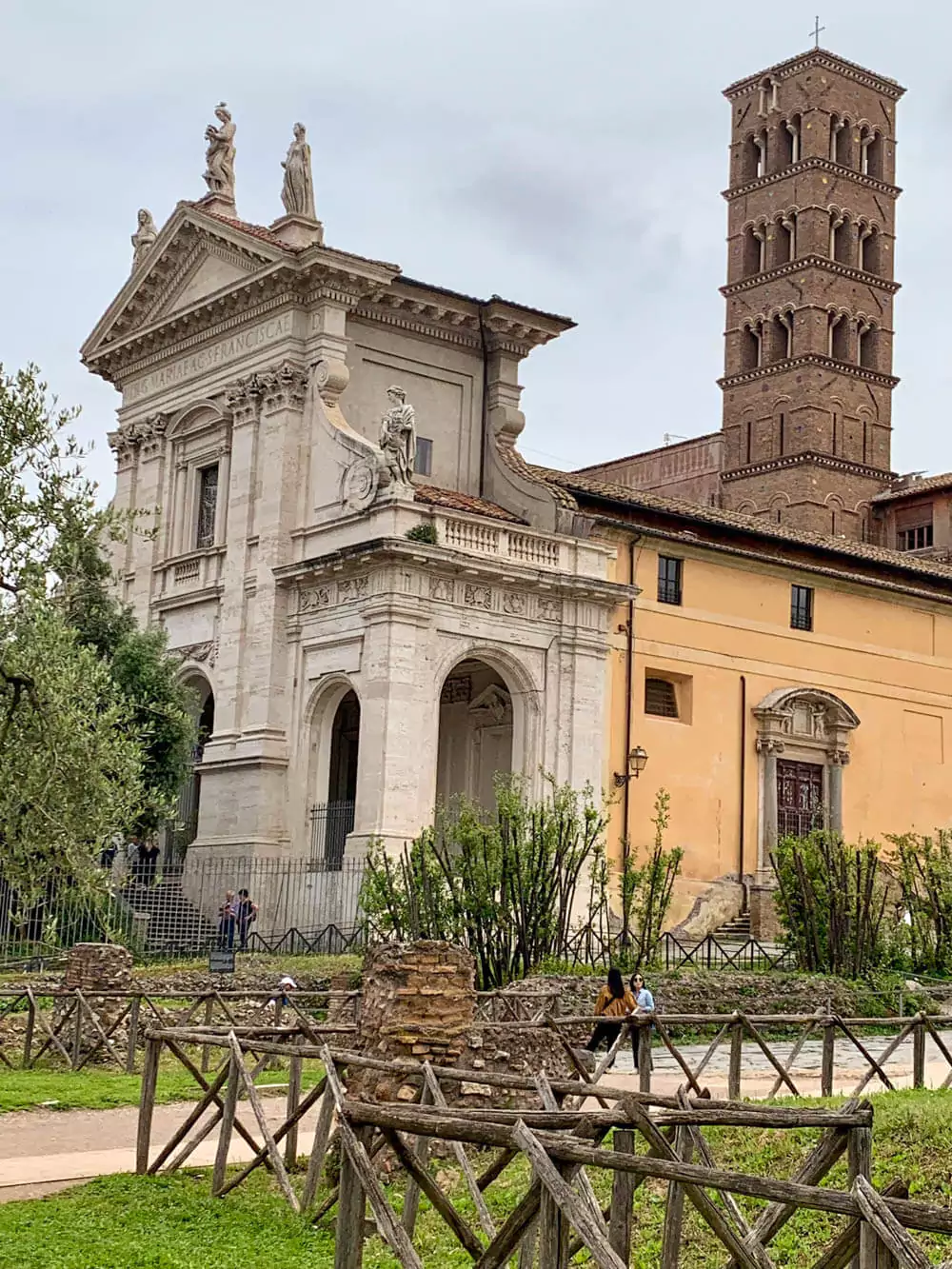
Can you visit the Roman Forum for free?
No, visiting the Roman Forum is not free.
Entry requires a ticket, which is typically bundled with access to the Colosseum and Palatine Hill.
However, on the first Sunday of every month, entry to the Roman Forum, along with other state museums and archaeological sites in Italy, is free.
Get your tickets on the official Roman Forum Website >
Should I go to Palatine Hill or Roman Forum first?
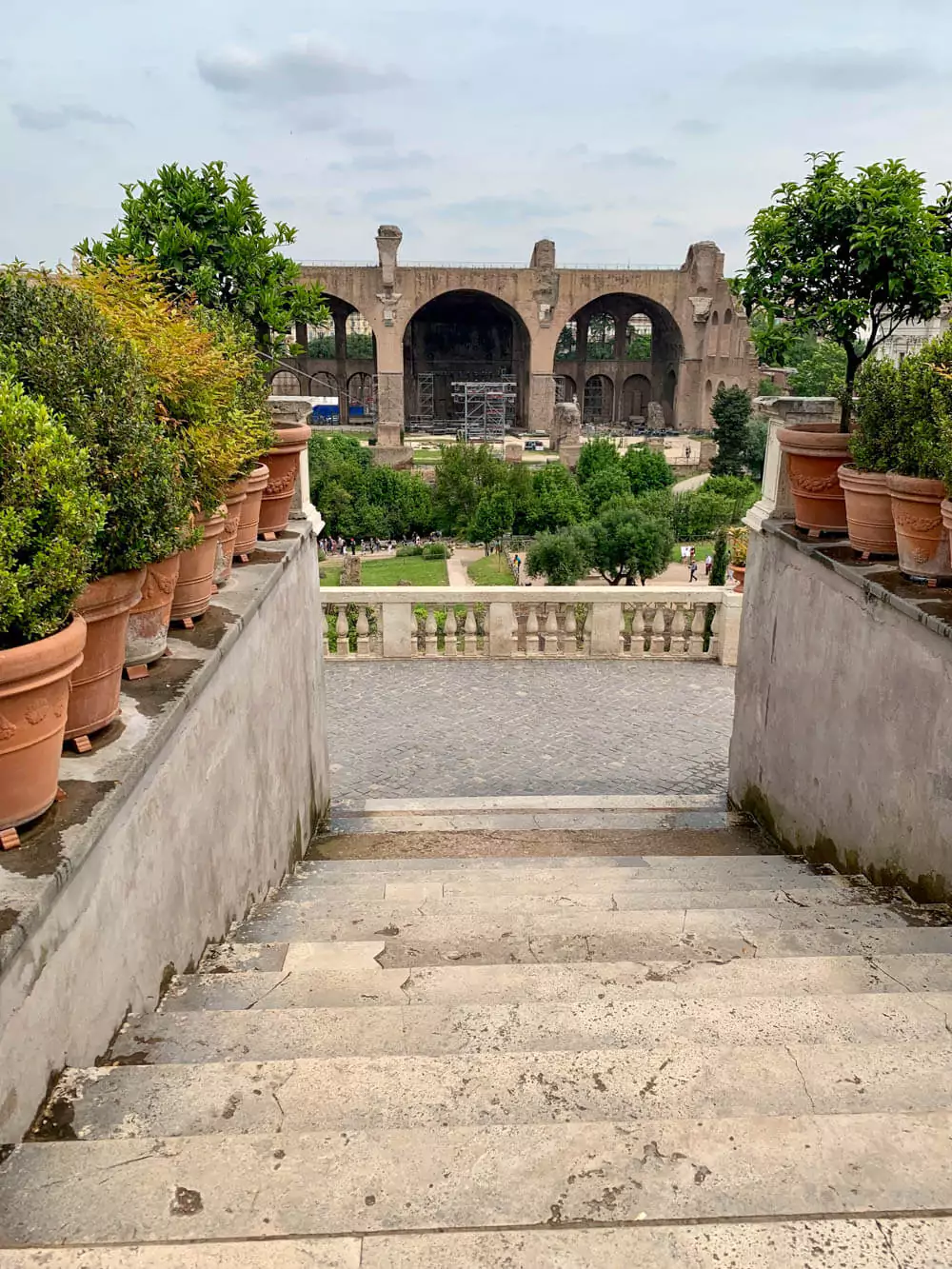
It’s generally recommended to start with Palatine Hill and then move on to the Roman Forum. Palatine Hill is where Rome’s legendary history began, offering stunning views over the Forum and the city.
Exploring it first allows you to gain an understanding of the imperial residences before descending to the Forum, which was the center of public life in ancient Rome.
The logical flow from the birthplace of Rome to its bustling civic center enhances the overall experience.
What to see at the Roman Forum
Roman Forum Map
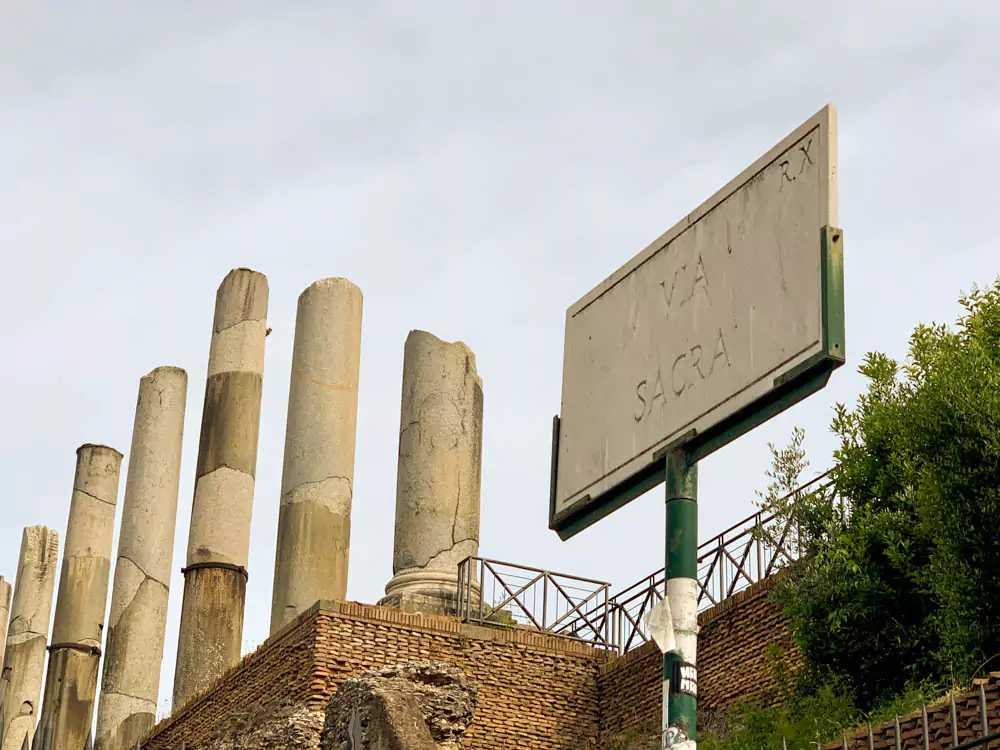
Via Sacra
The Via Sacra was the main street of ancient Rome, running through the Roman Forum. It was the route for religious and triumphal processions, connecting important sites like the Colosseum, the Arch of Titus, and the Temple of Saturn.
This road was central to public life in ancient Rome, lined with temples, basilicas, and public buildings.
Walking along the Via Sacra today, you can imagine the grandeur of Rome’s past as they pass by some of the city’s most significant ruins.

The Arch of Titus
The Arch of Titus is a triumphal arch located at the Roman Forum, built in 81 AD by Emperor Domitian to honor his brother Titus’s victory in the Jewish War, which culminated in the siege of Jerusalem.
The arch is celebrated for its detailed reliefs, particularly those depicting the spoils from the Temple of Jerusalem, including the Menorah.
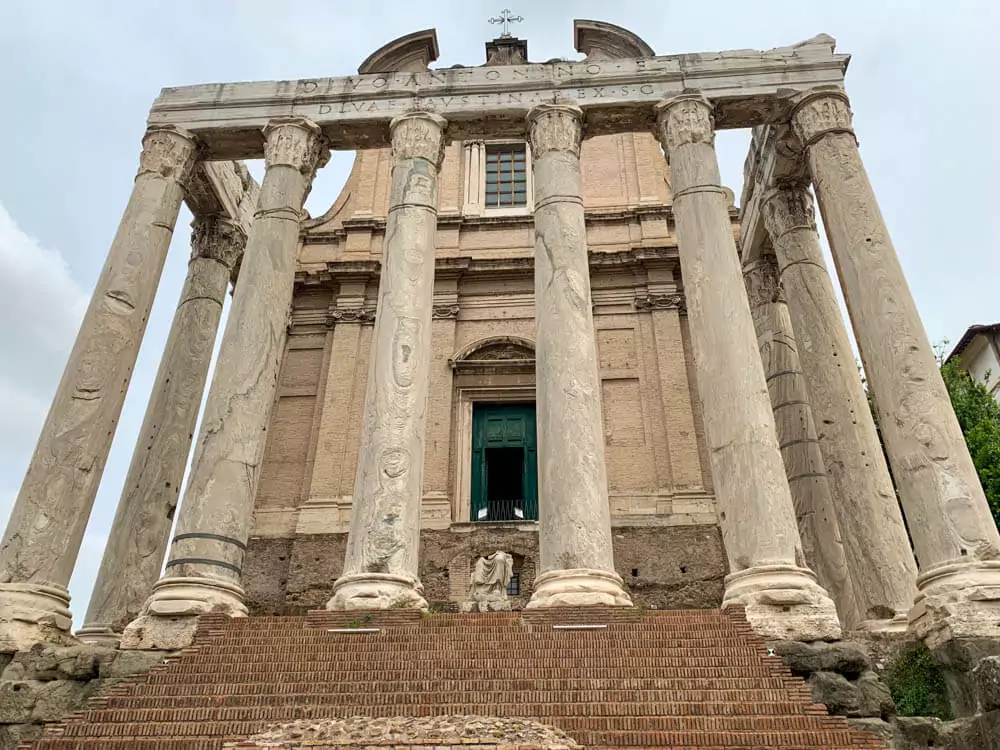
The Temple of Antoninus and Faustina
The Temple of Antoninus and Faustina is one of the most well-preserved ancient structures in the Roman Forum.
Originally built in 141 AD by Emperor Antoninus Pius to honor his deceased wife, Faustina, the temple was later rededicated to both Antoninus and Faustina after his death.
The temple features impressive Corinthian columns and was later converted into the Church of San Lorenzo in Miranda during the Middle Ages, which helped preserve much of its structure.
Arch of Septimius Severus
The Arch of Septimius Severus is a triumphal arch located in the Roman Forum, built in 203 AD to commemorate Emperor Septimius Severus’s victories over the Parthians.
The arch is made of white marble and features intricate carvings and reliefs depicting scenes from the military campaigns. Standing at 23 meters tall, it is one of the best-preserved monuments in the Forum.
The arch also honors Severus’s sons, Caracalla and Geta, although Geta’s name was later removed following his assassination by Caracalla.
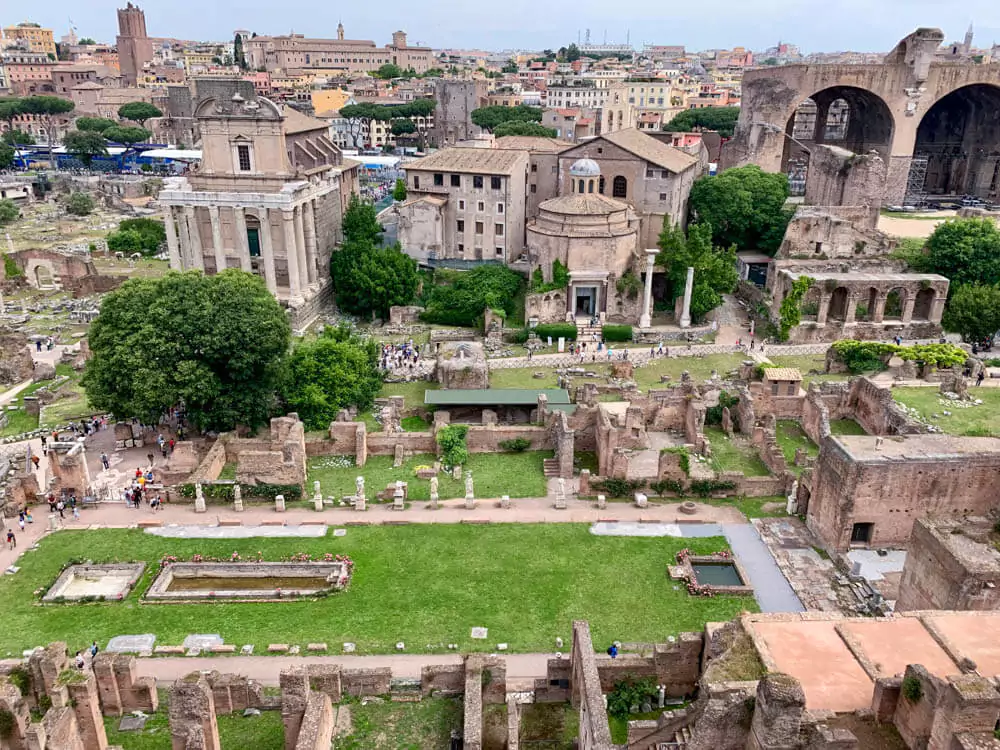
The House of the Vestal Virgins
The House of the Vestal Virgins was the residence of the Vestal Virgins, priestesses dedicated to Vesta, the goddess of the hearth. These women were tasked with maintaining the sacred fire that symbolized Rome’s eternal life.
The house was a grand structure with several rooms, courtyards, and a garden adorned with statues. It was a central and prestigious building, reflecting the importance of the Vestal Virgins in Roman society.
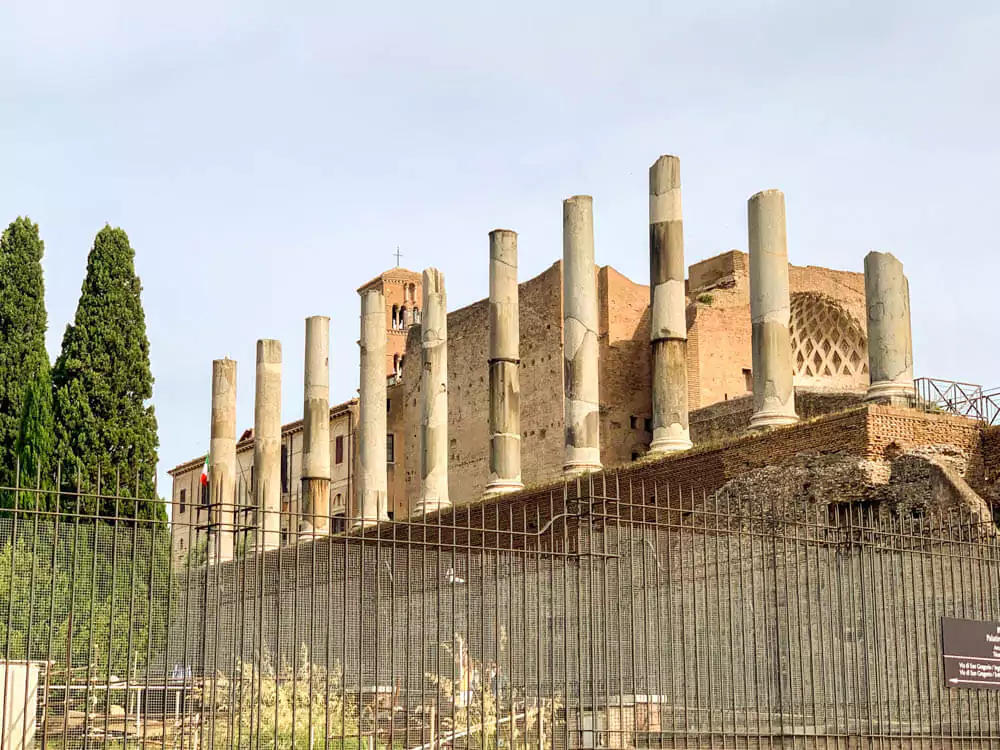
The Temple of Venus and Roma
The Temple of Venus and Roma was the largest temple in ancient Rome, dedicated to Venus Felix (Venus the Bringer of Good Fortune) and Roma Aeterna (Eternal Rome).
Built by Emperor Hadrian around 135 AD, the temple had a grand design with two main chambers, each dedicated to one of the goddesses.
The Temple of Saturn
The Temple of Saturn is one of the oldest temples in the Roman Forum, originally dedicated around 497 BC. It was rebuilt in 42 BC and served as a treasury for the Roman Republic.
The temple was dedicated to Saturn, the god of wealth and agriculture, and was central to the annual Saturnalia festival.
What to see at Palatine Hill
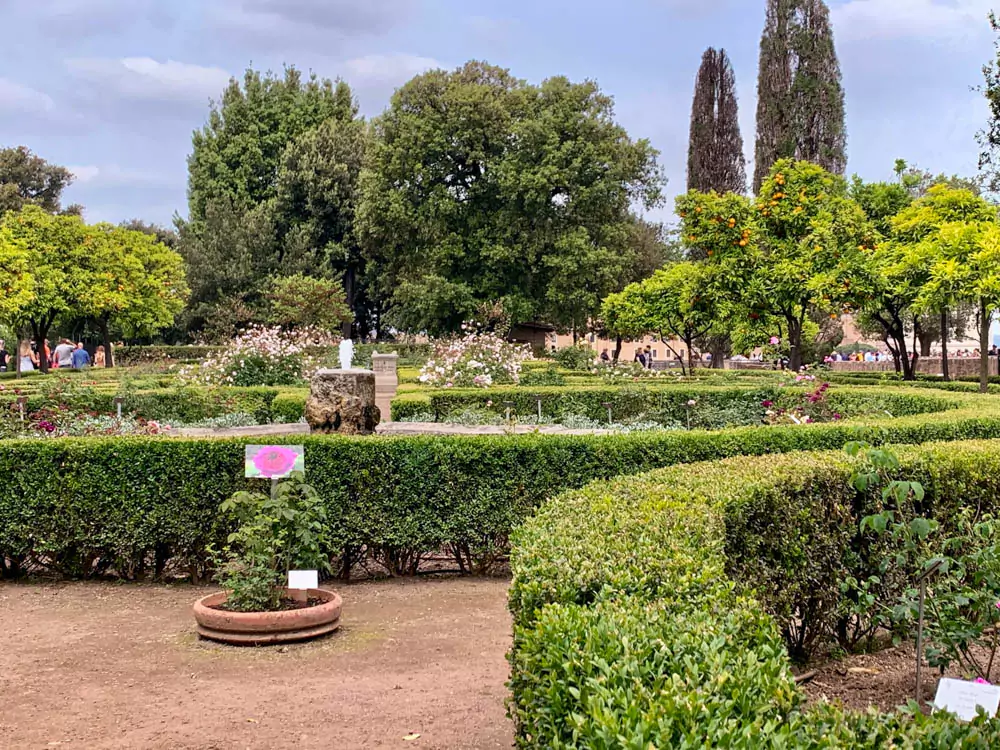
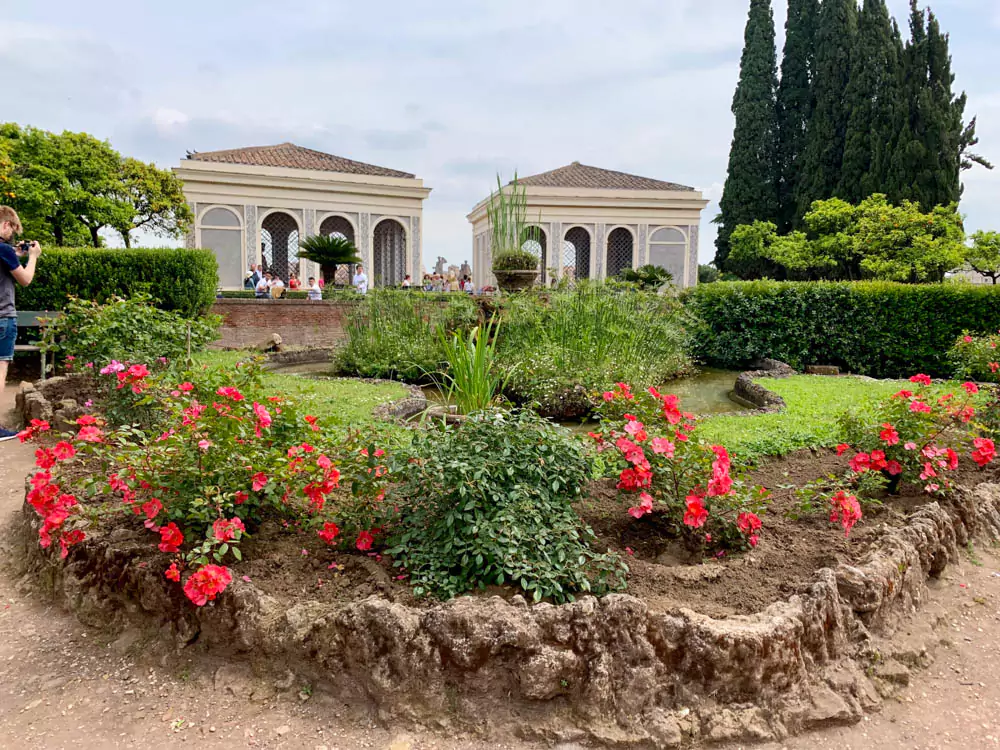
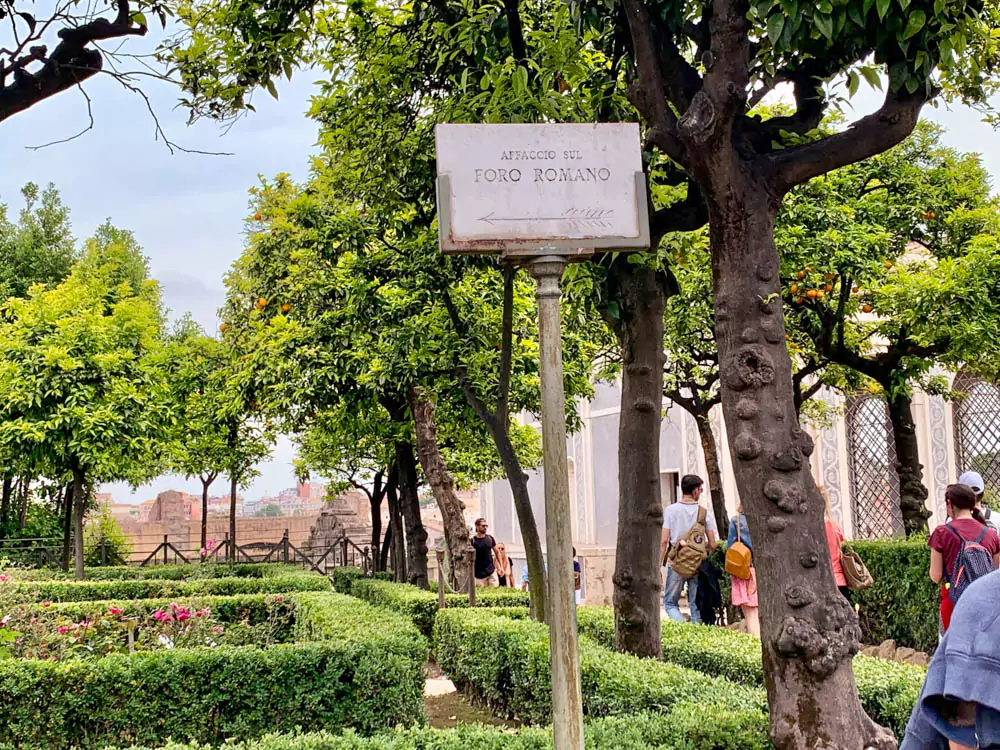
The Farnese Gardens
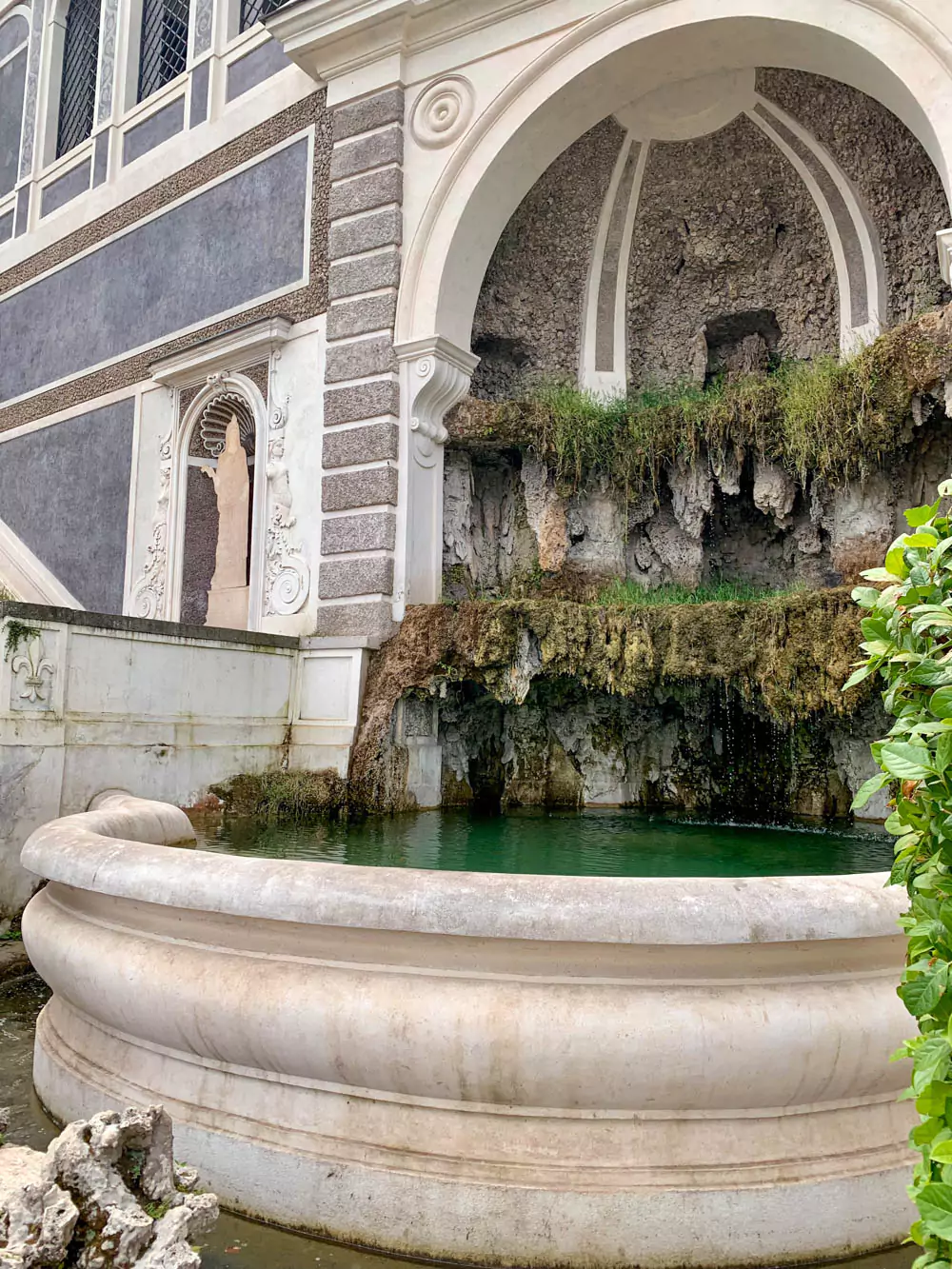
The Farnese Gardens (Horti Farnesiani) on Palatine Hill are some of the oldest botanical gardens in Europe, established in the 16th century by Cardinal Alessandro Farnese.
Built over the ruins of ancient Roman palaces, these Renaissance gardens were designed as a retreat, featuring terraced levels, manicured flower beds, fountains, and pavilions.
The Palace of Domitian
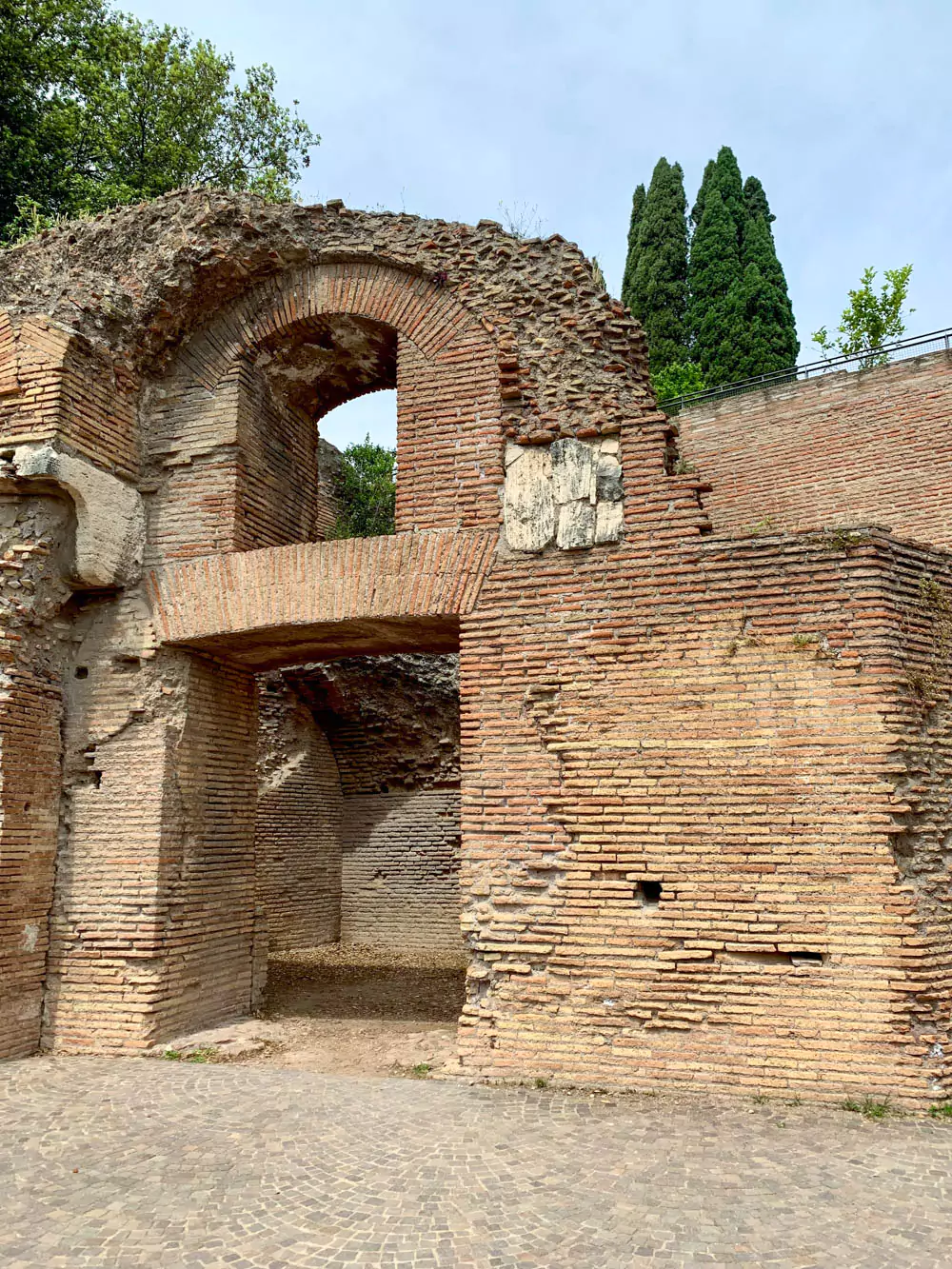
The Palace of Domitian on Palatine Hill was the grand imperial residence of Emperor Domitian, constructed in the late 1st century AD. Designed by the architect Rabirius, it served as the primary residence for Roman emperors.
The palace is divided into three main sections: the Domus Flavia (public areas), the Domus Augustana (private quarters), and the Stadium of Domitian (a large, private garden or racetrack).
The House of Augustus
The House of Augustus on Palatine Hill was the private residence of Rome’s first emperor, Augustus. This modest yet elegant home contrasts with the grander palaces that followed, reflecting Augustus’s image as a leader who valued simplicity.
The house is renowned for its well-preserved frescoes, which depict mythological scenes and intricate decorative patterns.
The House of Livia
The House of Livia on Palatine Hill was the residence of Livia Drusilla, the wife of Emperor Augustus. Known for its refined decoration, the house features beautifully preserved frescoes that depict mythological and nature-inspired scenes.
Despite its simplicity compared to later imperial palaces, the House of Livia offers a glimpse into the private life of one of Rome’s most influential women.
Hippodrome of Domitian
The Hippodrome of Domitian, located on Palatine Hill, was a large, stadium-like structure that was part of the imperial palace complex.
It was likely used as a private garden and for athletic events or chariot races, reflecting the luxurious lifestyle of the Roman emperors.
The elongated shape and tiered seating areas resemble those of a circus or stadium, though it was primarily a decorative feature of the palace.
Practical Information for Visiting the Roman Forum and Palatine Hill
Location
The two entrances to the Forum are Via della Salara Vecchia, 5/6 and Via di San Gregorio. The main entrance to Palatine Hill is the Via Sacra. This is also the main access point to the Roman Forum.
Opening Hours
The Roman Forum is typically open from around 8:30 AM until about one hour before sunset. Closing times vary depending on the time of year.
- January & February: Closes at 4:30 PM
- March: Closes at 5:30 PM
- April to August: Closes at 7:15 PM
- September: Closes at 7:00 PM
- October: Closes at 6:30 PM
- November & December: Closes at 4:30 PM
Tickets
Tickets for the Roman Forum are typically bundled with entry to the Colosseum and Palatine Hill.
Prices for a standard ticket usually range around €16 to €18.

Best tours for visiting Roman Forum and Palatine Hill
Tours of the Forum and Ancient Rome
Taking a guided tour of the Roman Forum and Palatine Hill offers several benefits. A knowledgeable guide can provide historical context and fascinating stories about the ruins, helping you understand the significance of the various temples, arches, and government buildings.
You’ll gain insights into the daily life of ancient Romans, the political events that shaped the empire, and the architectural innovations of the time. Guided tours also often include access to areas that might be overlooked by self-guided visitors, ensuring a more comprehensive and enriching experience.
Here are some of the tours that I recommend:
This 2.5 hour tour of the Colosseum, Palatine Hill and Roman Forum is a skip-the-line tour. With your live guide or audio guide, explore the Colosseum’s first level, walk on Palatine Hill and through the Roman Forum to see the most iconic monuments of Ancient Rome.
This 3 hour Colosseum, Roman Forum, & Palatine Hill tour with direct entry to the first two levels of the Colosseum, bypassing waiting times at the ticket counter with your host. Audioguide is provided through the Roman Forum and the Palatine Hill.
This 3 hour Priority Access Colosseum, and Ancient Rome tour is a skip-the-lines tickets to the Colosseum’s first and second floors. Then continue your tour through Palatine Hill and the Roman Forum.
Final Thoughts on Visiting the Roman Forum and Palatine Hill
Have you been to the Roman Forum or Palatine Hill in Rome? Aren’t they magnificent and overwhelming at the same time?
That’s exactly the reason why I put together this extensive travel guide!
Do you think our guide on visiting the Colosseum will help you plan your next trip better? Let us know in the comments below. If you think I missed something, drop in a line too. Always happy to chat!
XOXO,
Katie
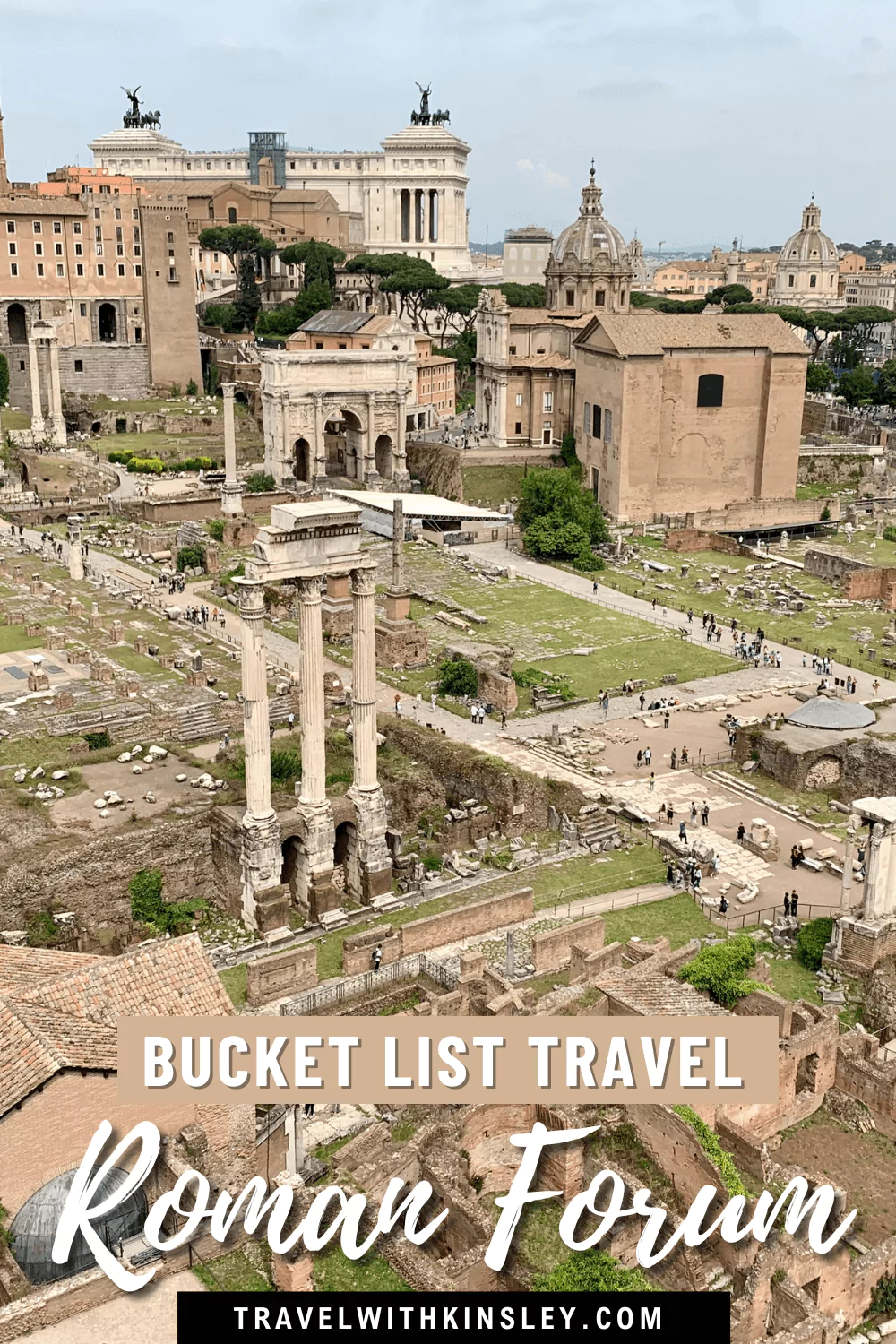
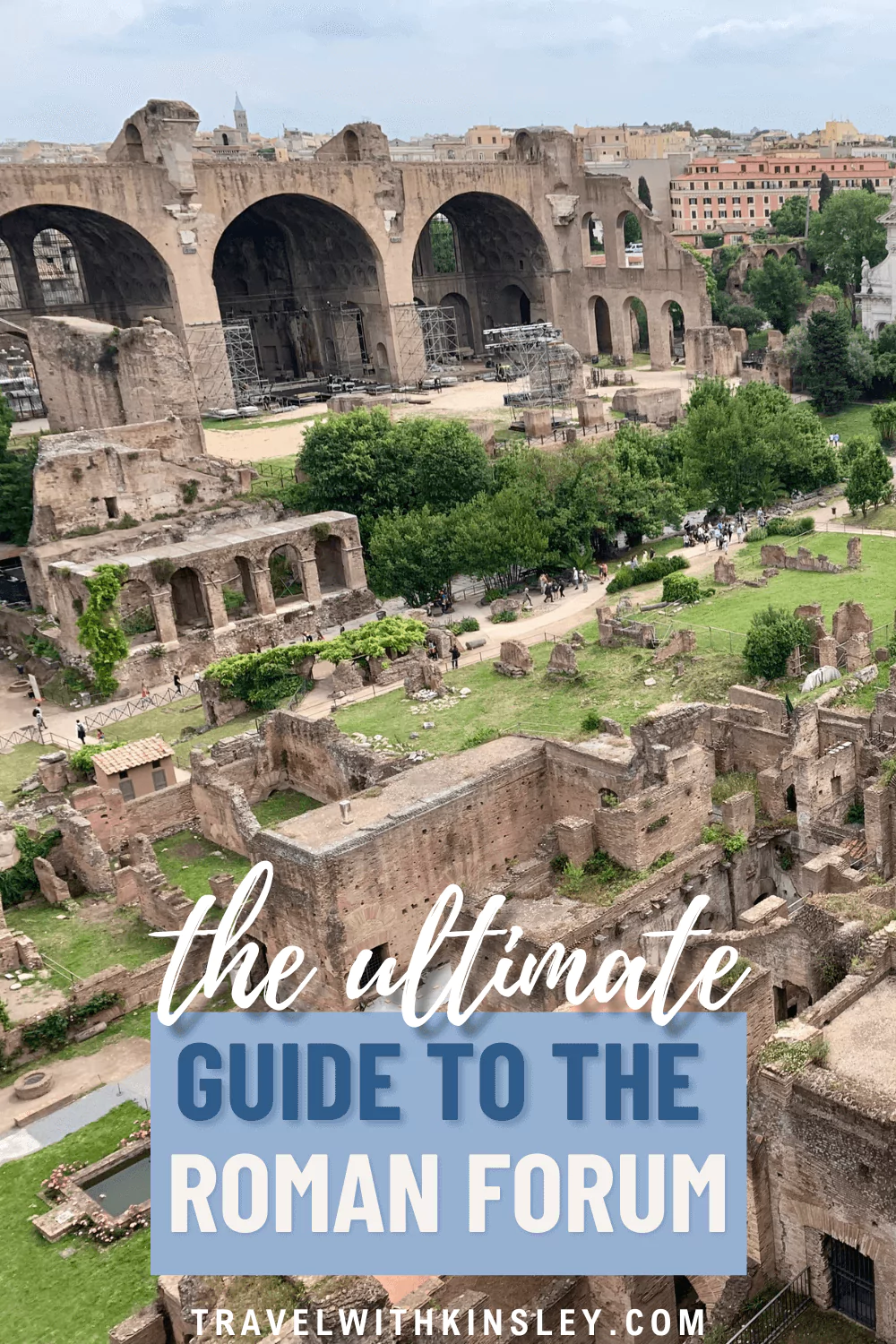
Planning on Visiting the Roman Forum and Palatine Hill? Share this on Pinterest!
 |
 |
More Information about Rome
Learn how to plan your time with my 2 Day Rome Itinerary. You can also find additional information about visiting the Colosseum in my detailed guide.
And learn some of the best things to do in Rome, like visiting the Trevi Fountain and Piazza Navona. If you’re a budget traveler, then be sure to check out my list of free things to do in Rome.
If you’re staying multiple days in Rome, then be sure to check out my list of day trips from Rome to help you explore outside of the Eternal City.
For advice on Vatican City, read my Must See Attractions in Vatican City, like the St. Peter’s Basilica, Vatican Museums, Sistine Chapel and St. Mark’s Square.
More Information for Your Trip to Italy
Our trip to Rome was part of a much longer trip to Italy. I created a detailed post about our seven days in Italy, and I also created a 10 days in Italy itinerary. You might also find my Italy packing list if you’re headed to Italy soon.
Learn about Naples with my post Best Things to Do in Naples. I also have a guide on how to take a day trip to Naples from Rome. If you are just beginning to research Naples, then be sure to check out my 2 Day Naples Itinerary.
And while you’re here, don’t forget to follow on Facebook, Instagram and Pinterest!
- Trains: Check Omio to search schedules and buy tickets
- Flights: Find the cheapest flights on Booking.com
- Airport transfer: Get a quote & book here
