A Self Guided Freedom Trail Tour in Boston Mass

Travel With Kinsley contains affiliate links and is a member of the Amazon Services LLC Associates Program, which means I may receive a cute little commission if you purchase through my links, at no extra cost to you. Please read full disclosure for more information.
If you want to walk through history while exploring Boston, the Freedom Trail is the perfect place to start.
This 2.5-mile red-brick path connects 16 historic sites, from Boston Common to the USS Constitution, and gives you an easy way to experience the city’s revolutionary past on your own schedule.
A self-guided tour means you can stop where you want, linger where it matters most, and skip what doesn’t interest you. All you need is comfortable shoes, a bit of time, and a map to follow the red line through the city.
What is the Freedom Trail?
Boston’s Freedom Trail is a must-do activity in Boston if you’re interested in history and you like walking.
The Freedom Trail is a 2.5-mile path that guides you through 16 key historical sites, like the Paul Revere House, Old North Church, and Boston Common. These landmarks offer a look into the American Revolution and Boston’s role in it.
Walking the trail gives you a great mix of sightseeing and history, perfect for exploring the city’s revolutionary past while enjoying a scenic stroll through Boston’s streets.
How long does a self guided Freedom Trail tour take?
Plan anywhere from 2 to 8 hours, depending on how much you want to explore:
– 2–3 hours: A quick walk, stopping briefly at each landmark.
– 4–5 hours: A half-day, with time to go inside a few major sites (like the Paul Revere House).
– 6–8 hours (or more): A full day if you’re visiting multiple museums, taking guided tours, or climbing the Bunker Hill Monument.
We spent about 4 hours walking the trail at a steady pace, including time aboard the USS Constitution. The beauty of this route is its flexibility—you can tackle it in one go or break it into sections over multiple days.
Freedom Trail Map
To make your walk easier, I’ve marked each stop on a custom Google Map below.
Tip: click the star ⭐ in the corner of the map to save it to your Google Maps app. That way, you’ll have the route handy on your phone with GPS directions as you go.
How many stops are on the Freedom Trail?
The Freedom Trail connects sixteen locations in historic Boston. Bookmark this post if you want to read about the stops while you’re on your self guided Freedom Trail walking tour.

Massachusetts State House
Start your Freedom Trail at the Massachusetts State House, sitting at the top of Beacon Hill with its shining gold dome. Free tours are offered on weekdays (plan ~30 minutes if you go inside), but even from the outside, it’s an impressive landmark.
➡️ Walking cue: From the State House, follow the red line downhill through Boston Common toward Park Street Church.
Boston Common
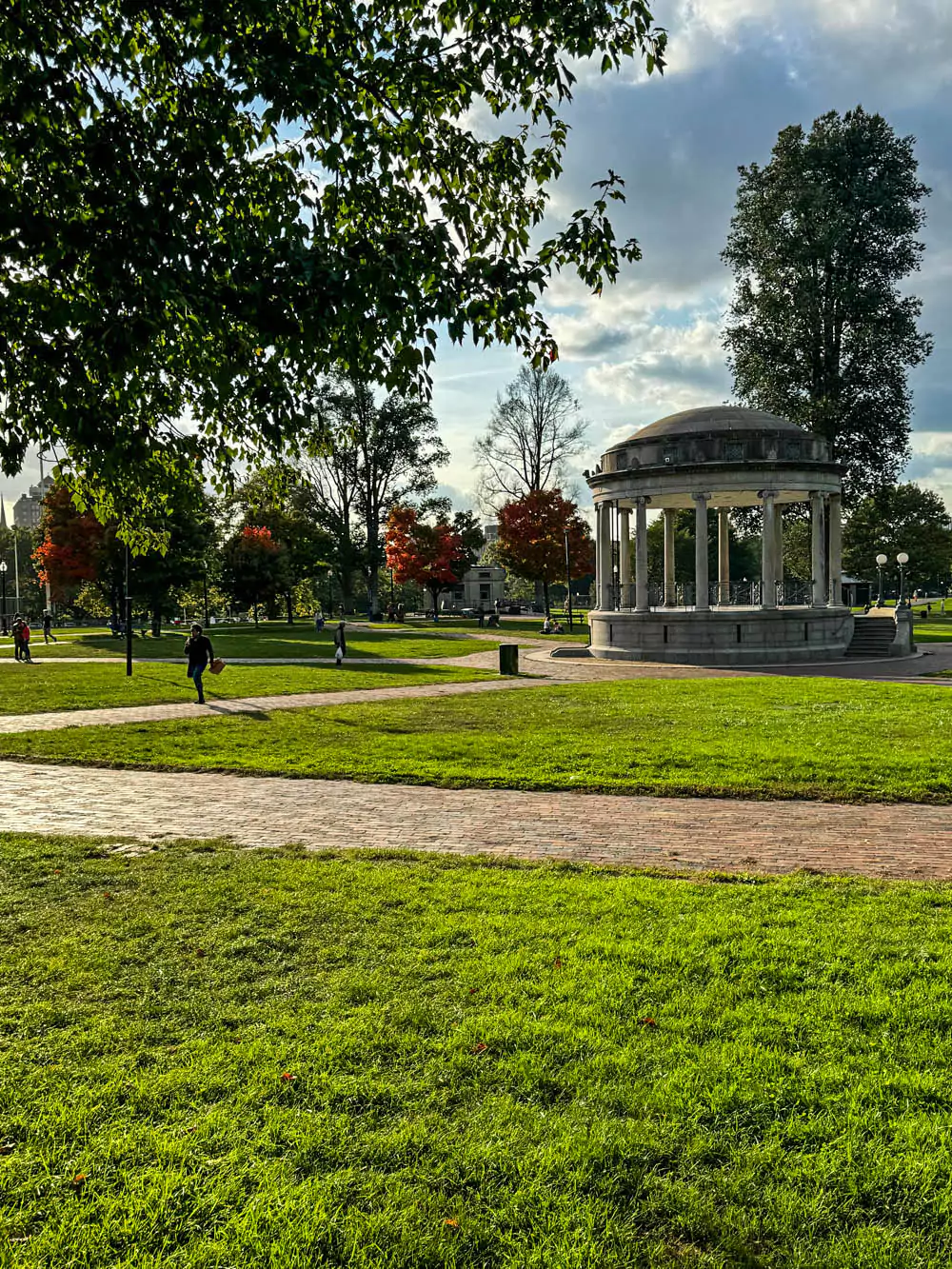
Boston Common, America’s oldest public park (1634), has seen everything from colonial grazing land to Revolutionary troop camps. Today, it’s a great place to start your walk. Stop briefly at the Shaw Memorial before continuing.
➡️ Pro tip: Restrooms and the visitor center are here—this is your best place to prep before starting the trail.
Park Street Church
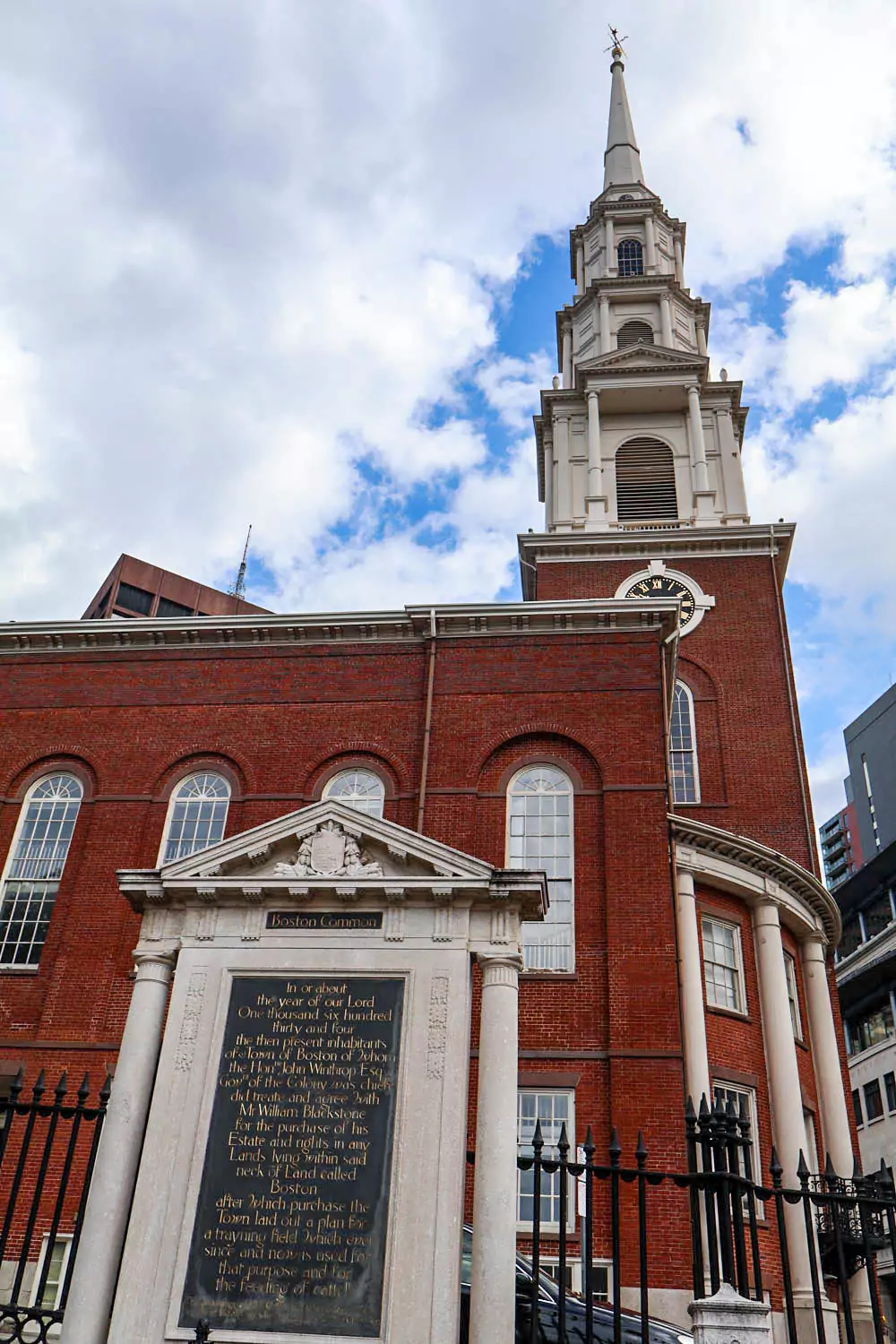
Just a 5-minute walk from Boston Common, Park Street Church was founded in 1809 and played a role in abolitionist history. William Lloyd Garrison gave his first anti-slavery speech here, and the hymn “America (My Country, ’Tis of Thee)” was sung for the first time on its steps.
➡️ Quick stop: You can’t go inside, so snap a photo and continue across the street to Granary Burying Ground.
Granary Burying Ground
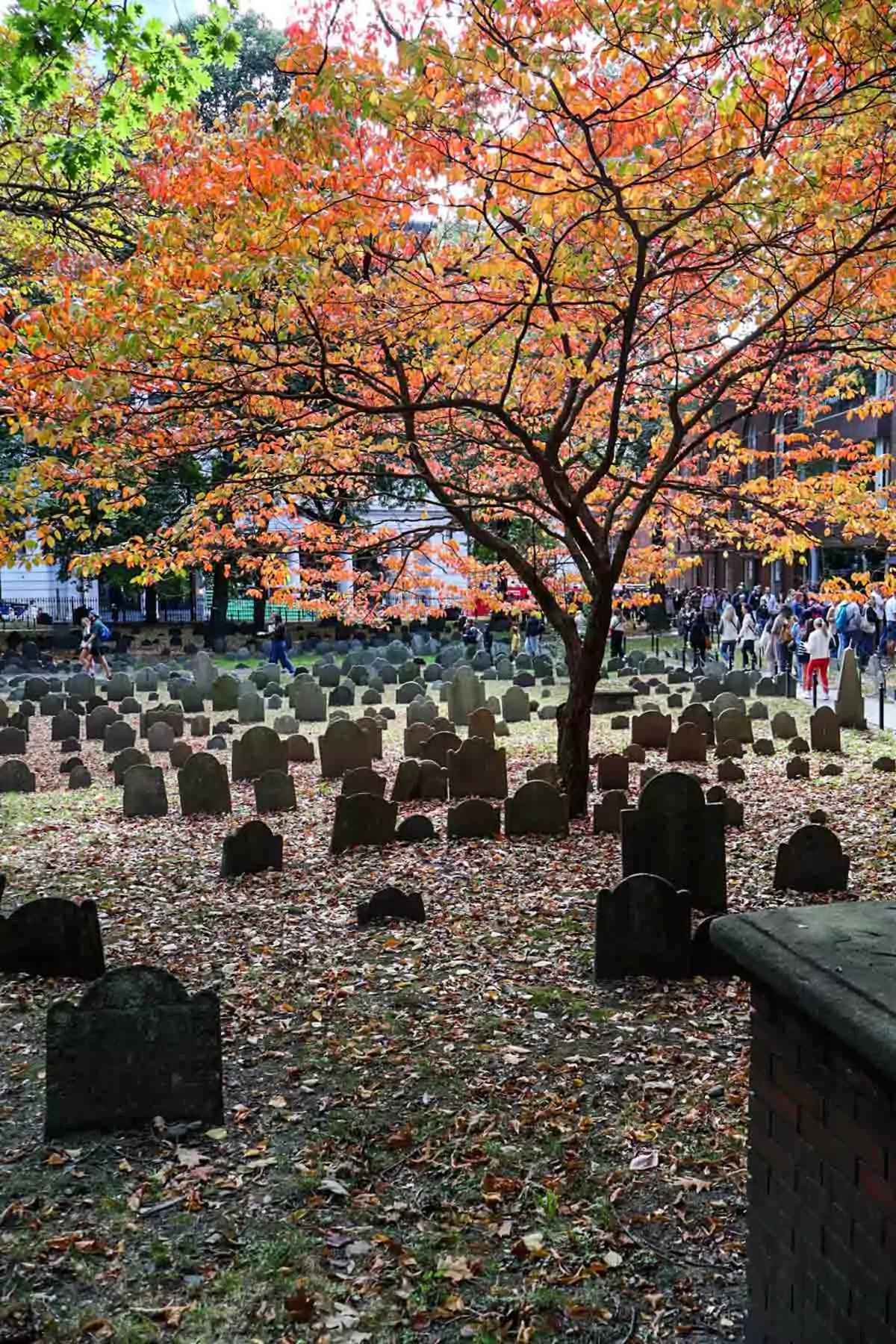
This 1660 cemetery is the final resting place of American Revolution leaders including Paul Revere, Samuel Adams, John Hancock, and victims of the Boston Massacre. Spend 15–20 minutes walking through—there are signs to help you find the major headstones.
➡️ Optional tip: If you want more depth, guided tours often pause here to share stories of the patriots buried within.

King’s Chapel + King’s Chapel Burying Ground
Boston’s first Anglican church (1686) and oldest cemetery (1630). Inside, George Washington once worshiped; outside, early settlers like Governor John Winthrop are buried.
➡️ Walking cue: Continue a short walk down School Street.

Boston Latin School Site + Ben Franklin Statue
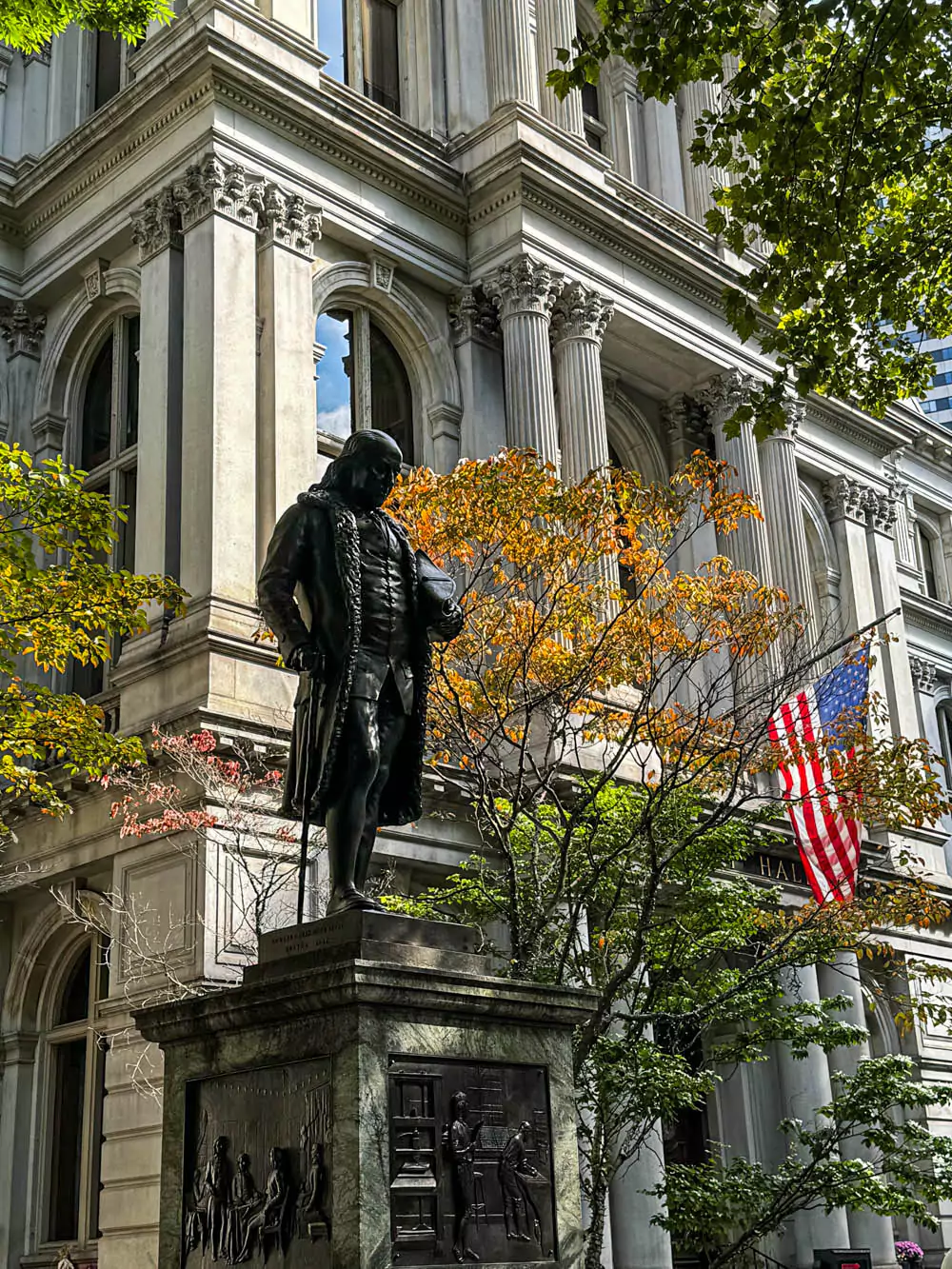
America’s first public school (1635) once stood here. The building is gone, but a plaque marks the spot beside a statue of its most famous dropout, Benjamin Franklin.
➡️ Fun stop: Snap a photo, then head toward the Old Corner Bookstore.
Old Corner Bookstore
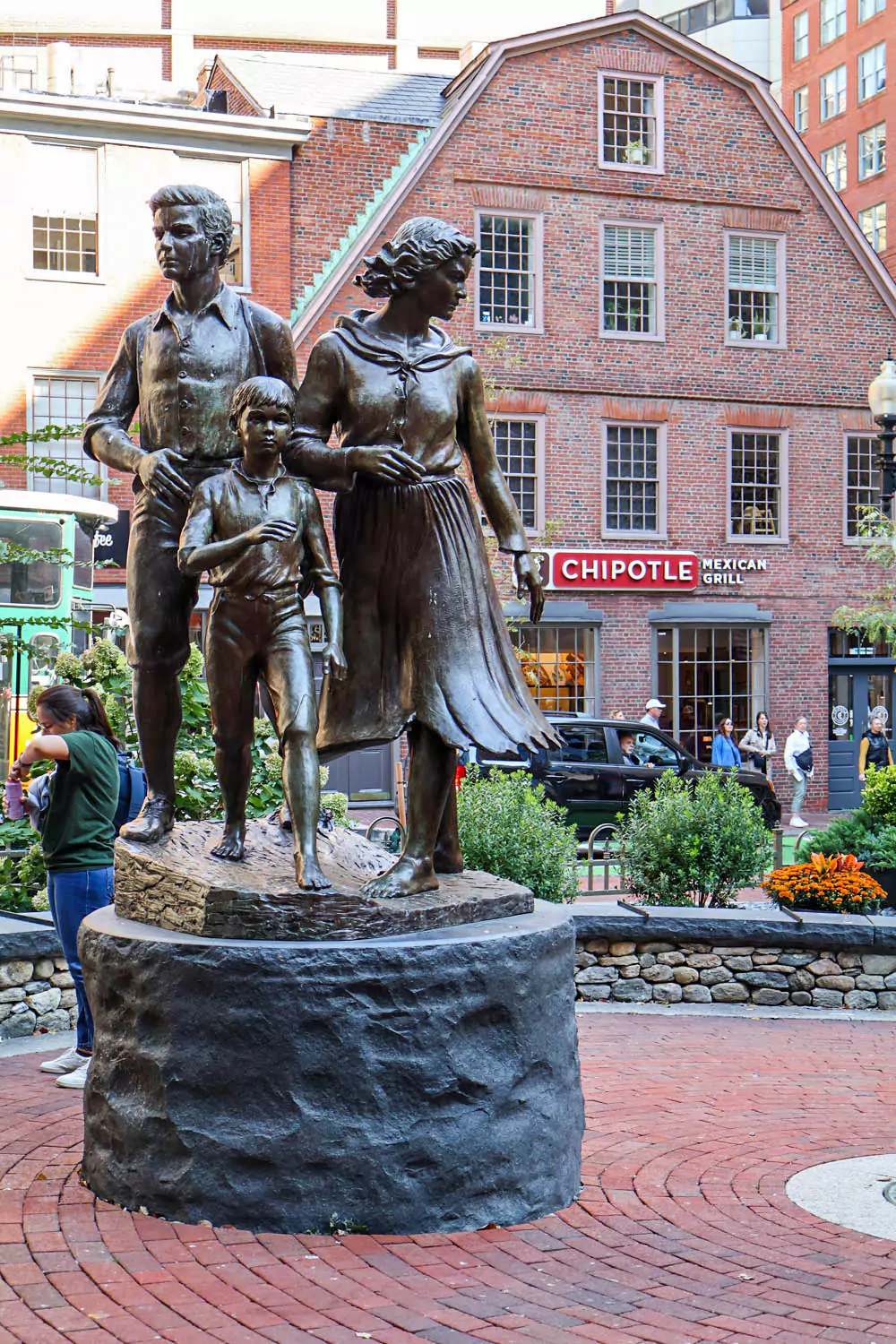
This 1718 building was once a hub for publishing giants like Hawthorne and Stowe. Today, it’s (ironically) a Chipotle—but the structure remains part of Boston’s literary past.

Old South Meeting House
Built in 1729, this was the gathering spot for the protest that sparked the Boston Tea Party. It’s now a museum, and worth going inside if you want a deeper dive.

Boston Massacre Site
Marked by a simple medallion near the Old State House, this is where British troops fired on colonists in 1770. Not much to see, but it’s a powerful stop to reflect.

Faneuil Hall
Known as the “Cradle of Liberty,” Faneuil Hall hosted speeches from Samuel Adams and others. Today, it’s a marketplace with food stalls in Quincy Market.
➡️ Pro tip: Go early for chowder or lobster rolls—lunchtime lines get long.

Paul Revere House
The oldest house in downtown Boston (1680), once home to Paul Revere. Small but fascinating museum with period furnishings. Worth ~30 minutes if you go inside.

Old North Church
Built in 1723, Boston’s oldest church is where the famous lanterns signaled “One if by land, two if by sea” during Paul Revere’s ride. Entry is $5 and well worth it.

Copps Hill Burying Ground
Dating to 1659, this cemetery was used by British troops as a vantage point during the Revolution. Notable burials include Robert Newman, who hung the lanterns at Old North.
➡️ Walking cue: Cross the bridge to Charlestown for the final two stops.

Bunker Hill + Bunker Hill Monument
A granite obelisk commemorating the 1775 battle, one of the first major clashes of the Revolution. You can climb 294 steps to the top for sweeping views of Boston.

USS Constitution
“Old Ironsides,” launched in 1797, is the world’s oldest commissioned warship still afloat. Tour the deck and visit the museum at Charlestown Navy Yard—entry is free.

How to Use This Walking Tour
The red brick line makes the trail easy to follow, but I recommend saving my Google Map (above) to your phone so you can navigate between stops. Plan 4–5 hours for a half-day tour, or a full day if you want to step inside multiple sites.
Practical Information for Your Freedom Trail Visit
Freedom Trail Parking
Parking along the Freedom Trail can be challenging, especially near popular stops in downtown Boston. The best options are parking garages near the trail, such as Boston Common Garage (near the start of the trail) or Government Center Garage.
You can also find parking at Charlestown Navy Yard, which is close to the USS Constitution and Bunker Hill.

FAQ’s
How many people walk the Freedom Trail each year?
Approximately 4 million people walk the Freedom Trail each year.
Where does the Freedom Trail start and end?
The Freedom Trail starts at Boston Common, the oldest public park in the United States, and ends at the Bunker Hill Monument in Charlestown.
Can you walk the Boston Freedom Trail for free?
Yes, you can walk the Boston Freedom Trail for free! The trail itself is a public path marked by a red line that guides you through 16 historical sites in Boston.
While walking the trail costs nothing, some of the sites along the way, like the Paul Revere House or the Old South Meeting House, may charge an admission fee if you want to go inside. You can still enjoy the trail and its landmarks from the outside at no cost.
Should I Book a Freedom Trail Tour?
Booking a Freedom Trail tour can be a great idea if you’re interested in learning the rich history behind each stop. A guided tour provides in-depth insights and stories that you might miss on your own.
Guides often offer fascinating details about historical figures, events, and landmarks, adding more context to your experience. This tour visits 11 of the 16 trail sites with guides that wear 18th-century costumes. Or checkout this one which provides the most comprehensive tour of the Freedom Trail (and in depth coverage of Bunker Hill and USS Constitution).
However, if you prefer flexibility, the Freedom Trail is easy to follow on your own, with plenty of informational signs along the way. It depends on your preference for structure or self-guided exploration!

Where to Stay for Close Access to the Freedom Trail
We stayed at the Hilton Boston Park Plaza, but here are some hotels for close access to the Freedom Trail.
- Boston Omni Parker House – Located near Boston Common, this historic hotel places you right at the start of the trail. And, fun fact, it’s the birthplace of the Boston creme pie!
- The Langham – A luxury option close to Faneuil Hall and the trail’s stops in the heart of the city.
- The Boxer Boston – A mid-range hotel near North End and several Freedom Trail stops.

Have a great time on your self guided Freedom Trail tour!
A self guided Freedom Trail tour can feel a bit overwhelming without the right preparation, but this guide should help you navigate it smoothly. You’ll be able to soak in the rich history, have fun exploring iconic sites, and walk in the footsteps of American patriots.
Make the most of your time in Boston with these fun and informative tours.
Like this self guided Freedom Trail tour? Share this guide on Pinterest!
 |
 |
More Information about Boston
Learn how to plan your time with my one day in Boston itinerary. You can read tips about visiting Boston in October in my detailed guide. And find a list of scenic drives to take in MA!
You can also find a list of free museums to visit in the city. And if you’re looking for a hotel, be sure to check out my review of our stay at the Hilton and a list of top-rated boutique hotels.
If you staying multiple days in Boston, then be sure to check out my 3 days in Boston itinerary. I also have some tips for getting around Boston if you need help navigating the city. And if you’re planning to visit other cities in New England, be sure to check out my day trip to Salem!
