The Ultimate 2 Day Itinerary Venice, Italy

Travel With Kinsley contains affiliate links and is a member of the Amazon Services LLC Associates Program, which means I may receive a cute little commission if you purchase through my links, at no extra cost to you. Please read full disclosure for more information.
Discover the perfect 2 Day Itinerary Venice Italy to explore iconic sights, hidden gems, savor local cuisine, and experience the best of Venice.
With so much to see and do in Venice, it can be overwhelming to decide where to start. You might worry about missing key sights or not experiencing everything that makes Venice so special. Navigating the city’s labyrinth of canals and narrow streets, all while trying to fit in essential experiences, can add to the stress.
I’ve been to Venice (or Venezia) a couple of times and I’m using my past planning to give you two great days. My goal is to help you enjoy Venice without the typical tourist rush. I’ve been where you are – eager to take it all in, but unsure where to begin.
That’s why I’ve crafted this 2 day Venice itinerary: to help you navigate Venice with ease, even if time is limited, allowing you to experience the best of Venice without feeling rushed or overwhelmed.

Why Visit Venice? A Mini History
Venice, located in northeastern Italy, is often referred to as the Queen of the Adriatic or City of Canals. It’s is literally made up of 118 islands.
Venice an it’s lagoon is a UNESCO Heritage Site since 1987. Unfortunately, it will not be added to the list of endangered sites even with the rising sea levels from global warming.
Venice’s history begins in the 5th and 6th centuries AD when refugees fleeing from barbarian invasions on the Italian mainland settled in the marshy islands of the Venetian Lagoon. They established a system of governance based on a doge, or leader, and began to build a unique city on wooden pilings to protect against flooding and invasion.
Venice gradually became a powerful maritime and trading republic during the Middle Ages. The city’s location on the Adriatic Sea allowed it to establish a vast trading empire, extending from the Eastern Mediterranean to Northern Europe. Venice’s success was driven by its powerful navy, diplomacy, and skilled merchants.
The Renaissance had a profound impact on Venice, and the city became a center of art, culture, and learning. Iconic landmarks like St. Mark’s Basilica and the Doge’s Palace were constructed during this period.
Venice, one of Italy’s most romantic cities, remains a unique and iconic destination, known for its canals, and is a popular tourist destination, attracting millions of visitors from around the world.

Is 2 days in Venice enough?
While two days in Venice can give you a good amount of time to visit the major attractions, keep in mind that the city has much more to offer.
If you have additional time, you can explore more neighborhoods, visit additional museums, or simply take your time to soak in the unique city. You can find a list of more things to do in Venice to inspire your visit.
If you need some visual inspiration, add some of these movies set in Italy to your watchlist while you plan your trip!
If you don’t have time for two days in Venice, then be sure to check out my one day in Venice itinerary (because sometimes you only visit on a day trip).
Want to experience Venice without the crowds? These books set in Venice and beyond offer the perfect escape.
We also visited:
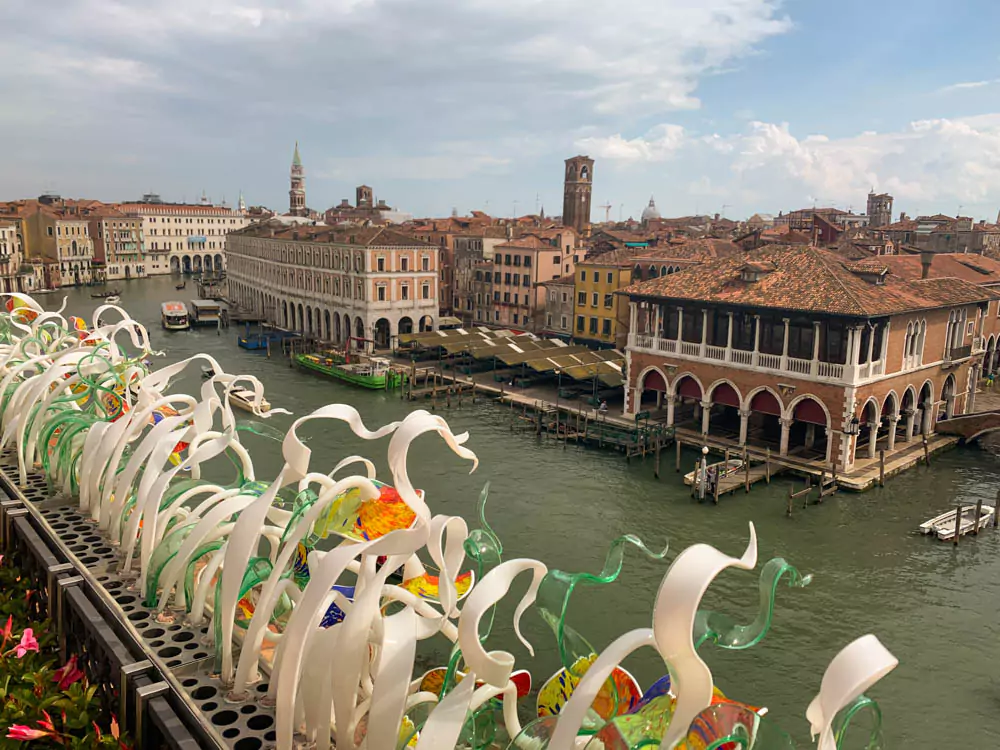
Day 1: Discovering the Heart of Venice
Located less than five miles from Marco Polo Airport, Venice is a city like no other, with its winding canals and historic landmarks. You can take a bus from the airport to Piazzale Roma, or you can purchase tickets for a water taxi (more costly).
If you arrived at the main train stations of Venice Santa Lucia, then you can walk to your next activity or take a water bus.

Morning: Piazza San Marco and Iconic Landmarks
Start the first day of your Venice adventure at the city’s most famous square, Piazza San Marco, or San Marco Square. This bustling hub is surrounded by some of Venice’s most iconic buildings.
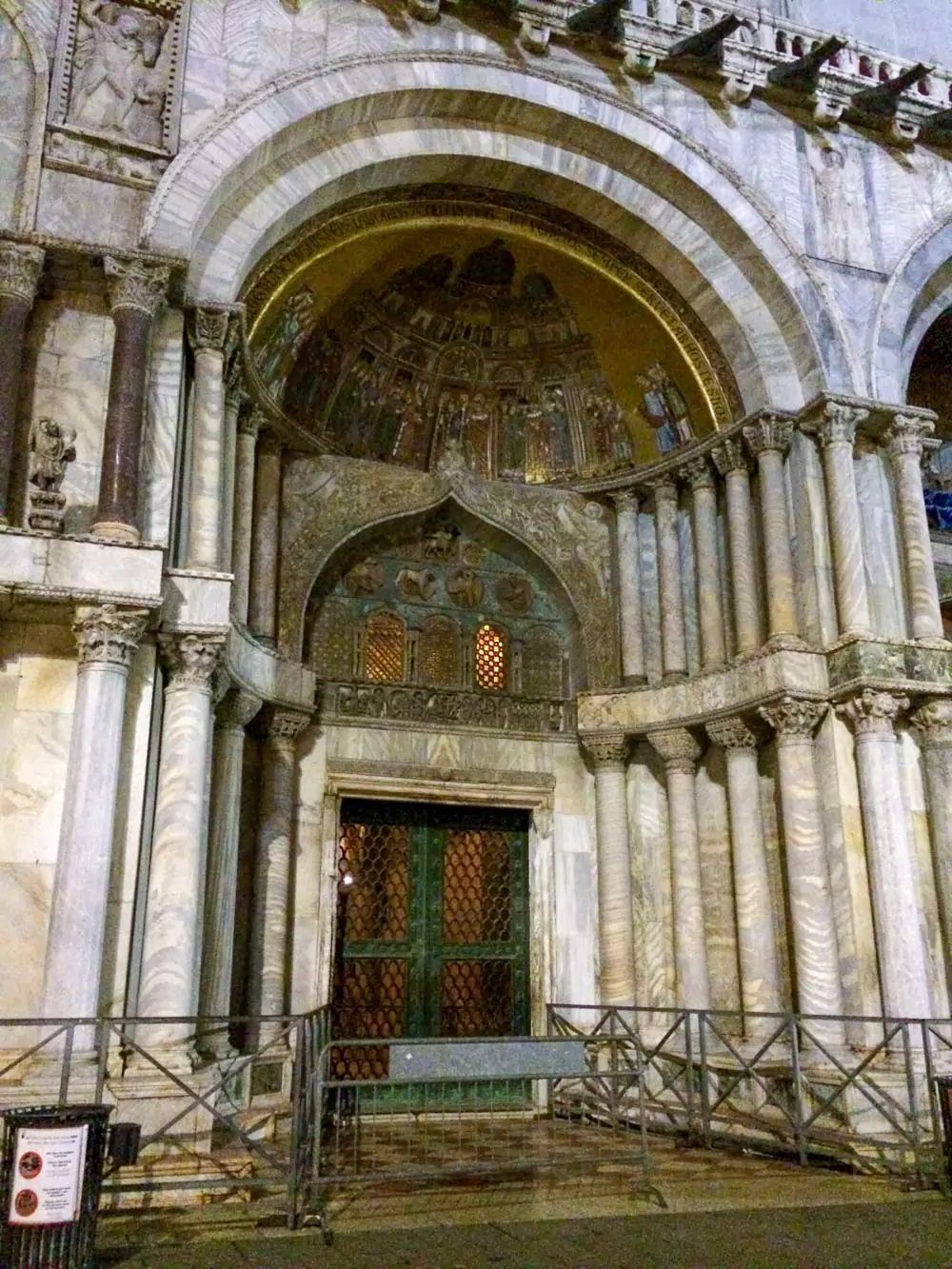
St. Mark’s Basilica
The basilica is a stunning example of Byzantine architecture, with its domes, intricate mosaics, and golden decorations. The basilica is said to house the remains of St. Mark, the patron saint of Venice, which makes it a significant pilgrimage site.
The interior is adorned with over 8,000 square meters of gold mosaics that depict biblical scenes and stories, shimmering with a divine glow. The high altar features the Pala d’Oro, a magnificent gold altarpiece encrusted with precious stones and intricate enamel work.
It’s also home to the famous statue of the Tetrarchs, a group of 4th-century Roman emperors.
Guided tours can provide in-depth insights into the history, art, and architecture of the basilica, enriching the visit even further.
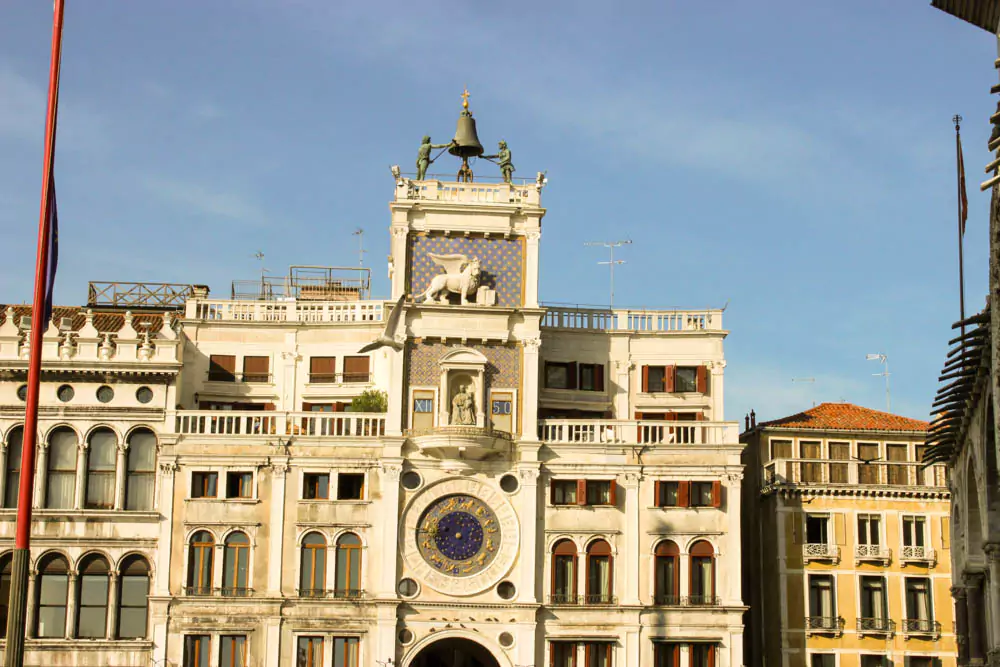
Campanile di San Marco
After exploring the basilica, take the elevator up the Campanile, the bell tower of St. Mark’s. The Campanile di San Marco, or St. Mark’s Campanile, is one of Venice’s most iconic landmarks.
From the top, you’ll be rewarded with panoramic view of St. Mark’s Square, for the views of the city of Venice, and the surrounding lagoon.
The campanile is a classic example of Venetian Gothic architecture. It stands tall with a simple, elegant design, topped with a clock and a golden weathervane shaped like a rooster.
Unlike many historic towers, the Campanile di San Marco offers an elevator ride to the top, making it accessible even if you’re not up for a strenuous climb.

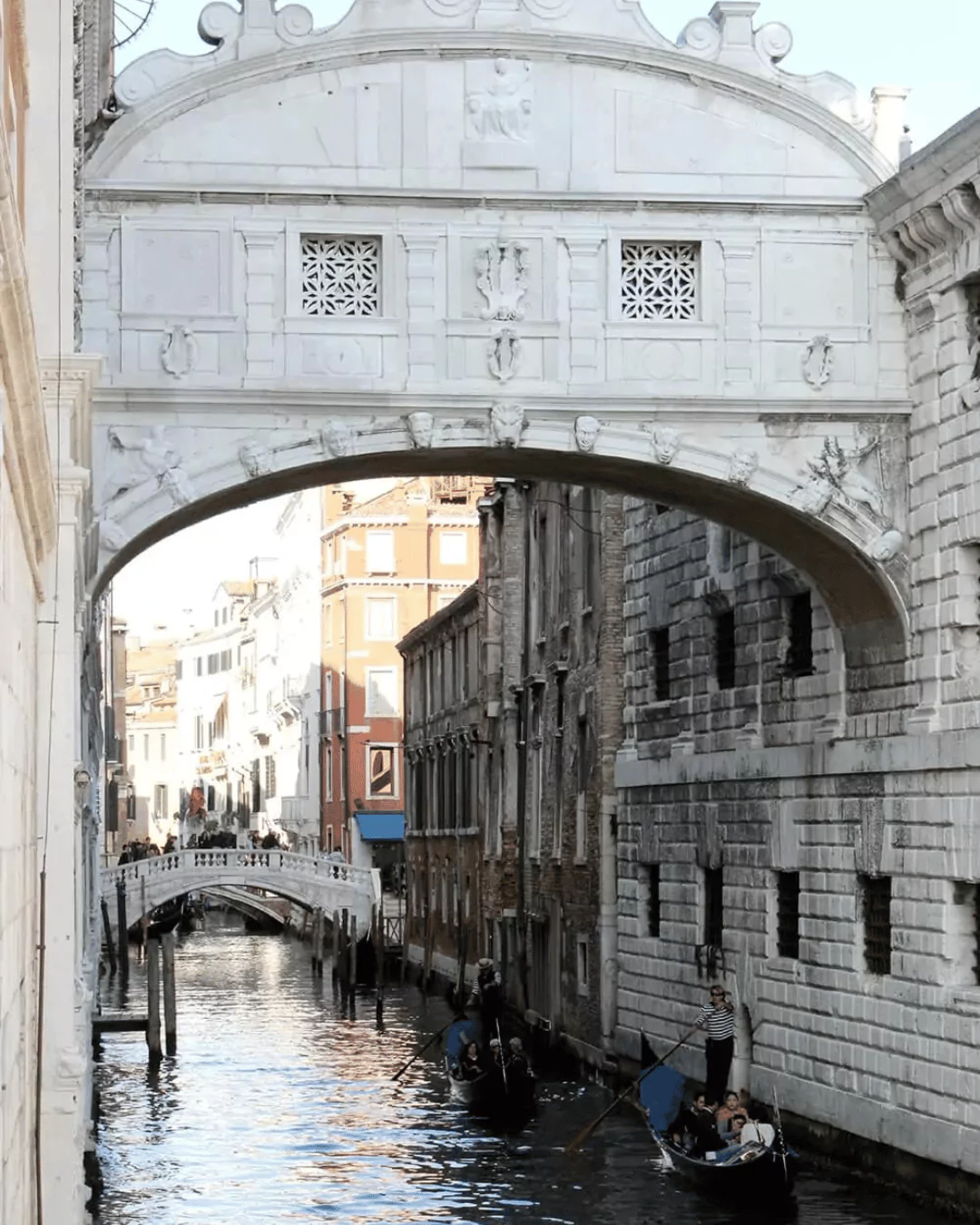
Doge’s Palace and the Bridge of Sighs
Just a minute walk from the square, head to the Doge’s Palace, once the political and judicial heart of Venice. The palace is a prime example of Venetian Gothic architecture with it’s intricate stone carvings, and stunning arches.
You can explore the grand halls, the Doge’s apartments, and the prison cells. The palace also houses an extensive collection of art and historical artifacts.
Don’t miss walking across the Bridge of Sighs, where prisoners took their last look at Venice before being incarcerated. It connected the Doge’s Palace to the old prisons and was used by prisoners as they were led to their cells.
Many tours combine visits to both the Doge’s Palace and the Bridge of Sighs. The Secret Itineraries tour, which takes you through hidden passages and into the palace’s ancient prisons, including the cell of Casanova.
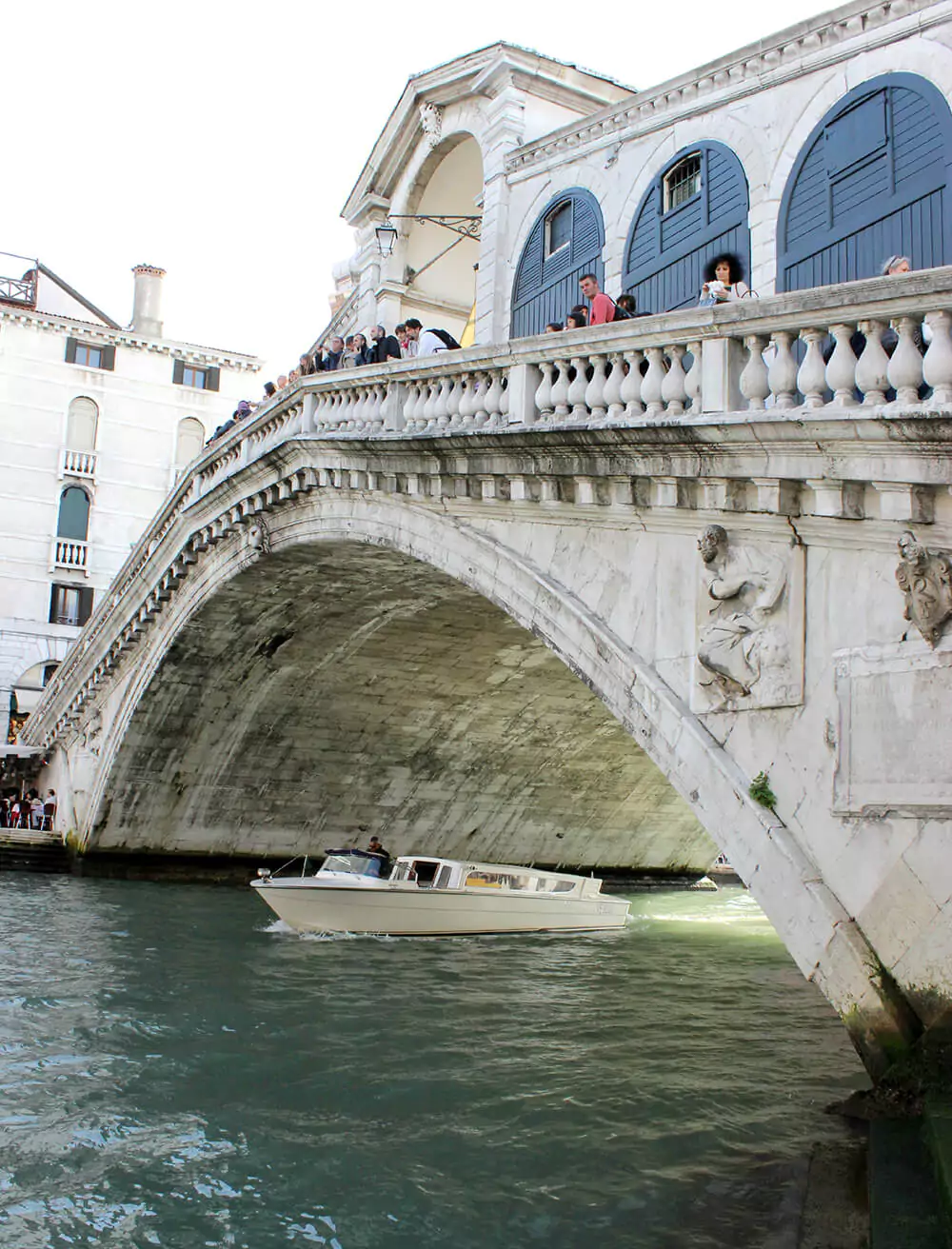
Midday: Rialto Bridge and Market
From St. Mark’s, make your way to the Rialto Bridge, one of Venice’s most iconic landmarks.
Rialto Bridge
The Rialto Bridge is the oldest of the four bridges spanning the Grand Canal and has been a central crossing point since its original construction in the 12th century.
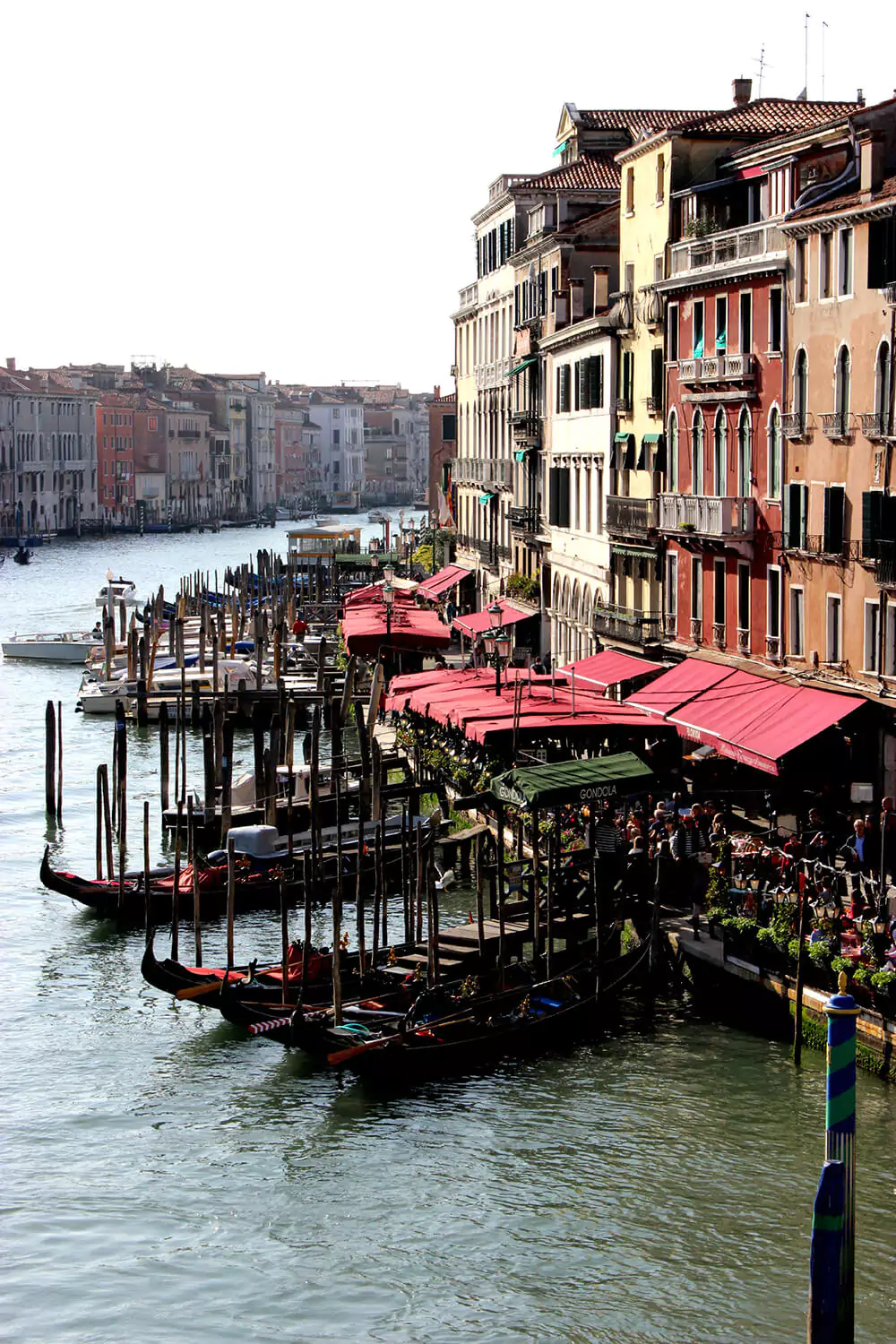
From this historic bridge, you get stunning views of the Grand Canal, including beautiful Venetian buildings and gondolas in the water. Take your time to snap photos!
Just a short walk from the bridge is the Rialto Market, where locals shop for fresh produce and seafood. The Rialto Market has been a central hub for trade since the 11th century, making it one of Venice’s oldest markets.
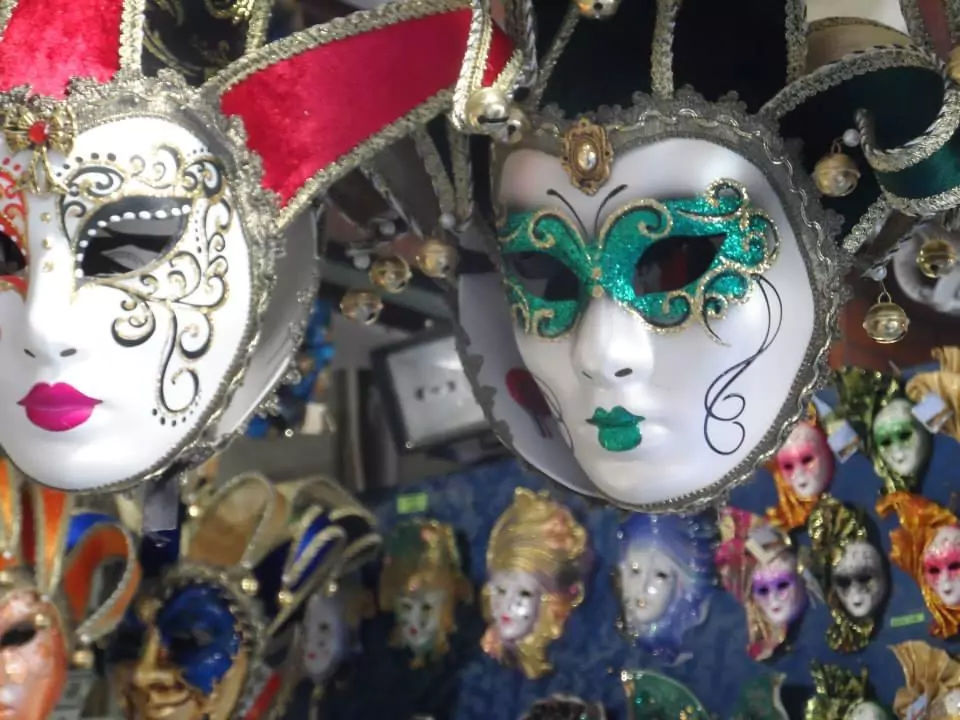
Shop for a Venetian Mask
Venetian masks have a long history, dating back to the 13th century. They were originally worn during the Carnival of Venice, a festival that allowed people to hide their identities and break free from the rigid social hierarchies of the time.
Venetian masks are crafted by skilled artisans using traditional techniques that have been passed down through generations.
- Bauta: full-face mask with a square jawline, a prominent nose, and no mouth opening. The Bauta was often worn with a black cloak and a tricorn hat.
- Moretta: small, oval-shaped mask traditionally worn by women. It is usually made of black velvet and covers the face entirely, with no mouth opening.
- Volto (Larva): white, ghost-like mask that covers the entire face. It is often worn with a tricorn hat and a cloak.
- Colombina: half-mask that covers only the upper part of the face, leaving the mouth visible. It is often richly decorated with gold, silver, crystals, and feathers.
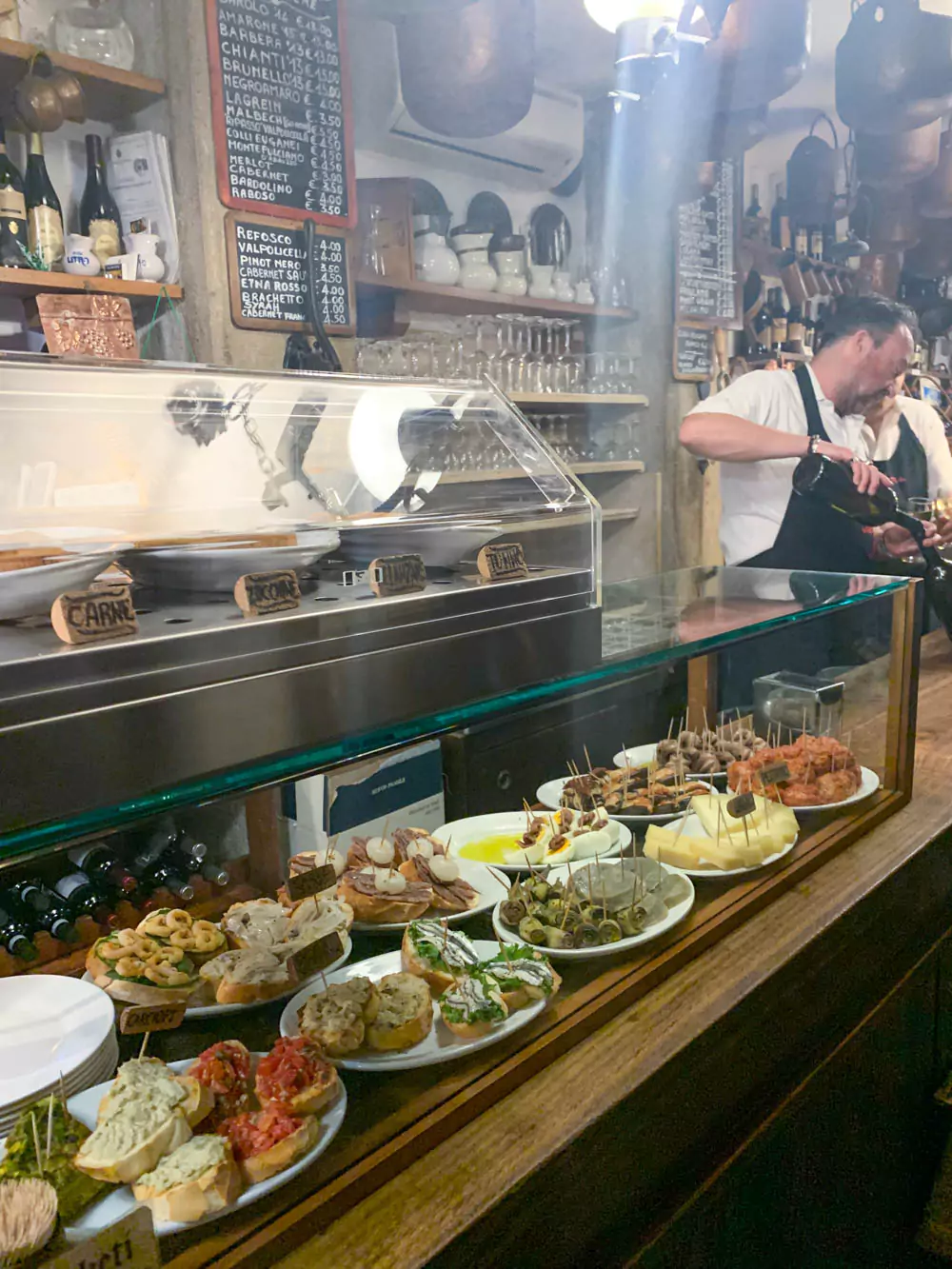
Lunch: Traditional Venetian Cuisine
For lunch, indulge in a meal at a traditional Venetian trattoria near the Rialto area. You might opt for a pizza at Antico Forno, known for its thick, Roman-style slices, or head to Trattoria alla Madonna for some of the freshest seafood in Venice. We ate some of the best cicchetti in Venice Italy at Cantina Do Mori.

Afternoon: Exploring Cannaregio District
After lunch, head to the Cannaregio district, one of Venice’s less touristy areas, full of local charm.
Jewish Ghetto
Start your exploration in the Jewish Ghetto, one of the oldest in the world. Established in 1516, Venice’s Jewish Ghetto was the first in the world. The term “ghetto” originated from the Venetian word “gheto,” meaning “foundry”—the area was originally a site for a foundry.
The ghetto is characterized by its narrow streets, charming squares, and distinctive architecture. The buildings here are unique due to the constraints of the ghetto’s original boundaries, leading to taller, narrower structures.
There are many guided walking tours available that go into the history of the ghetto, it’s Venetian history and the experiences of the Jewish population that lived there.
Ca’ d’Oro
Continue your afternoon with a visit to Ca’ d’Oro, or House of Gold, a stunning Venetian Gothic architecture overlooking the Grand Canal.
The palace is now home to the Galleria Giorgio Franchetti, which houses an impressive collection of art and antiques, including sculptures, paintings, and period furnishings.
The view from the palace offers a beautiful perspective of the canal and the surrounding architecture.

Evening: Sunset and Dinner by the Grand Canal
As the sun begins to set, head back towards the Grand Canal for a relaxing evening.
Dinner by the Grand Canal
Choose a restaurant with a view, such as Riva del Vin, L’Alcova Restaurant, or Osteria Bancogiro, and enjoy a leisurely dinner as you watch the boats go by on the canal.
Here’s a couple of options for the best places to eat in Venice Italy:
- Cafe Florian – One of the oldest operating cafes in the world.
- Trattoria Dona Onesta – The ambiance is authentic and location of the restaurant overlooking the canal is just magical.
- Ristorante Bakaro – Beautiful plaza dining or a quiet bistro inside if you prefer. They have fresh ingredients prepared very well and the menus change seasonally.
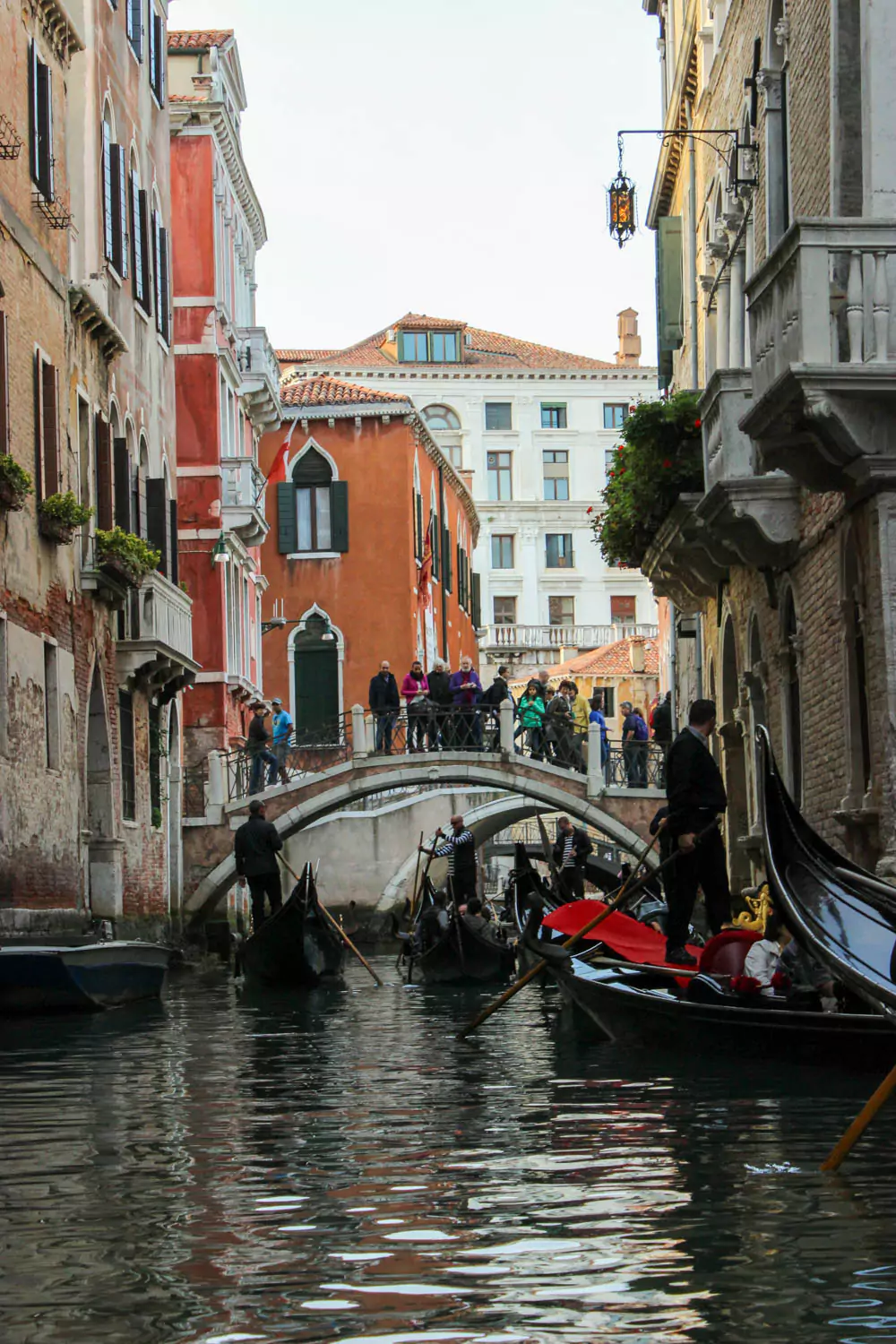
Gondola Ride
No visit to Venice is complete without a gondola ride. Gondola rides typically last between 30 minutes to an hour. Prices for gondola rides can vary, with standard rates typically being around €80 for a 30-minute ride. Be sure to confirm the cost before boarding.
- Grand Canal: The gondola stations at the Grand Canal are typically located near the Rialto Bridge or the train station Venezia Santa Lucia.
- Smaller Canals: Gondola stations in areas like San Marco or Dorsoduro can lead you to these smaller, charming canals. You’ll encounter charming bridges, quaint houses, and less crowded areas.
- Canal of San Giorgio: You can catch a gondola ride near the San Giorgio Maggiore island or from nearby spots like the Accademia Bridge. Enjoy views of the Basilica of San Giorgio Maggiore and the islands of the lagoon.
- Rialto Area: Gondola stations are available near the Rialto Bridge and the surrounding area. Views of the Rialto Bridge and market area.
Day 2: Art, Culture, and Island Exploration
Morning: Venice’s Art Treasures
Start your second day in Venice by diving into its art scene.
Gallerie dell’Accademia
Begin with a visit to the Gallerie dell’Accademia, Venice’s premier art museum. You can view masterpieces by Venetian painters like Titian, Tintoretto, and Bellini. The museum’s vast collection spans centuries and offers a deep dive into the artistic history of Venice.
Peggy Guggenheim Collection
Next, head to the Peggy Guggenheim Collection, located in a beautiful palazzo on the Grand Canal. This museum showcases an impressive collection of modern art, featuring works by Picasso, Pollock, and Dalí. After exploring the galleries, take a stroll along the nearby Zattere promenade for beautiful views across the water.
Lunch: Dining in Dorsoduro
For lunch, stay in the Dorsoduro district and enjoy a meal at one of the local cafes or trattorias. Cantinone Storico offers a cozy atmosphere with delicious Venetian dishes, while La Bitta is a great choice for hearty, traditional fare.
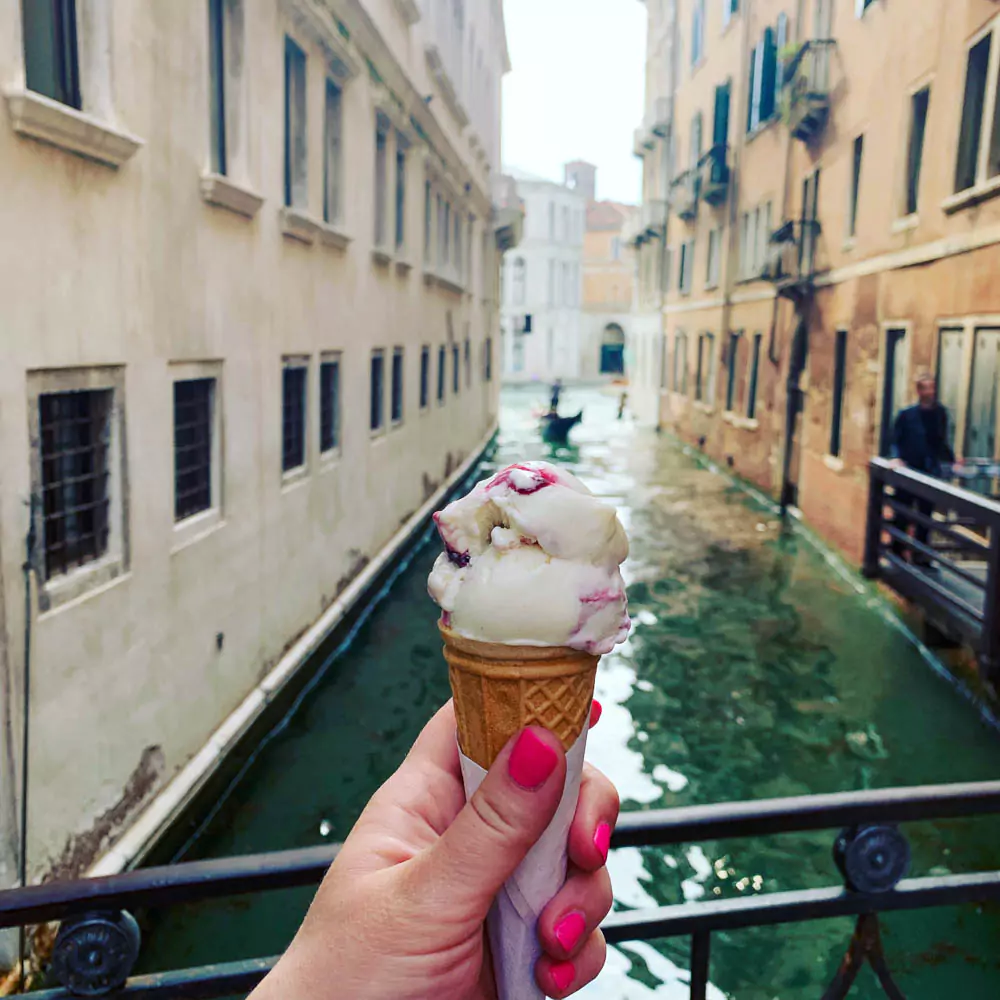
Here’s some of the tops places for gelato:
Afternoon: Island Hopping to Murano and Burano
After lunch, take a day trip to two of Venice’s most famous islands: Murano and Burano. There’s also a ton more islands to explore, so be sure you find the one you want to spend time visiting! Here’s some other places that are worth a day trip from Venice, like Verona or Cinque Terre.
Murano
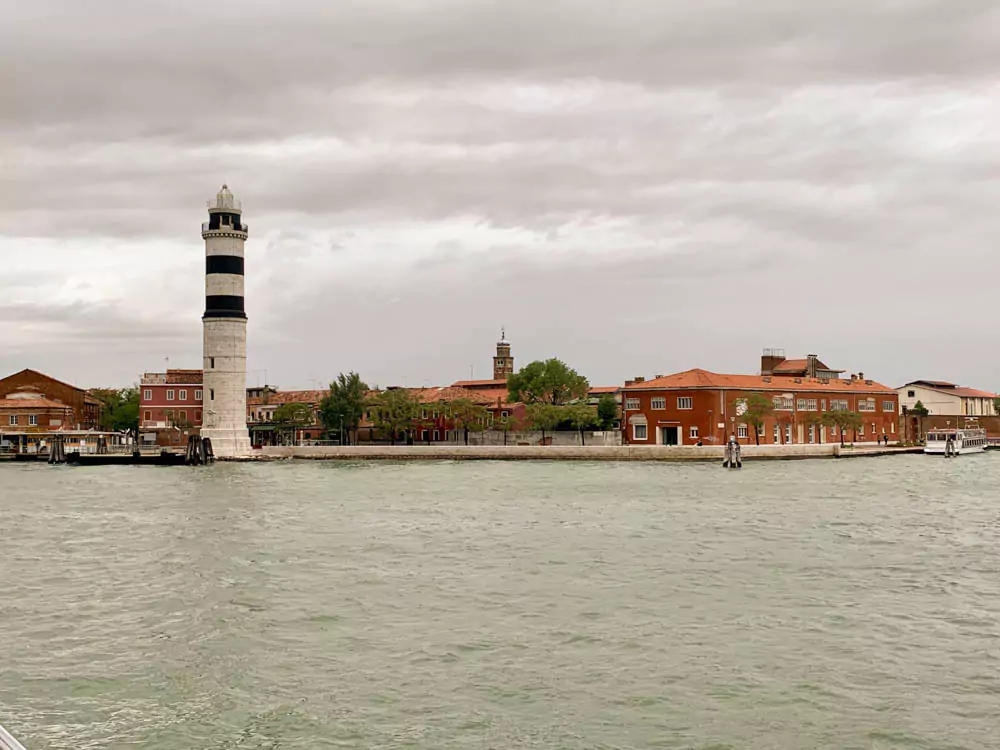
Take a 15 minute vaporetto (water bus) (or private water taxi) to Murano, known for its glassmaking. Visit a glass factory to see artisans at work and learn about the intricate process of creating Murano glass. The Museo del Vetro (Glass Museum) offers an in-depth look at the history and development of glassmaking on the island.
Murano is less crowded than central Venice and offers a more relaxed atmosphere. The island’s canals, colorful buildings, and quiet streets create a charming and peaceful setting.
Burano
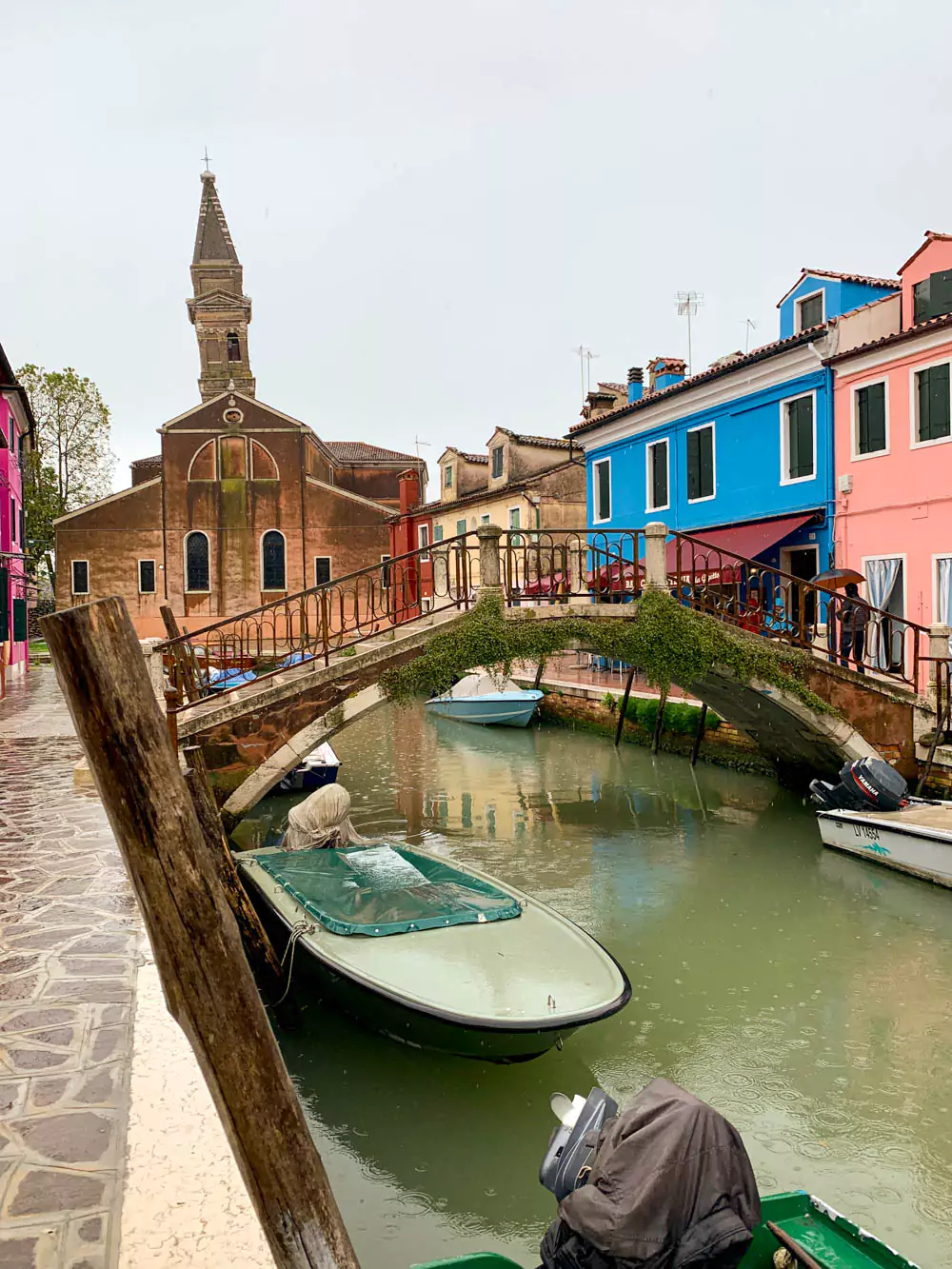
From Murano, continue on to Burano, a small island famous for its brightly colored houses and lace-making tradition. The tradition of painting houses in bright hues dates back to the 16th century.
The Museo del Merletto (Lace Museum) provides an in-depth look at the history and techniques of Burano’s lace-making. It features a collection of lace pieces and tools used in the craft.
Burano is known for its excellent seafood restaurants such as risotto al nero di seppia (squid ink risotto).
Evening: Return to Venice and Farewell Dinner
As the afternoon fades, return to Venice and enjoy a final evening in the city.
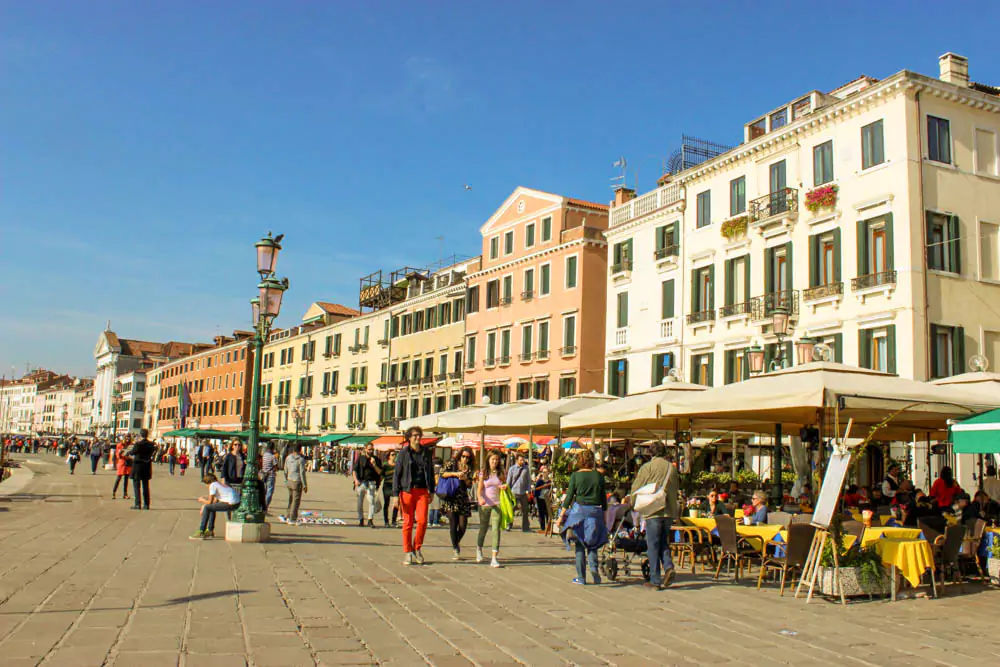
Stroll along the Riva degli Schiavoni
After returning to Venice, take a leisurely stroll along the Riva degli Schiavoni. This waterfront promenade offers stunning views of the lagoon and is a perfect place to enjoy a gelato and reflect on your time in Venice.

Farewell Dinner
For your last dinner in Venice, choose a quieter, more intimate restaurant. Algiubagio offers a refined dining experience with beautiful views, or you can opt for Trattoria da Fiore for a cozy and traditional meal.
Some restaurants offer set menus for tourists, which can be reasonably priced, but quality varies, and it may not represent the best of Venetian cuisine.
Here’s a couple of most popular restaurants for dinner in Venice:


Venice Travel Tips
Get a Venice Card – Consider purchasing a Venice Card (Venezia Unica) for access to public transportation, attractions, and discounts. It can streamline your visit and save money.
Navigate the Canals – Vaporetto: Use the Vaporetto (water bus) to travel around the city and get a different perspective of Venice. It’s a convenient and scenic way to explore.
Explore on Foot – Venice’s narrow streets and hidden squares are best explored on foot. Wear comfortable shoes and be prepared for some getting lost—it’s part of the charm!
Avoid Peak Times – Visit popular attractions like St. Mark’s Basilica and the Doge’s Palace early in the morning or later in the afternoon to avoid large crowds.
Respect Local Customs – When visiting churches and religious sites, dress modestly. Cover your shoulders and knees.
Watch for Tides -Be aware of “acqua alta” (high water) events, which can cause flooding in some areas. Check tide forecasts and be prepared with waterproof footwear if necessary.
Use Local Maps and Apps – Venice’s layout can be confusing. Use a map or a navigation app to help find your way, especially if you plan to explore less touristy areas. Open Google maps and save these locations to plan for your Venice one day tour.
Respect the Environment – Dispose of your trash properly and avoid littering. Venice is a fragile city, and preserving its beauty is crucial.
Learn Basic Italian Phrases – While many people in Venice speak English, learning a few basic Italian phrases can enhance your experience and show respect for the local culture.


The best time to do this 2 Day Itinerary Venice Italy
While we visited in May for our anniversary, we got rained on both days. While wearing ponchos are fun, you may not be interested in being soaked for your trip! Make sure you check the weather before you go.
The best time to visit Venice depends on your preferences and what you want to experience. Venice is a beautiful city with something to offer year-round, but each season has its own unique charm and considerations. Here’s a breakdown of the different seasons:
Spring (March to May)
- Spring is a great time to visit Venice. The weather is generally mild, and the city’s gardens and parks are in full bloom.
- Tourist crowds are smaller compared to the summer months, making it a more pleasant experience for sightseeing.
- Be prepared for occasional rain, so bring an umbrella and some waterproof clothing.
Summer (June to August)
- Summer is the peak tourist season in Venice. The city can get extremely crowded, and prices for accommodations are at their highest.
- The weather is warm and sunny, but it can also be hot and humid. Be prepared for occasional high water levels (aqua alta) in some parts of the city.
- If you visit during this time, consider early morning and late evening for sightseeing to avoid the crowds.
Autumn (September to November):
- Early autumn is a fantastic time to visit Venice. The weather is still pleasant, and the tourist crowds start to thin out after the summer peak.
- September and October are great months for exploring the city, as the temperatures are comfortable, and the city’s canals and squares are less crowded.
Winter (December to February):
- Winter is the quietest and least crowded time in Venice. You’ll have many of the city’s attractions to yourself, and you can experience a more local, authentic side of Venice.
- Venice can be chilly and damp in the winter, with occasional fog and acqua alta (high water). Be prepared for the possibility of flooding in some areas.
- This is a great time to enjoy Venice’s cultural offerings, such as the opera and the Carnival of Venice, which takes place in late January to early February.
The best time to visit Venice depends on your tolerance for crowds and your weather preferences. Late spring and early autumn are the most pleasant times to visit, as the weather is generally favorable, and the crowds are more manageable. However, each season has its own unique appeal, and the city’s beauty remains on display year-round.

 |
 |
Where to stay in Venice
For us, the best place to stay in Venice, Italy was the Ca’ Sagredo Hotel which was rated 5 stars when we stayed. It’s a luxury boutique hotel on the Grand Canal.
Venice is a magical city, and where you stay can really enhance your experience. Here are some great areas and hotels to consider:
San Marco (Central Venice)
- Hotel Danieli: A luxurious and iconic hotel with stunning views and opulent interiors.
- Bauer Palazzo: A beautiful hotel with a classic Venetian charm and great views of the Grand Canal.
Dorsoduro (Artistic and Quieter)
- Ca’ Maria Adele: A boutique hotel with a unique, artistic flair and a quieter, more local feel.
- Hotel Antiche Figure: Located near the train station but in a charming part of Dorsoduro, offering a mix of convenience and authenticity.
Cannaregio (Local and Lively)
- Hotel Ai Mori d’Oriente: A charming hotel with a touch of oriental decor and a great location in Cannaregio.
- Hotel Ca’ d’Oro: A stylish hotel with a perfect blend of comfort and tradition, situated near the Grand Canal.
Castello (Historical and Less Touristy)
- Hotel Sant’Elena: Located in a more residential area, offering a peaceful retreat with beautiful gardens.
- Hotel Campiello: A cozy and affordable option with a traditional Venetian feel.
Lido (Beach and Relaxation)
- Hotel Excelsior Venice Lido Resort: A luxury resort with a private beach and stunning views of the Adriatic.
- Hotel Villa Mabapa: A charming hotel with beautiful gardens and easy access to the beach.
Budget-Friendly Options
- Hotel Antico Panada: A well-priced option with a great location near Piazza San Marco.
- Hotel Abbazia: Located close to the train station, it’s a good value with comfortable accommodations.
Map of this Venice Itinerary
FAQs about visiting Venice
Is 2 days enough to see Venice?
Yes, 2 days in Venice is enough to see the city’s main highlights, including St. Mark’s Basilica, the Doge’s Palace, the Grand Canal, and the Rialto Bridge, while also allowing time to explore local neighborhoods.
What are the must-see attractions in Venice in 2 days?
Must-see attractions for a 2-day Venice itinerary include St. Mark’s Basilica, Doge’s Palace, the Rialto Bridge, a gondola ride, the Grand Canal, and the colorful island of Burano or Murano.
What is the best way to get around Venice in 2 days?
The best way to get around Venice is on foot or by using the Vaporetto (water bus). Gondolas and water taxis are available but can be more expensive.
Is the Venice Vaporetto pass worth it for 2 days?
Yes, the Vaporetto pass is worth it for 2 days if you plan to visit multiple locations, including Murano or Burano, as it provides unlimited rides on public water transport.
Where should I stay in Venice for a 2-day visit?
The best areas to stay in Venice for a 2-day visit are San Marco (central and close to attractions), Cannaregio (local feel with budget-friendly options), or Dorsoduro (artistic and less crowded).
What should I eat in Venice during a 2-day trip?
Must-try foods in Venice include Cicchetti (Venetian tapas), Risotto al Nero di Seppia (squid ink risotto), Sarde in Saor (sweet and sour sardines), and traditional Tiramisu.
Can I visit Murano and Burano in a 2-day Venice itinerary?
Yes, visiting Murano and Burano is possible in 2 days. Allocate half a day to these islands to explore Murano’s glass-blowing tradition and Burano’s colorful streets.
Do I need to book Venice attractions in advance?
Yes, booking tickets in advance for popular attractions like St. Mark’s Basilica, Doge’s Palace, and gondola rides is recommended to avoid long lines.
What is the best time of year to visit Venice for 2 days?
The best time to visit Venice is during spring (April-June) or fall (September-October) when the weather is pleasant and crowds are smaller compared to peak summer months.
How much should I budget for 2 days in Venice?
A mid-range budget for 2 days in Venice is around €150-€250 per person per day, covering accommodation, food, transport, and entrance fees.

Final thoughts on this 2 day Itinerary Venice, Italy
This 2 day itinerary offers a comprehensive exploration of Venice, blending the city’s iconic sights with its rich cultural heritage and charming island life.
Whether it’s your first visit or a return trip, these two days will leave you with unforgettable memories of this magical city.
Already been? What’s your favorite thing to do in Venice? Let me know in the comments below!
Useful resources for your trip to Venice, Italy
- The 17 Best Things To Do in Venice
- 20 Beautiful Day Trips From Venice Italy
- 10 Best Things To Do in Burano Italy
- 1 Day in Venice Itinerary (Yes, It’s Possible!)
- Italy Packing List: What to Pack for Italy
- The Most Romantic Destinations in Italy
- Here’s how we turned our Italian honeymoon into the trip of a lifetime.
Like this post? Share it on Pinterest!
 |
 |
Follow + Share
Loved this guide? Let’s keep the adventure going! Follow me on Instagram to see where I’m headed next—and don’t forget to check out my travel hashtag #TravelWithKinsley for more trip inspiration.
If this post helped you plan your trip, I’d be so grateful if you’d share it with a friend or pin it for later! You can also follow me on Pinterest for more detailed itineraries, destination ideas, and travel tips from around the world.
Thanks for being here—it means the world!
- Trains: Check Omio to search schedules and buy tickets
- Flights: Find the cheapest flights on Booking.com
- Airport transfer: Get a quote & book here
- Grand Canal by Gondola
- St Mark’s Basilica, Doge Palace, & Bell Tower Option
- Venetian Masks Workshop
- Street Food Tour with a Local Guide and Tastings
