Visiting Hahoe Folk Village in Andong, South Korea

Travel With Kinsley contains affiliate links and is a member of the Amazon Services LLC Associates Program, which means I may receive a cute little commission if you purchase through my links, at no extra cost to you. Please read full disclosure for more information.
Hahoe Village in Andong, South Korea, is one of the country’s most picturesque and well-preserved folk villages, offering visitors a glimpse into Korea’s traditional lifestyle, architecture, and customs.
Known for its thatched-roof houses, ancestral shrines, and beautiful riverside setting, Hahoe Village has been designated a UNESCO World Heritage Site and is celebrated for maintaining the cultural heritage of the Joseon Dynasty (1392–1910).
Here’s a guide to visiting Hahoe Village, from what to see to practical tips for exploring this charming village.

Why Visit Hahoe Village?
Hahoe Village is unique because it preserves the traditional lifestyle, Confucian culture, and architecture of the Joseon period.
The village has been continuously inhabited for centuries, with many of its residents descended from the Ryu clan, one of Korea’s prominent families.
The village’s location along the Nakdong River and surrounded by scenic mountains, adds to its allure and offers a peaceful, timeless atmosphere.
Hahoe Village is also known for Andong Mask Dance performances and traditional Korean mask-making, making it an excellent destination for anyone interested in Korean folklore, arts, and history.

Getting to Hahoe Village
Hahoe Village is located near Andong, making it easily accessible for a day trip or overnight stay:
From Andong: Take Bus #46 from Andong Bus Terminal or Andong Station. The bus ride takes approximately 40 minutes and will drop you off near the entrance to the village.
From Seoul: Take an intercity bus or KTX train to Andong (approximately 2-3 hours), and then transfer to Bus #46 to reach Hahoe Village.
By Taxi: Taxis are also available from Andong Station or Bus Terminal and take around 30 minutes to reach Hahoe Village. The fare is approximately 20,000–25,000 KRW.


Highlights of Hahoe Village
Traditional Joseon-Era Houses
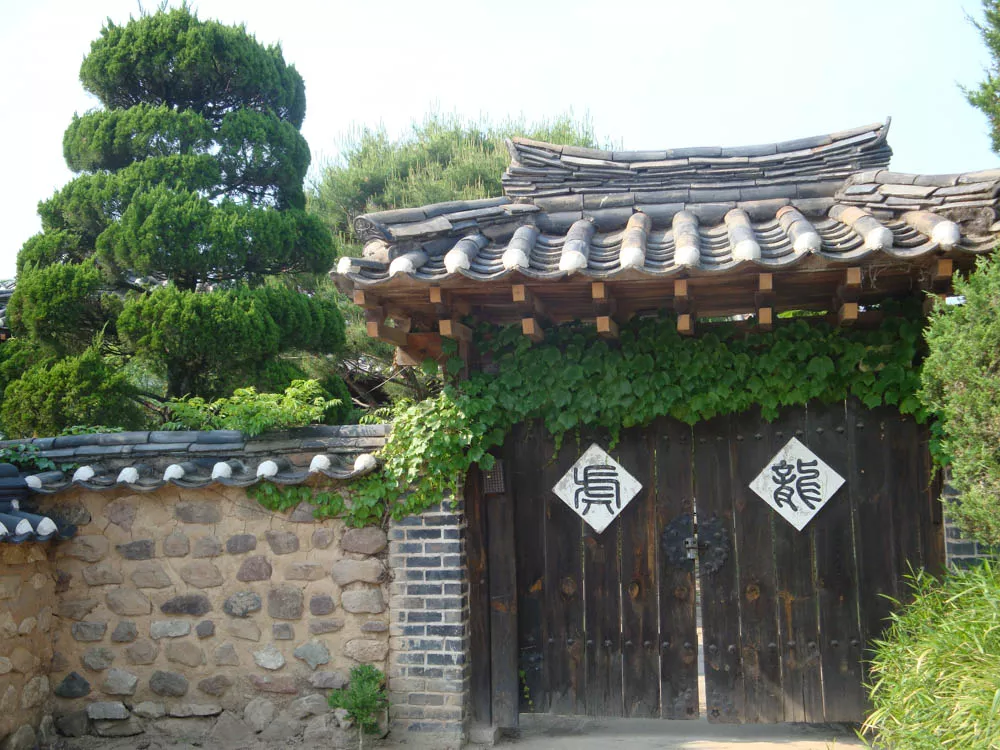
Hahoe Village is famous for its traditional hanok houses, which include both thatched-roof houses (for commoners) and tiled-roof houses (for the yangban, or noble class). These structures showcase the architectural styles and social hierarchy of the Joseon Dynasty.
Some houses, like the Chunghyodang House, are open to the public and offer a look at the architecture and lifestyle of Korea’s upper class. Many of the houses are still inhabited by descendants of the Ryu family, adding to the authenticity of the village.

Buyongdae Cliff and Nakdong River Views
The Buyongdae Cliff offers one of the best views of Hahoe Village and the surrounding landscape. You can reach it by crossing the Nakdong River via a ferry, which adds a scenic and traditional touch to your visit.
From Buyongdae, you’ll have a panoramic view of the entire village, the river, and the nearby mountains, which makes for excellent photo opportunities, especially in autumn when the foliage is at its peak.

Hahoe Mask Museum
The Hahoe Mask Museum is located near the village entrance and showcases traditional Korean masks, many of which are used in the famous Andong Mask Dance. The museum houses a variety of Hahoe masks representing different characters, social classes, and animals.
The masks and their expressions play a significant role in Korean culture, often used to represent satire, humor, and social commentary. A visit to the museum provides insight into Korea’s mask dance traditions and the symbolism behind the various characters.
Andong Hahoe Mask Dance
One of the highlights of Hahoe Village is the Hahoe Mask Dance performance, held regularly in an outdoor theater near the village. The mask dance, known as Hahoe Byeolsingut Talnori, is a traditional folk dance that features masked performers acting out humorous and satirical stories.
The performance offers a lively glimpse into Korean folklore, often poking fun at the upper class and reflecting Confucian values. Watching the mask dance is a unique cultural experience that brings the village’s traditions to life.
Pungsan Ryu Family Ancestral Shrine
The Pungsan Ryu family, the founding family of Hahoe Village, built ancestral shrines to honor their forebears. The Ryu family ancestral shrine is an important site in the village and represents the Confucian values of filial piety and respect for ancestors that were integral to the Joseon society.
The shrine and other Confucian academies in the village offer a look into the family’s traditions and the cultural practices that were maintained through generations.

Hahoe Seowon (Confucian Academy)
The Hahoe Seowon is a Confucian academy located within the village. Historically, it served as an educational institution for the yangban class, where scholars studied Confucian classics and philosophy.
Visiting the seowon provides insight into the Confucian educational system, which played a crucial role in Korean society during the Joseon Dynasty, and reflects the academic and cultural heritage of Hahoe Village.
Samsindang Tree
The Samsindang Tree, a 600-year-old zelkova tree, stands as a sacred symbol in Hahoe Village. Local legends say that the tree is home to a guardian spirit, and villagers have traditionally offered prayers and tied wishes to the tree for blessings and protection.
The Samsindang Tree holds spiritual significance for the village, making it a peaceful and symbolic spot to visit and take part in a time-honored tradition.
Tips for Visiting Hahoe Village
Admission Fees: Entry to Hahoe Village costs approximately 5,000 KRW for adults, 2,500 KRW for teenagers, and 1,500 KRW for children. The fee includes access to all public areas within the village.
Best Time to Visit: Spring (April) and autumn (October) are the best times to visit Hahoe Village. The cherry blossoms in spring and vibrant autumn foliage create a stunning backdrop for the traditional houses and scenic landscapes.
Wear Comfortable Shoes: Hahoe Village has uneven, cobblestone paths, so it’s a good idea to wear comfortable walking shoes, as you’ll be walking a lot to explore the various sights.
Catch a Mask Dance Performance: If possible, plan your visit to coincide with one of the Hahoe Mask Dance performances. Performances are typically held on weekends or during festivals, but schedules may vary, so check ahead to avoid missing this cultural highlight.
Respect Residents’ Privacy: Hahoe Village is a living community, with many residents still occupying traditional houses. While most homes and paths are open to the public, it’s essential to respect residents’ privacy by not peeking into windows or entering private areas.
Pack Snacks and Water: There are a few shops and cafes around the entrance, but options inside the village may be limited, especially during non-peak seasons. Bringing water and light snacks is helpful, especially if you plan to spend a few hours exploring.

