10 Best Day Trips from Nuremberg: Castles & Medieval Towns

Travel With Kinsley contains affiliate links and is a member of the Amazon Services LLC Associates Program, which means I may receive a cute little commission if you purchase through my links, at no extra cost to you. Please read full disclosure for more information.
Imagine sipping a smoky beer in Bamberg’s medieval town square, wandering the cobbled streets of Rothenburg ob der Tauber, or stepping inside the grandeur of Würzburg’s Residenz Palace—all just a short trip from Nuremberg! Which adventure will you choose?
Nuremberg is a historic city, but one of its biggest perks is its perfect location for exploring the heart of Bavaria and Franconia.
From the half-timbered charm of Rothenburg ob der Tauber to the beer culture of Bamberg, and from Regensburg’s stunning Danube setting to the university town of Heidelberg, each destination offers a unique experience.
History lovers can explore Augsburg’s Renaissance history or Würzburg’s Residenz Palace, while nature enthusiasts can escape to the rocky landscapes of Franconian Switzerland.
If you’re after a romantic riverside stroll, Dinkelsbühl and its medieval charm will win you over. And for a real fairytale experience, don’t miss a trip to Neuschwanstein Castle, Germany’s most famous palace.
Whether you want cultural sights, scenic countryside, or legendary Bavarian beer gardens, these best day trips from Nuremberg will fill your itinerary with unforgettable adventures.
After traveling through Bavaria, I’ve discovered some of the most breathtaking day trips from Nuremberg — this guide includes some of my absolute favorites!
💡 What’s Inside This Guide?
- ✔ Best historical towns & scenic day trips
- ✔ Travel tips & transport recommendations
- ✔ Local food & drink highlights

1. Munich
Travel Time: ~1 hour by train
A day trip to Munich from Nuremberg is the perfect way to experience Bavaria’s vibrant capital. Just one hour by train, Munich blends centuries-old history with lively beer gardens, world-class museums, and stunning royal palaces.
Why Visit?
- Rich History: Explore medieval churches, royal palaces, and WWII sites.
- Beer Culture: Visit the legendary Hofbräuhaus and Munich’s historic beer gardens.
- Cultural Hub: Home to art museums, historic landmarks, and lively markets.
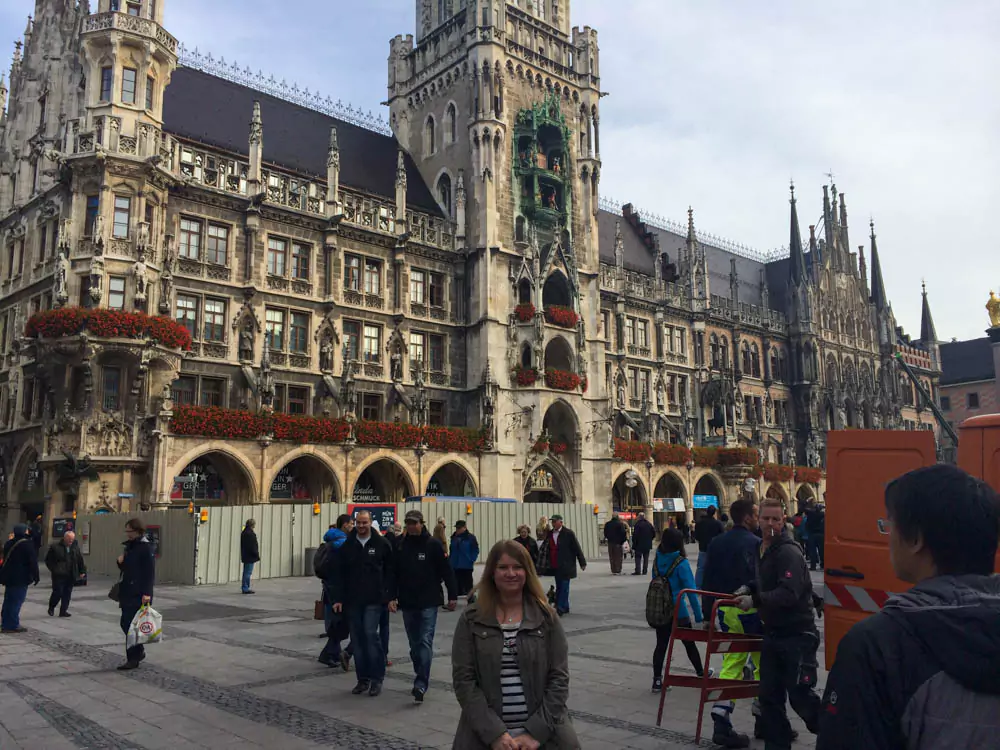
Best Things to Do in Munich on a Day Trip
1️⃣ Start at Marienplatz & the Glockenspiel
Begin your Munich adventure in Marienplatz, the city’s main square since 1158. Here, you’ll find the iconic Neues Rathaus (New Town Hall) and its famous Glockenspiel show, which reenacts Bavarian history daily at 11 AM and 12 PM.
2️⃣ Stroll Through Viktualienmarkt
Just a short walk from Marienplatz, the Viktualienmarkt is Munich’s largest open-air market, perfect for grabbing a quick bite. Try a fresh pretzel, local cheese, or an authentic Bavarian sausage.
3️⃣ Visit the Residenz Palace
Step into Bavarian royalty at the Munich Residenz, one of Europe’s most opulent palaces. Explore the stunning Antiquarium Hall, gold-adorned rooms, and the treasury filled with royal artifacts.
4️⃣ Walk Through the Englischer Garten
For a breath of fresh air, head to the Englischer Garten, one of the largest urban parks in the world. Watch surfers ride the waves at the famous Eisbach River and relax at the Chinesischer Turm (Chinese Tower) Beer Garden.
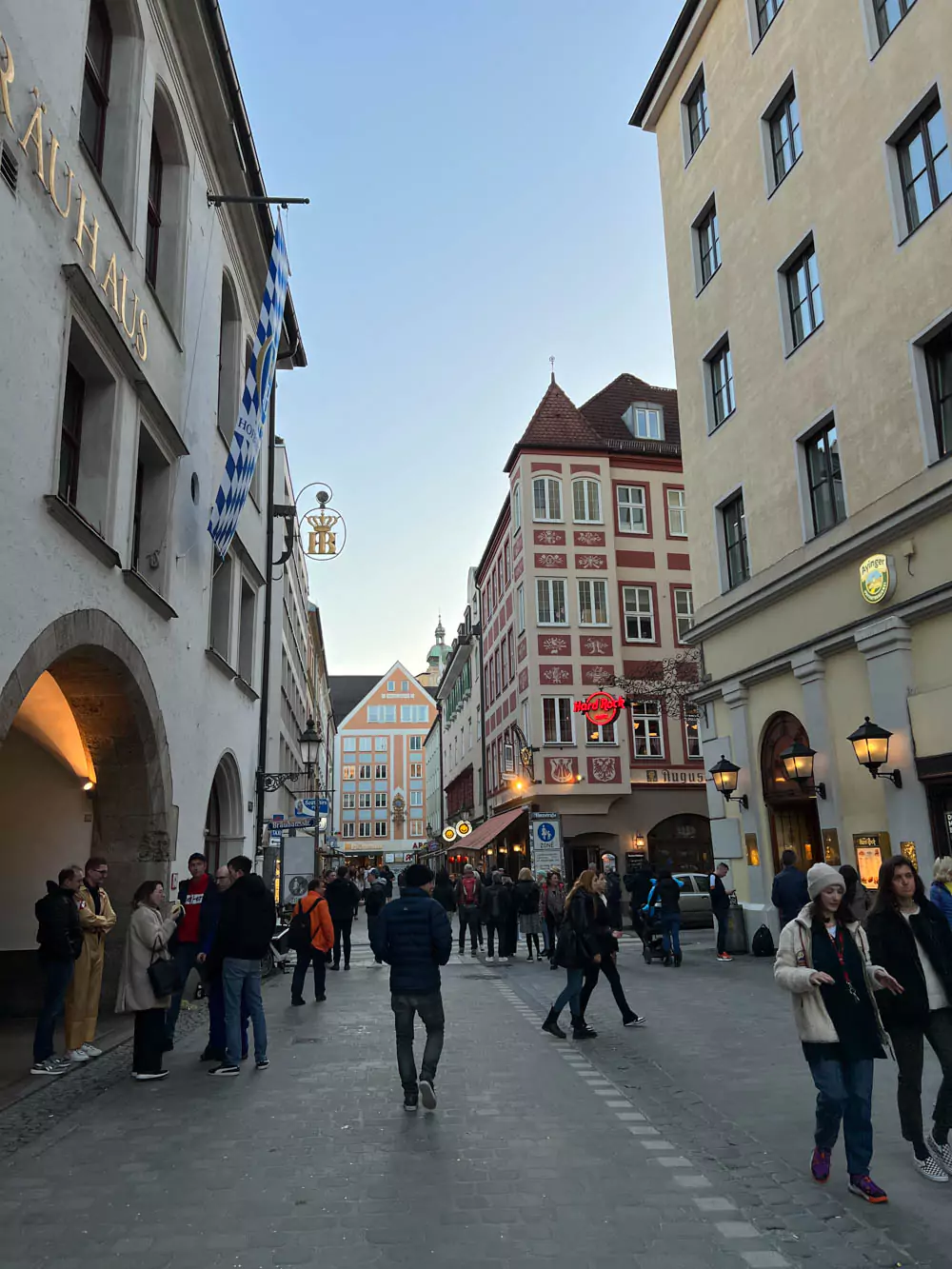
5️⃣ Grab a Beer at Hofbräuhaus
No trip to Munich is complete without a visit to the historic Hofbräuhaus, founded in 1589. Sip on a stein of Bavarian beer, enjoy traditional music, and soak in the lively beer hall atmosphere.
6️⃣ End the Day at Nymphenburg Palace (Optional)
If you have extra time, take a short tram ride to the stunning Nymphenburg Palace. Walk through its beautiful gardens and explore the lavish interiors of this Baroque masterpiece.
Getting to Munich from Nuremberg
- By Train: The fastest and easiest way to travel. Direct trains run every 30 minutes, taking ~1 hour.
- By Car: A scenic 1.5-hour drive along the Autobahn.
- By Bus: Budget-friendly option (~2 hours). Check FlixBus for schedules.
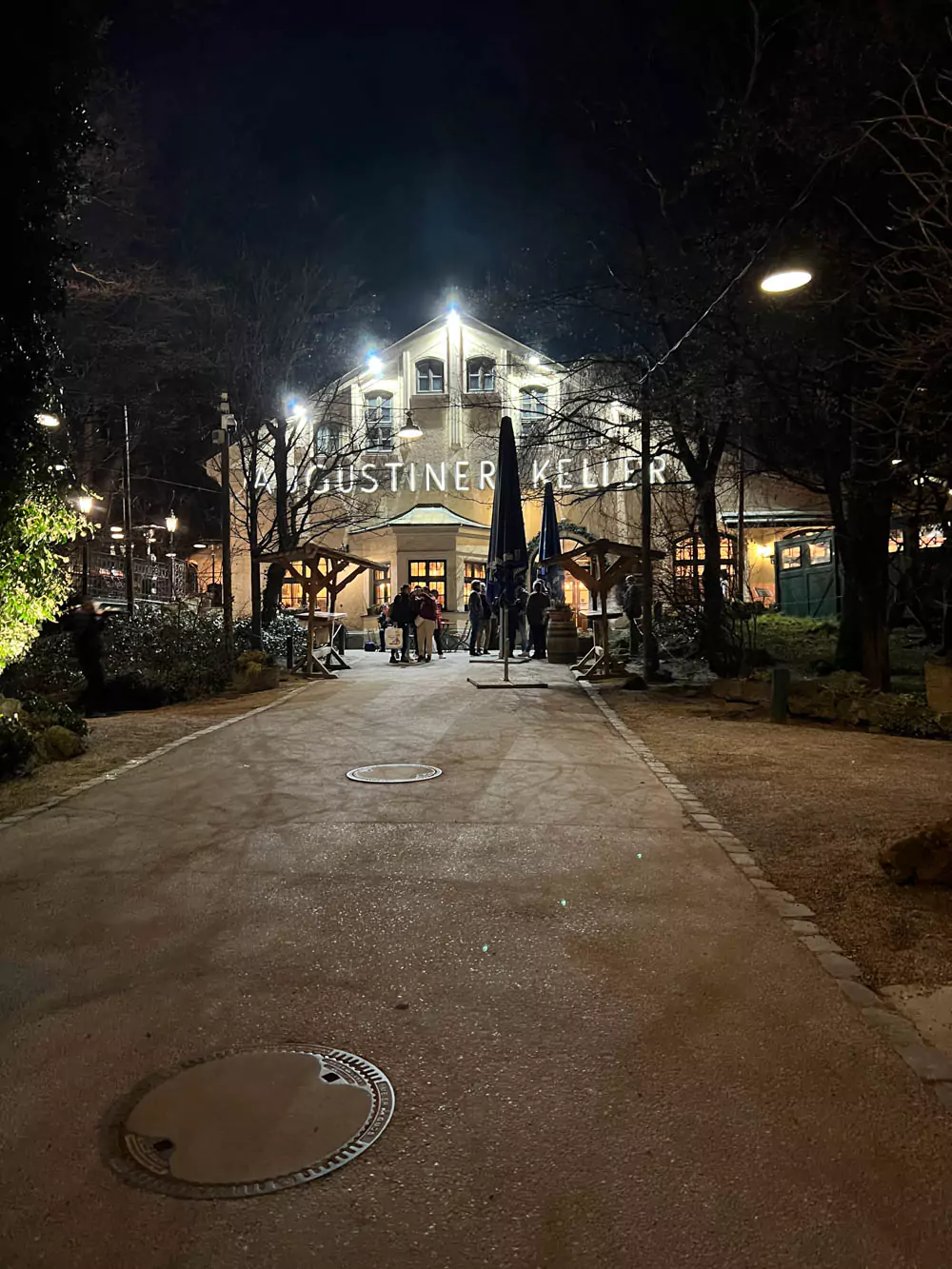
Where to Eat in Munich
- Hofbräuhaus: Classic beer hall with traditional Bavarian dishes.
- Augustiner-Keller: One of Munich’s oldest beer gardens, known for its relaxed atmosphere.
- Ratskeller: Located beneath the New Town Hall, offering hearty Bavarian cuisine.
Read My Full Munich Itinerary →
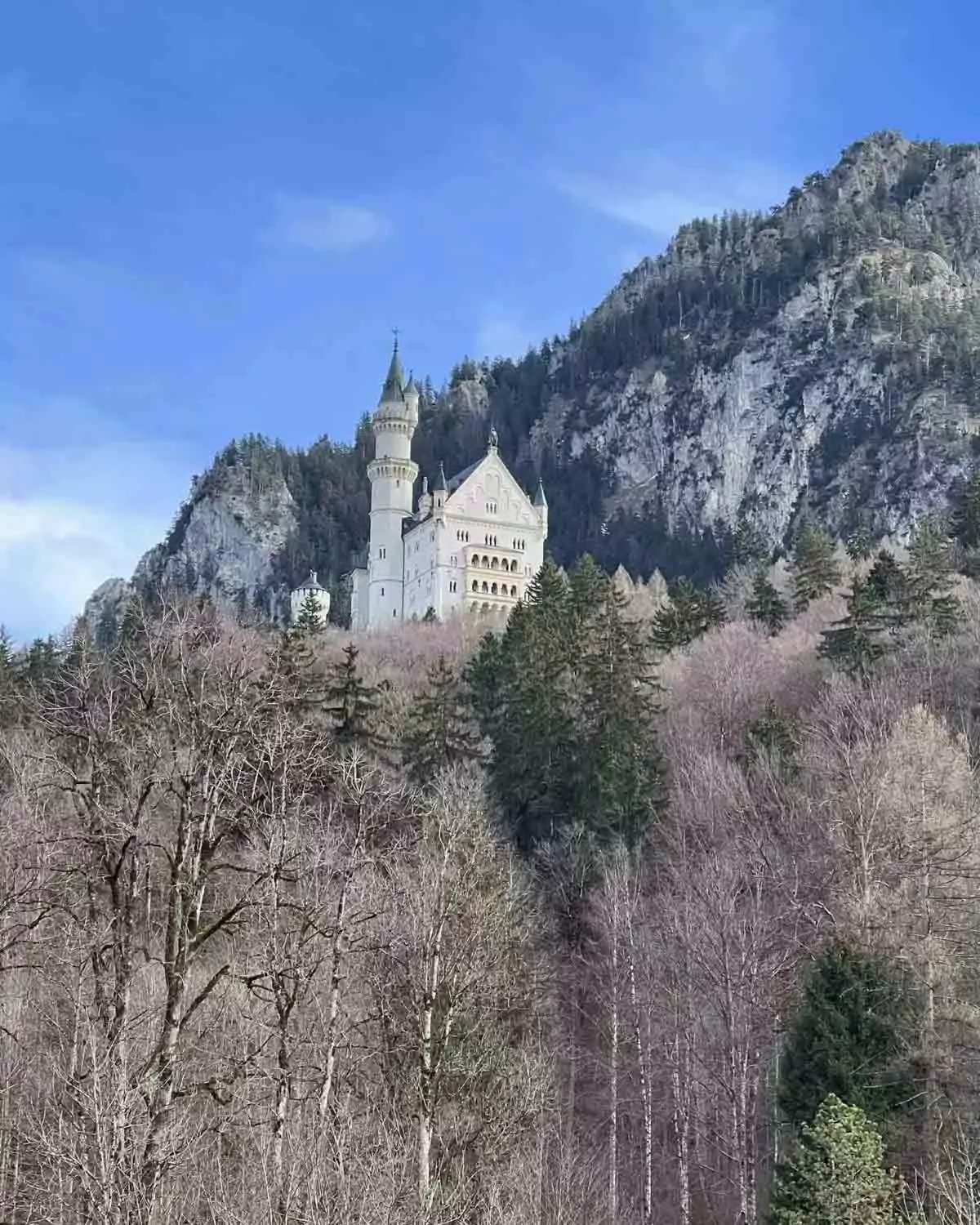
2. Neuschwanstein Castle
Travel Time: ~3 hours by train or car
A day trip to Neuschwanstein Castle from Nuremberg is one of the most magical experiences in Germany. This fairytale-like castle, perched on a hill in the Bavarian Alps, inspired Disney’s Sleeping Beauty Castle and attracts millions of visitors each year. With its breathtaking scenery, romantic architecture, and fascinating history, Neuschwanstein is a must-visit destination.
Why Visit?
- One of the most famous and picturesque castles in the world
- Built by King Ludwig II, known as the “Mad King of Bavaria”
- Surrounded by stunning alpine landscapes and scenic hiking trails
Best Things to Do at Neuschwanstein Castle
1️⃣ Take a Guided Tour of Neuschwanstein Castle
To visit the castle’s lavish interiors, you must book a guided tour. Highlights include the Throne Room, inspired by Byzantine churches, and the extravagant Singers’ Hall, where Ludwig envisioned grand performances.
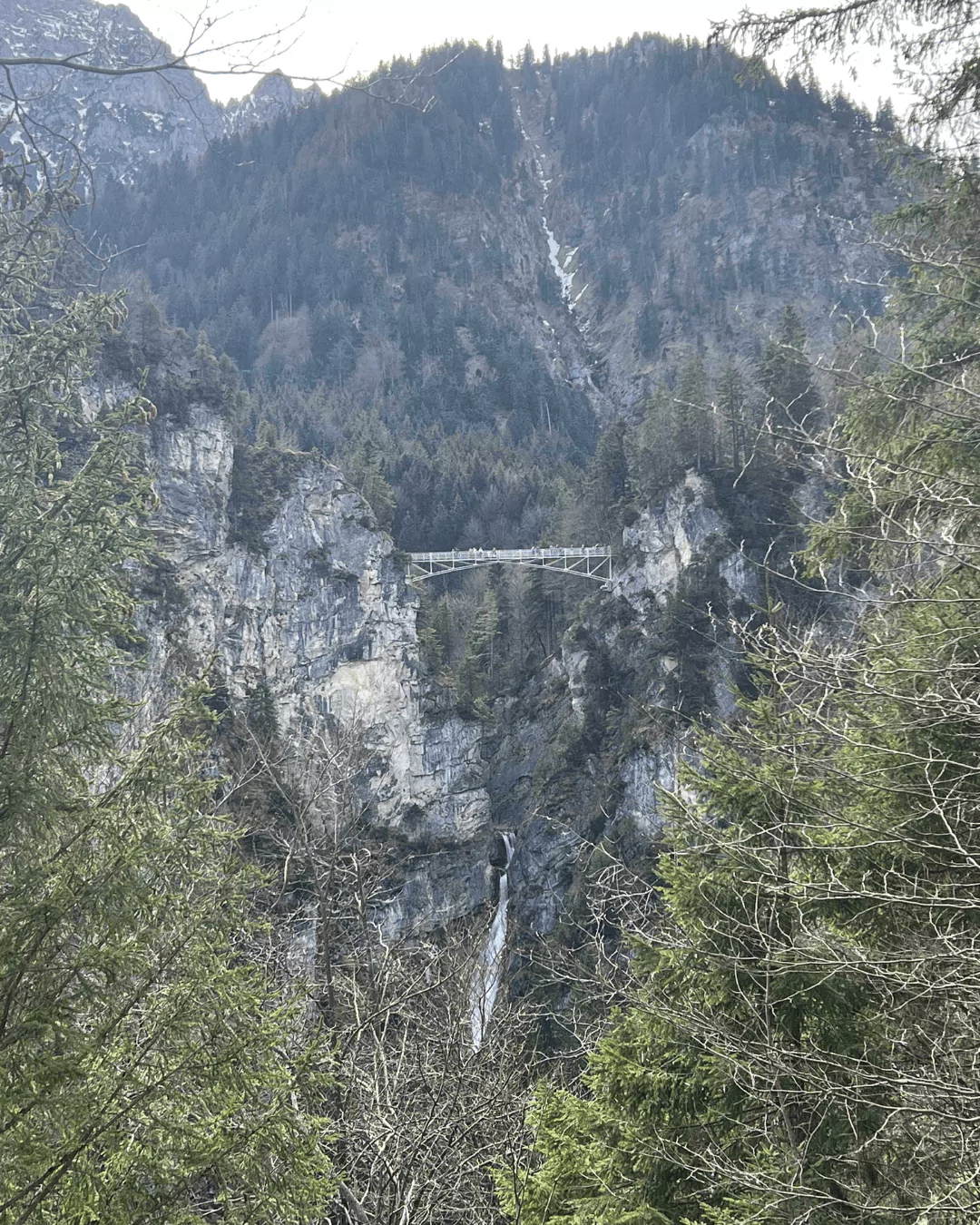
2️⃣ Enjoy the View from Marienbrücke (Mary’s Bridge)
One of the best spots to photograph Neuschwanstein is from Marienbrücke, a suspension bridge that offers breathtaking views of the castle against the backdrop of the Bavarian Alps.
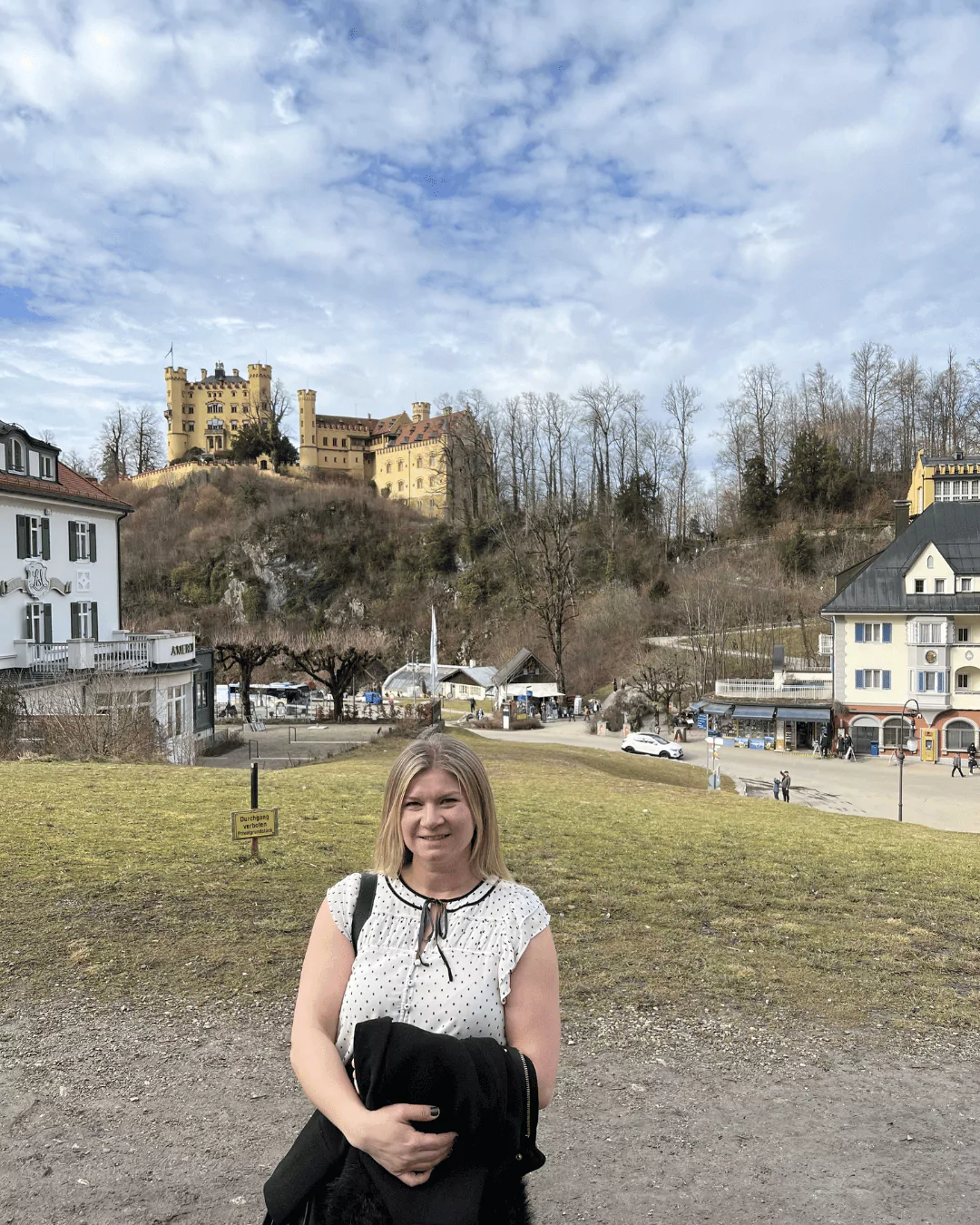
3️⃣ Visit Hohenschwangau Castle
Located near Neuschwanstein, Hohenschwangau Castle was King Ludwig II’s childhood home. It features beautifully preserved rooms and provides context for Ludwig’s vision of Neuschwanstein.
4️⃣ Explore Alpsee Lake
Just below the castles, Alpsee is a stunning alpine lake with scenic walking trails and crystal-clear water. It’s a peaceful spot to relax and take in the natural beauty of the region.
5️⃣ Hike to Tegelberg Mountain
For adventure seekers, consider taking the Tegelbergbahn cable car up the nearby mountain for spectacular views of the castle and surrounding landscape.
Getting to Neuschwanstein Castle from Nuremberg
- By Train & Bus: Take a train to Füssen (~2.5 hours), then a short bus ride to Hohenschwangau.
- By Car: A scenic 3-hour drive through the Bavarian countryside.
- By Tour: Consider a guided day tour for a stress-free experience.
Where to Eat Near Neuschwanstein
- Alpenstuben: A cozy Bavarian restaurant near the castle entrance.
- Schlossrestaurant Neuschwanstein: Offers traditional Bavarian dishes with a view of the castle.
- Café Luipold: A great spot for coffee and cake after your castle tour.

3. Bamberg
Travel Time: ~40 minutes by train
A day trip to Bamberg from Nuremberg is an easy and rewarding experience, offering a mix of UNESCO-listed medieval architecture, a vibrant beer culture, and stunning river views. Just 40 minutes by train or car, Bamberg is one of Germany’s most charming and well-preserved old towns, often called the “Franconian Rome” due to its seven hills and rich history.
Why Visit?
- Historic Old Town with medieval and baroque architecture
- Home to the world-famous Rauchbier (smoked beer)
- Beautiful river views and picturesque bridges
Best Things to Do in Bamberg
1️⃣ Explore the Old Town (Altstadt)
Bamberg’s Old Town is a UNESCO World Heritage site known for its medieval buildings, winding alleys, and vibrant atmosphere. Start your visit by wandering through the cobblestone streets and admiring the colorful half-timbered houses.
2️⃣ Visit the Altes Rathaus (Old Town Hall)
One of Bamberg’s most famous landmarks, the Old Town Hall is dramatically built on a bridge over the Regnitz River. With its intricate frescoes and unique location, it’s one of the most photographed buildings in Germany. Walk across the bridge to take in its stunning details and views of the surrounding area.
3️⃣ Climb to Bamberg Cathedral (Bamberger Dom)
Bamberg Cathedral is an impressive Romanesque and Gothic masterpiece dating back to the 13th century. Inside, you’ll find the famous Bamberg Horseman statue and the tombs of Emperor Henry II and Empress Cunigunde. The cathedral’s hilltop location offers excellent views of the city.
4️⃣ Walk Through the Rose Garden at the New Residence
Adjacent to the cathedral, the New Residence (Neue Residenz) features beautifully decorated rooms and a stunning rose garden. From here, you can enjoy panoramic views of Bamberg’s rooftops and the surrounding hills.
5️⃣ Try Bamberg’s Famous Rauchbier
Bamberg is famous for its Rauchbier, a distinctive smoked beer with a rich, smoky flavor. Head to Schlenkerla, the city’s most famous brewery, to sample this unique beer alongside local Franconian dishes like Schäufele (roast pork shoulder) or bratwurst with sauerkraut.
6️⃣ Stroll Along Little Venice (Klein Venedig)
This picturesque row of 17th-century fishermen’s houses along the Regnitz River is known as “Little Venice.” The charming half-timbered houses and flower-filled balconies create a postcard-perfect scene. Consider taking a short boat tour for a different perspective of the city.
7️⃣ Visit Altenburg Castle
Perched on one of Bamberg’s seven hills, Altenburg Castle offers breathtaking views of the city and surrounding countryside. The castle dates back to the 12th century and once served as a residence for Bamberg’s bishops. Today, it’s a great spot for a scenic walk and some history.
Getting to Bamberg from Nuremberg
- By Train: The fastest and most convenient option. Direct trains run every 30 minutes and take ~40 minutes.
- By Car: A 45-minute drive along the A73 Autobahn.
- By Bus: Less frequent and takes over an hour, so the train is recommended.
Where to Eat in Bamberg
- Schlenkerla: Famous for its Rauchbier and traditional Franconian food.
- Zum Sternla: The oldest inn in Bamberg, offering hearty Bavarian dishes.
- Eckerts Wirtshaus: A riverside restaurant with a mix of local and modern cuisine.
Bamberg is a perfect mix of history, charm, and Bavarian beer culture. Whether you’re exploring medieval streets, sipping Rauchbier, or admiring river views, this town offers a truly unique experience just a short trip from Nuremberg.

4. Rothenburg ob der Tauber
Travel Time: ~1.5 hours by train or car
A day trip to Rothenburg ob der Tauber from Nuremberg is like stepping into a fairy tale. Known for its well-preserved medieval architecture, half-timbered houses, and charming cobblestone streets, this picturesque town along the Romantic Road is one of Germany’s most beloved destinations.
Why Visit?
- One of the best-preserved medieval towns in Europe
- Iconic half-timbered houses and scenic viewpoints
- Famous for its Christmas markets and year-round holiday charm
Best Things to Do in Rothenburg ob der Tauber
1️⃣ Explore Marktplatz (Market Square)
The heart of Rothenburg, Market Square is surrounded by historic buildings, including the Rothenburg Town Hall (Rathaus). If you have time, climb the Town Hall tower for a panoramic view of the town’s red rooftops.
2️⃣ Walk the Medieval City Walls
One of Rothenburg’s most unique experiences is walking along its 14th-century city walls. The path offers fantastic views of the town’s rooftops and surrounding countryside. Look for historical plaques that tell the stories of the city’s past.
3️⃣ Visit Plönlein – The Most Photographed Spot
Plönlein is Rothenburg’s most iconic view, featuring a timber-framed house with two diverging streets and medieval towers in the background. Arrive early in the morning or late in the afternoon to capture the best photos without crowds.
4️⃣ Tour St. Jacob’s Church
Home to the famous Holy Blood Altar by Tilman Riemenschneider, St. Jacob’s Church is a stunning Gothic church dating back to the 14th century. The intricate wooden altarpiece is considered a masterpiece of medieval craftsmanship.
5️⃣ Try Rothenburg’s Famous Schneeball
One of the town’s unique treats is the Schneeball, a deep-fried pastry dusted with powdered sugar or dipped in chocolate. Try one from Zuckerbäckerei, one of the most popular bakeries in town.
6️⃣ Visit the Rothenburg Christmas Museum
Rothenburg is famous for its Christmas markets, but you can experience the holiday spirit year-round at the Käthe Wohlfahrt Christmas Village. The museum showcases festive decorations and German Christmas traditions.
7️⃣ Discover the Medieval Crime Museum
One of the most unique attractions in Rothenburg is the Medieval Crime Museum, which displays historic torture devices, legal documents, and fascinating exhibits about medieval law and punishment.
8️⃣ Experience the Night Watchman’s Tour
For a fun and engaging way to learn about Rothenburg’s history, join the Night Watchman’s Tour. This evening walking tour is led by a costumed guide who shares fascinating stories about the town’s medieval past.
Getting to Rothenburg ob der Tauber from Nuremberg
- By Train: The journey takes ~1.5 to 2 hours with a transfer in Ansbach or Steinach.
- By Car: A scenic 1.5-hour drive along the Romantic Road.
- By Tour: Consider a guided day trip for a hassle-free experience.
Where to Eat in Rothenburg ob der Tauber
- Zur Höll: A historic tavern serving traditional Franconian dishes.
- Hotel Reichsküchenmeister: Offers classic German meals in a charming setting.
- Café Einzigartig: A cozy café perfect for coffee and cake.
Rothenburg ob der Tauber is one of the most magical places in Germany. Whether you’re strolling through its medieval streets, enjoying a Schneeball pastry, or watching the sunset from the city walls, it’s a destination that feels frozen in time.

5. Regensburg
Travel Time: ~1 hour by train or car
A day trip to Regensburg from Nuremberg offers a glimpse into one of Germany’s best-preserved medieval cities. A UNESCO World Heritage site, Regensburg is known for its stunning Gothic cathedral, charming Old Town, and scenic location along the Danube River.
Why Visit?
- One of the best-preserved medieval towns in Europe
- Home to Germany’s oldest stone bridge, the Steinerne Brücke
- Rich Roman and Bavarian history, with charming cobblestone streets
Best Things to Do in Regensburg
1️⃣ Explore Regensburg’s Old Town (Altstadt)
Regensburg’s Altstadt is filled with historic buildings, narrow alleys, and colorful medieval houses. Walk through Haidplatz and Kohlenmarkt, two lively squares lined with cafés and shops. The town’s blend of Roman, Gothic, and Renaissance architecture makes it a fascinating place to explore.
2️⃣ Visit St. Peter’s Cathedral (Regensburger Dom)
Regensburg’s most famous landmark, St. Peter’s Cathedral, is a masterpiece of Gothic architecture. Known for its towering spires and stunning stained glass windows, this 13th-century cathedral is one of Bavaria’s most important religious sites.
3️⃣ Walk Across the Old Stone Bridge (Steinerne Brücke)
Dating back to the 12th century, the Steinerne Brücke (Old Stone Bridge) is one of the oldest surviving bridges in Germany. Cross the bridge for excellent views of the Danube River and the city skyline.
4️⃣ Visit the Old Town Hall (Altes Rathaus)
The Altes Rathaus (Old Town Hall) has been the seat of city government since the Middle Ages. It was also the meeting place of the Holy Roman Empire’s first parliament. Inside, you can tour the historic rooms, including a medieval torture chamber.
5️⃣ Have a Traditional Bavarian Lunch at the Historic Wurstkuchl
For an authentic Bavarian experience, stop by the Historische Wurstkuchl, Germany’s oldest sausage kitchen. Located on the banks of the Danube, this famous eatery has been serving grilled sausages with sauerkraut and mustard for over 500 years.
6️⃣ Visit the Thurn and Taxis Palace
The Thurn and Taxis Palace was once home to one of Europe’s wealthiest noble families. Today, visitors can tour the opulent rooms and learn about the family’s role in establishing Europe’s postal system.
7️⃣ Take a Boat Ride on the Danube
For a different perspective of the city, take a boat cruise on the Danube. Popular routes include trips to Walhalla, a stunning hilltop temple that honors Germany’s greatest historical figures.
Getting to Regensburg from Nuremberg
- By Train: Direct trains run frequently, taking about 1 hour.
- By Car: A 1-hour drive via the A3 Autobahn.
- By Tour: Consider a guided day trip to explore Regensburg with an expert guide.
Where to Eat in Regensburg
- Wurstkuchl: Famous for its traditional sausages and Danube river views.
- Haus Heuport: Historic restaurant near the cathedral, offering classic Bavarian dishes.
- Alte Linde: Riverside beer garden with fantastic views of the Old Stone Bridge.
Regensburg is a fascinating mix of medieval charm, Bavarian traditions, and scenic beauty. Whether you’re admiring the Gothic cathedral, walking along the Danube, or enjoying a meal at Germany’s oldest sausage kitchen, this city makes for an unforgettable day trip from Nuremberg.
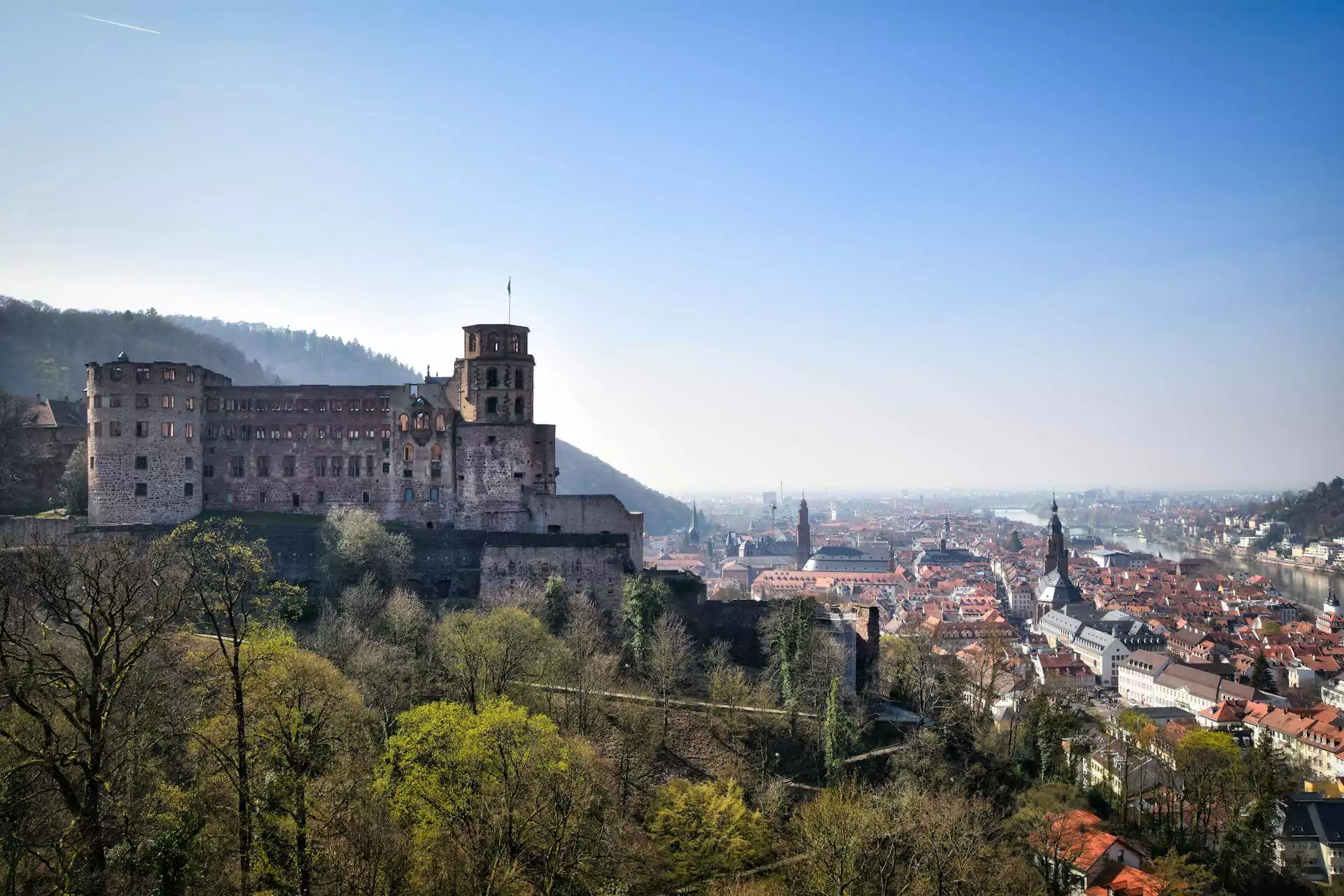
6. Heidelberg
Travel Time: ~2 hours by train or car
A day trip to Heidelberg from Nuremberg is a journey into Germany’s most romantic city. Famous for its historic Old Town, stunning castle ruins, and Germany’s oldest university, Heidelberg is a perfect blend of history, scenic views, and vibrant student life.
Why Visit?
- Home to the breathtaking Heidelberg Castle with panoramic views
- One of Germany’s most charming Old Towns with cobblestone streets and historic landmarks
- Beautiful riverside setting along the Neckar River, ideal for walks and photography
Best Things to Do in Heidelberg
1️⃣ Explore Heidelberg’s Old Town (Altstadt)
Start your visit by wandering through the historic Altstadt, lined with colorful buildings, traditional cafés, and boutique shops. The main street, Hauptstraße, is one of Germany’s longest pedestrian zones and offers plenty of places to explore.
2️⃣ Visit Heidelberg Castle (Schloss Heidelberg)
The city’s most iconic landmark, Heidelberg Castle sits on a hillside overlooking the Neckar River. A mix of Gothic and Renaissance architecture, the castle is partially in ruins but remains incredibly majestic. Inside, you can visit the Great Barrel, one of the largest wine barrels in the world, and the German Apothecary Museum. Take the Heidelberg Bergbahn (funicular) for a scenic ride up to the castle.
3️⃣ Walk Across the Old Bridge (Alte Brücke)
The Alte Brücke is a historic stone bridge offering spectacular views of Heidelberg Castle and the Neckar River. Look for the famous Brückenaffe (Bridge Monkey) statue—legend says touching its mirror brings good fortune.
4️⃣ Climb the Philosophenweg (Philosopher’s Walk)
For some of the best views of Heidelberg, take a walk along the Philosophenweg, a scenic path once favored by poets and philosophers. From here, you’ll get an incredible panoramic view of the Old Town and castle.
5️⃣ Visit the University of Heidelberg
Founded in 1386, Heidelberg University is Germany’s oldest university. Explore the historic buildings, and don’t miss the Studentenkarzer (Student Prison), where unruly students were once detained for minor infractions. The walls are covered in graffiti left by students from centuries past.
6️⃣ Relax at a Riverside Café
Heidelberg’s riverside setting makes it perfect for enjoying a leisurely break. Grab a coffee or a glass of local Riesling at a café along the Neckar River, where you can soak in the city’s romantic atmosphere.
Getting to Heidelberg from Nuremberg
- By Train: Direct trains take about 2 hours and 15 minutes.
- By Car: A scenic 2-hour drive via the A6 Autobahn.
- By Tour: Consider a guided day trip for a hassle-free experience.
Where to Eat in Heidelberg
- Zum Roten Ochsen: One of Heidelberg’s oldest restaurants, serving traditional German cuisine.
- Schnitzelbank: A cozy spot known for its hearty schnitzels and local wines.
- Café Knösel: Famous for its Studentenkuss chocolates, a Heidelberg specialty.
With its castle ruins, historic university, and picturesque Old Town, Heidelberg is a must-visit destination for history lovers and romantics alike. Whether you’re taking in the views from the Philosophenweg, exploring medieval streets, or sipping wine along the river, Heidelberg promises an unforgettable day trip from Nuremberg.

7. Würzburg
Travel Time: ~1 hour by train or car
A day trip to Würzburg from Nuremberg offers a mix of stunning baroque architecture, rich history, and world-famous Franconian wine. Located along the Main River, Würzburg is home to one of Germany’s most impressive palaces and a charming Old Town perfect for a relaxing and culture-filled day.
Why Visit?
- Home to the UNESCO-listed Würzburg Residence, one of Europe’s most stunning palaces
- A beautiful Old Town with historical landmarks and cozy cafés
- Famous for Franconian wine and vineyard-covered hills
Best Things to Do in Würzburg
1️⃣ Tour the Würzburg Residence
The Würzburg Residence is a UNESCO World Heritage site and one of Germany’s most breathtaking baroque palaces. Built in the 18th century, it features lavish interiors, the stunning Staircase Hall with its grand fresco by Tiepolo, and beautifully landscaped Court Gardens. Be sure to take a guided tour to fully appreciate the palace’s history and opulence.
2️⃣ Explore the Old Town & Marktplatz
Würzburg’s Marktplatz (Market Square) is the heart of the city, lined with historic buildings, shops, and lively cafés. The Marienkapelle, a striking Gothic church with its red and white façade, is one of the most recognizable landmarks in the square.
3️⃣ Walk Across the Alte Mainbrücke (Old Main Bridge)
Similar to Prague’s Charles Bridge, the Alte Mainbrücke is a historic stone bridge offering fantastic views of the river and the city. A local tradition is to grab a glass of Brückenschoppen—Franconian wine served in a glass—while enjoying the sunset over the vineyards.
4️⃣ Visit the Fortress Marienberg
Overlooking the city, Fortress Marienberg is a must-visit for history lovers. This medieval stronghold, once home to the prince-bishops of Würzburg, offers spectacular panoramic views of the city and the river. The fortress also houses a museum detailing Würzburg’s history.
5️⃣ Try Franconian Wine
Würzburg is one of Germany’s top wine regions, known for its dry white wines, particularly Silvaner and Riesling. Stop by the historic Bürgerspital Weinstuben or Weingut am Stein for a wine tasting session.
6️⃣ Visit the Käppele Pilgrimage Church
A short uphill walk from the city center, the Käppele is a beautiful baroque pilgrimage church offering stunning views over Würzburg and its vineyards. The hike is worth it for both the views and the ornate interior of the church.
Getting to Würzburg from Nuremberg
- By Train: Direct trains run frequently, taking about 1 hour.
- By Car: A 1-hour drive along the A3 Autobahn.
- By Tour: Consider a guided day trip to explore more without hassle.
Where to Eat in Würzburg
- Alte Mainmühle: A riverside restaurant offering traditional Franconian cuisine and wine.
- Bürgerspital Weinstuben: Great for wine tasting and regional specialties.
- Backöfele: Cozy spot serving classic Bavarian and Franconian dishes.
Würzburg is a fantastic blend of history, architecture, and wine culture. Whether you’re admiring the grandeur of the Würzburg Residence, strolling along the Old Main Bridge, or sipping local wine, this charming city makes for an unforgettable day trip from Nuremberg.

8. Augsburg
Travel Time: ~1.5 hours by train or car
A day trip to Augsburg from Nuremberg takes you to one of Germany’s oldest cities, rich in history, Renaissance architecture, and fascinating connections to the powerful Fugger banking dynasty. As a former Free Imperial City, Augsburg offers a unique blend of medieval charm and cultural heritage.
Why Visit?
- One of Germany’s oldest cities, founded by the Romans over 2,000 years ago
- Rich Renaissance and Baroque architecture, including the stunning Augsburg Town Hall
- Home to the historic Fuggerei, the world’s oldest social housing complex
Best Things to Do in Augsburg
1️⃣ Explore the Historic Rathausplatz
Start your visit in Rathausplatz, the central square surrounded by historic landmarks. The highlight is the Augsburg Town Hall (Rathaus), an architectural masterpiece from the Renaissance period. Don’t miss the opulent Golden Hall inside, featuring a breathtaking gilded ceiling.
2️⃣ Visit the Fuggerei – The World’s Oldest Social Housing Complex
Founded in 1521 by the wealthy Fugger family, the Fuggerei is the world’s oldest existing social housing project. It still houses residents who pay just €0.88 per year in rent. The museum on-site provides insight into how this remarkable charitable institution has operated for over 500 years.
3️⃣ Stroll Along Maximilianstraße
One of Germany’s most beautiful streets, Maximilianstraße is lined with Baroque fountains, historic mansions, and lively cafés. Key stops include the Augustus Fountain and the Merkur Fountain, both symbols of the city’s prosperity during the Renaissance.
4️⃣ Discover Augsburg Cathedral
Augsburg Cathedral (Dom St. Maria) dates back to the 11th century and features a blend of Romanesque and Gothic architecture. Inside, you’ll find some of the oldest stained glass windows in the world, dating back to the 12th century.
5️⃣ Visit the Schaezlerpalais
Art lovers shouldn’t miss the Schaezlerpalais, an elegant Baroque palace that houses a remarkable collection of German and European paintings. The highlight is the Rococo Ballroom, one of the most extravagant in Germany.
6️⃣ Walk Along the Lech Canal System
Augsburg is famous for its UNESCO-listed water management system, with centuries-old canals running through the city. Take a scenic walk along the canals to appreciate the city’s historical connection to water power and trade.
Getting to Augsburg from Nuremberg
- By Train: Direct trains take about 1 hour and 30 minutes.
- By Car: A 1.5-hour drive along the A8 Autobahn.
- By Tour: Consider a guided day trip to explore Augsburg’s history with an expert guide.
Where to Eat in Augsburg
- Ratskeller Augsburg: Traditional Bavarian restaurant located beneath the Town Hall.
- Weinhaus Schneider: Cozy wine bar with excellent Franconian and Bavarian cuisine.
- Il Gallo Nero: One of the best Italian restaurants in the city.
Augsburg is a hidden gem filled with rich history, stunning architecture, and fascinating stories from its time as a Free Imperial City. Whether you’re admiring the grandeur of the Golden Hall, exploring the historic Fuggerei, or walking along the canals, Augsburg is a rewarding and easy day trip from Nuremberg.
Did you know? Augsburg is known for its stunning Renaissance architecture, but few travelers visit the Fuggerei, the world’s oldest social housing complex—still home to residents paying just €0.88 per year in rent!

9. Dinkelsbühl
Travel Time: ~1.5 hours by train or car
A day trip to Dinkelsbühl from Nuremberg is like stepping into a medieval fairy tale. Located along the Romantic Road, this charming town is often compared to Rothenburg ob der Tauber but with fewer crowds and a more authentic atmosphere. With its colorful half-timbered houses, well-preserved city walls, and historic streets, Dinkelsbühl is one of Germany’s best-kept secrets.
Why Visit?
- One of Germany’s most beautifully preserved medieval towns
- Less crowded than Rothenburg ob der Tauber, offering a more intimate experience
- Surrounded by medieval walls, with 16 towers and four historic gates
Best Things to Do in Dinkelsbühl
1️⃣ Explore the Old Town (Altstadt)
The heart of Dinkelsbühl is its well-preserved Old Town, filled with cobbled streets, colorful buildings, and centuries-old charm. Stroll through the historic alleys and admire the beautifully restored half-timbered houses, many of which date back to the 15th and 16th centuries.
2️⃣ Visit St. George’s Minster
The St. George’s Minster is one of the most impressive late-Gothic churches in Bavaria. Built in the 15th century, it features a stunning vaulted ceiling and intricate stone carvings. Climb the tower for a panoramic view over the rooftops of Dinkelsbühl.
3️⃣ Walk Along the City Walls
Dinkelsbühl is one of the few German towns where the entire medieval wall remains intact. A walk along the walls offers great views of the town and its surrounding countryside. Look out for the Rothenburger Tor and Segringer Tor, two of the best-preserved medieval gates.
4️⃣ Visit the Weinmarkt and Marktplatz
The Weinmarkt and Marktplatz are the town’s lively squares, lined with beautiful buildings, cafés, and shops. The Deutsches Haus, an iconic half-timbered house in Weinmarkt, is one of the most photographed spots in the town.
5️⃣ Tour the Haus der Geschichte (House of History)
For a deeper understanding of Dinkelsbühl’s past, visit the Haus der Geschichte, a museum detailing the town’s history, medieval life, and its unique role during the Thirty Years’ War.
6️⃣ Experience the Night Watchman’s Tour
For an unforgettable evening, join the Night Watchman’s Tour. This guided tour, led by a costumed night watchman, takes you through the Old Town while sharing fascinating stories about Dinkelsbühl’s medieval past.
Getting to Dinkelsbühl from Nuremberg
- By Train & Bus: No direct train; take a train to Ansbach or Ellwangen, then a regional bus (~1.5 to 2 hours total).
- By Car: A 1.5-hour drive along the scenic Romantic Road.
- By Tour: Consider a Romantic Road tour that includes Dinkelsbühl and other medieval towns.
Where to Eat in Dinkelsbühl
- Meiser’s Restaurant: A stylish spot offering a mix of traditional and modern German cuisine.
- Weib’s Brauhaus: A cozy brewery serving Franconian specialties and local beers.
- Café am Münster: Perfect for coffee and homemade cakes with a view of St. George’s Minster.
Dinkelsbühl is a hidden gem that offers all the charm of a medieval German town without the crowds. Whether you’re exploring its half-timbered streets, walking along the old city walls, or enjoying a meal in the historic squares, this town provides an unforgettable glimpse into Germany’s past.

10. Franconian Switzerland (Fränkische Schweiz)
Travel Time: ~45 minutes by car or train
A day trip to Franconian Switzerland (Fränkische Schweiz) from Nuremberg offers a perfect escape into one of Germany’s most picturesque regions. Known for its rolling hills, charming villages, medieval castles, and limestone caves, this area is a paradise for nature lovers, hikers, and those looking to experience authentic Franconian culture.
Why Visit?
- Stunning landscapes with forests, cliffs, and scenic valleys
- Charming medieval villages with half-timbered houses
- One of the world’s highest densities of breweries, ideal for beer lovers
Best Things to Do in Franconian Switzerland
1️⃣ Explore Pottenstein
Start your visit in Pottenstein, one of the most famous villages in the region. Here, you can visit Burg Pottenstein, a medieval castle perched on a hilltop offering breathtaking views. If you’re feeling adventurous, check out the Devil’s Cave (Teufelshöhle), one of Germany’s largest limestone cave systems, filled with impressive stalactites and stalagmites.
2️⃣ Visit Tüchersfeld & the Franconian Switzerland Museum
The tiny village of Tüchersfeld is one of the most photographed spots in Franconian Switzerland, known for its dramatic rock formations and half-timbered houses nestled between cliffs. Visit the Franconian Switzerland Museum to learn about the region’s history, culture, and geology.
3️⃣ Hike Through the Wiesent Valley
The Wiesent Valley is the heart of Franconian Switzerland, offering some of the best hiking trails. Walk along the Franconian Switzerland Trail, where you’ll pass stunning rock formations, ancient caves, and beautiful riverbanks.
4️⃣ Experience Traditional Brewing Culture
Franconian Switzerland has one of the **highest densities of breweries in the world**, with over 70 small breweries producing traditional Franconian beer. Stop by a local brewery such as Brauerei Meister or Lindenbräu to enjoy a freshly brewed beer with a hearty Franconian meal.
5️⃣ Visit Gößweinstein and Its Baroque Basilica
The town of Gößweinstein is home to the stunning Basilica of the Holy Trinity, a masterpiece of baroque architecture. The town itself is a charming place to wander, with its castle and picturesque streets.
6️⃣ Canoeing or Rock Climbing Adventures
If you’re looking for an outdoor adventure, try canoeing on the Wiesent River or rock climbing on the many limestone cliffs that make Franconian Switzerland a popular destination for climbers.
Getting to Franconian Switzerland from Nuremberg
- By Car: The most convenient option (~45 minutes). Parking is available in most villages.
- By Train: Take a train to Forchheim, then connect to a regional bus to towns like Pottenstein or Gößweinstein.
- By Tour: Consider a guided tour to explore multiple sites without worrying about transportation.
Where to Eat in Franconian Switzerland
- Gasthof Drei Linden (Pottenstein): Authentic Franconian cuisine in a cozy atmosphere.
- Brauerei Gasthof Held Bräu (Oberailsfeld): Family-run brewery with delicious local beer.
- Café Müller (Gößweinstein): A great stop for homemade cakes and coffee.
Whether you’re hiking through scenic valleys, exploring historic castles, or enjoying a freshly brewed Franconian beer, Franconian Switzerland is the perfect getaway for nature lovers and culture enthusiasts alike. Just a short trip from Nuremberg, this region offers an unforgettable escape into Bavaria’s countryside.
Plan Your Franconian Switzerland Visit →
Final Thoughts
Neuschwanstein Castle is a dream destination for history lovers, photographers, and fairytale enthusiasts. Whether you’re exploring its opulent halls, hiking through the Alps, or capturing the perfect photo from Marienbrücke, this castle will leave you spellbound.
Plan Your Neuschwanstein Visit →
Which Day Trip Interests You Most?
Final Thoughts: The Best Day Trips from Nuremberg
With so many incredible day trips from Nuremberg, you’re spoiled for choice when it comes to history, culture, nature, and adventure. Whether you’re wandering through the medieval streets of Rothenburg ob der Tauber, sipping smoky beer in Bamberg, exploring UNESCO heritage sites in Regensburg and Würzburg, or soaking in the fairytale beauty of Neuschwanstein Castle, each destination offers a unique glimpse into Bavaria and beyond.
For those who love charming villages and half-timbered towns, places like Dinkelsbühl and Heidelberg will transport you back in time. If you’re more into nature and outdoor activities, Franconian Switzerland offers breathtaking landscapes, hiking trails, and hidden caves. And for history lovers, Augsburg’s Renaissance grandeur and the impressive Würzburg Residenz are must-visits.
Whether you choose one or several of these amazing destinations, each trip will add a new layer of discovery to your Nuremberg adventure. Bavaria is full of hidden gems, and these day trips are just the beginning!
What’s your favorite day trip from Nuremberg? Let me know in the comments below!
P.S. Follow me on Instagram and Pinterest for more travel inspiration!
Like this post? Share it on Pinterest!

