25 Best Things to Do in Nuremberg, Germany (+ Hidden Gems)

Travel With Kinsley contains affiliate links and is a member of the Amazon Services LLC Associates Program, which means I may receive a cute little commission if you purchase through my links, at no extra cost to you. Please read full disclosure for more information.
Nuremberg was a fun addition to our 9-day Germany and Austria itinerary—thanks to a work conference Zack had in the city. And honestly, we’re so glad it ended up on our route.
This Bavarian gem is packed with medieval charm and layers of WWII history. From imperial castles perched above the old town to cozy beer halls serving up hearty Franconian dishes, Nuremberg offers a mix of history and atmosphere that’s hard to beat—especially if you’re someone who loves Christmas markets, local food, or walking through centuries-old streets (my favorite).
After exploring Munich’s beer gardens, pretending we were in a real-life fairy tale at Neuschwanstein Castle, and saying “so long, farewell, auf wiedersehen, goodbye” to Salzburg, we spent time wandering Vienna and even slid down into a salt mine in Hallstatt—but arriving in Nuremberg gave us a fresh perspective on the region.
If you’re planning a trip through southern Germany or Austria, don’t overlook Nuremberg. It’s more than just a stop—it’s an experience.
Quick-Glance: Top 5 Must-Sees in Nuremberg
Short on time? Here are the top 5 must-visit attractions in Nuremberg, Germany!
| 🏰 Attraction | 🌟 Why Visit? | 📍 Location |
|---|---|---|
| Imperial Castle (Kaiserburg Nürnberg) | A medieval fortress with panoramic city views. One of Nuremberg’s most iconic landmarks. | 📍 Altstadt (Old Town) |
| Nazi Party Rally Grounds & Documentation Center | A historical WWII site offering insight into Nuremberg’s role in Nazi Germany. | 📍 Southeast Nuremberg |
| Nuremberg Christmas Market (Christkindlesmarkt) | One of the oldest & most famous Christmas markets in Europe, featuring handcrafted gifts & mulled wine. | 📍 Hauptmarkt (Main Square) |
| Albrecht Dürer’s House | The home of Germany’s most famous Renaissance artist, featuring original works & period interiors. | 📍 Altstadt (Old Town) |
| Historic Beer Halls (Hausbrauerei Altstadthof) | Experience authentic Franconian beer culture in a historic setting. A must for beer lovers! 🍻 | 📍 Old Town |
Pro Travel Tip: Use Google Maps to Plan Your Day! Most of these attractions are within walking distance in Nuremberg’s Old Town. For a hassle-free experience, consider a guided walking tour to visit all the top spots in one day.
👉 Book a Nuremberg Walking Tour Here
25 top things to do and see in Nuremberg
In this post, I’ve rounded up the very best things to do in Nuremberg, so you can make the most of your time in this beautiful city!
We adored Nuremberg, and I wanted to be sure others didn’t miss out as we almost did.
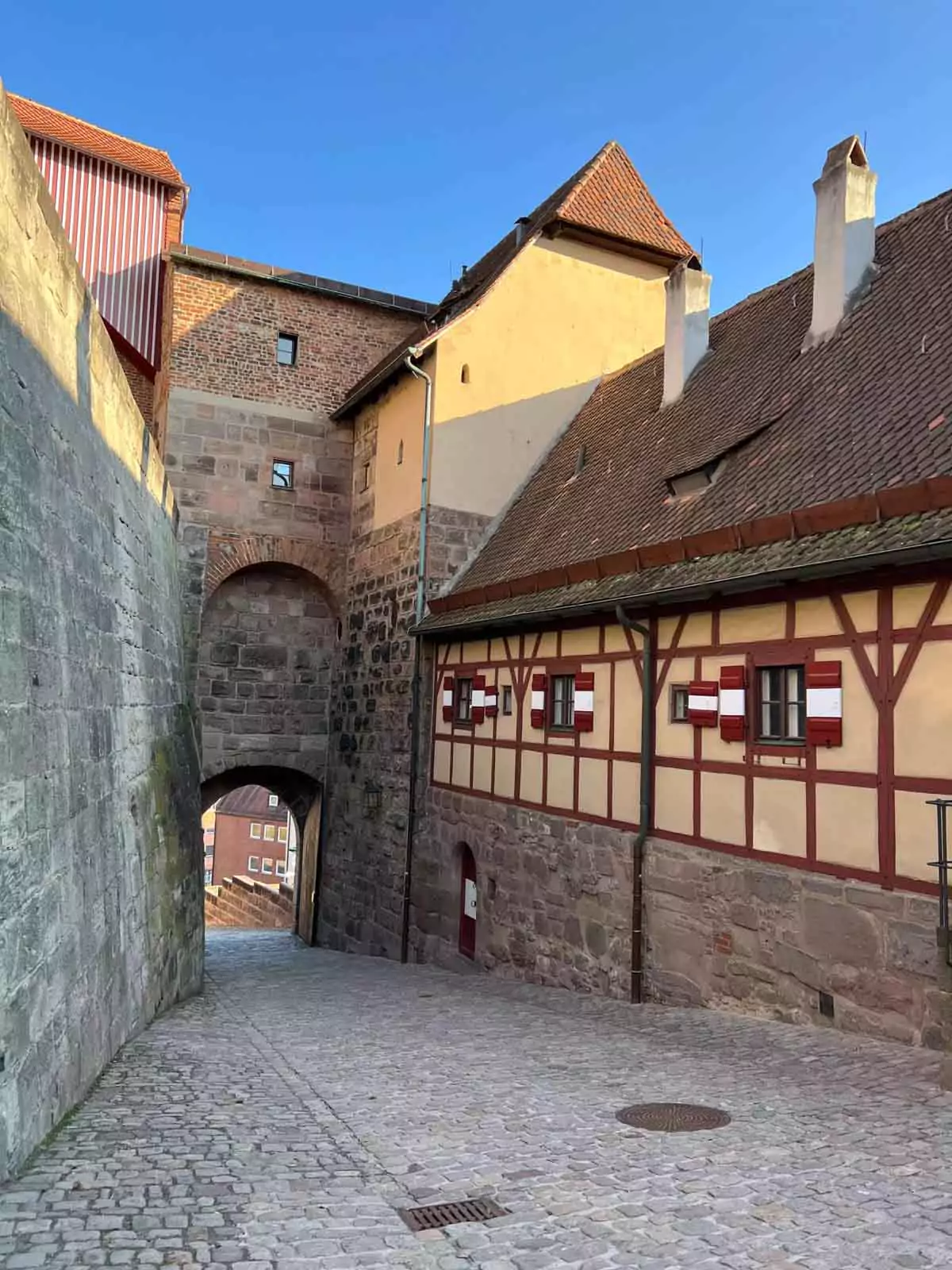
1. Take a Self-guided Tour at the Imperial Castle of Nuremberg (Kaiserburg)
Nuremberg Castle, known as Kaiserburg Nürnberg, is one of the most significant and iconic landmarks in Nuremberg, Germany. Perched on a sandstone ridge overlooking the city, the castle complex has played a central role in the history of the Holy Roman Empire and remains a symbol of Nuremberg’s medieval importance.
Nuremberg Castle served as one of the key imperial residences of the Holy Roman Emperors from the 11th century to the end of the empire in 1806.
The castle was both a royal palace and a fortified stronghold, symbolizing the emperor’s power and the city’s strategic significance within the Holy Roman Empire.
The castle is surrounded by impressive medieval fortifications, including walls, towers, and gates. The main building of the castle, known as the Palas, is where the imperial apartments and state rooms are located.
The large circular tower, originally built in the 13th century, offers one of the best views of Nuremberg’s Old Town. Climbing the Sinwell Tower at sunset was magical — the golden rooftops of Nuremberg stretched endlessly, and I could even spot the Hauptmarkt below!
One of the castle’s most intriguing features is the Deep Well, which is over 50 meters deep and was essential for the castle’s water supply.
The admission to the castle is included in the Nuremberg Card.
Admission Fees: Entrance to the castle and its museum typically costs around €9 for adults, with reduced rates for students, seniors, and children.
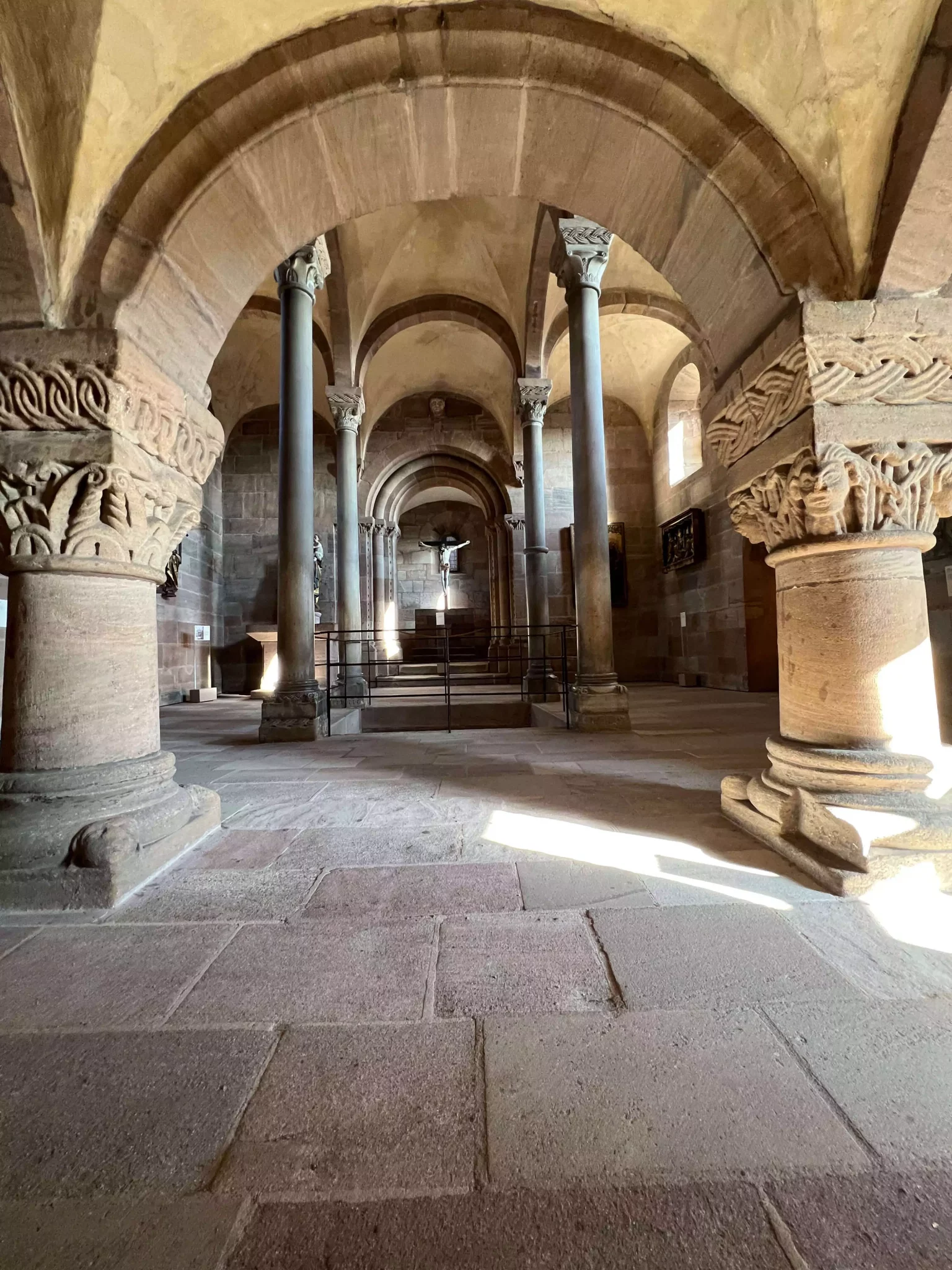
2. Nuremberg Castle Museum
The museum housed within the castle showcases a wide range of artifacts related to Nuremberg’s history, the Holy Roman Empire, and the daily life of the castle’s inhabitants. Exhibits include weapons, armor, coins, and other medieval items.
The museum also delves into the history of the Holy Roman Emperors who resided at the castle, offering detailed information about their reigns and the significance of Nuremberg within the empire.
3. Explore the Old Town (Altstadt)
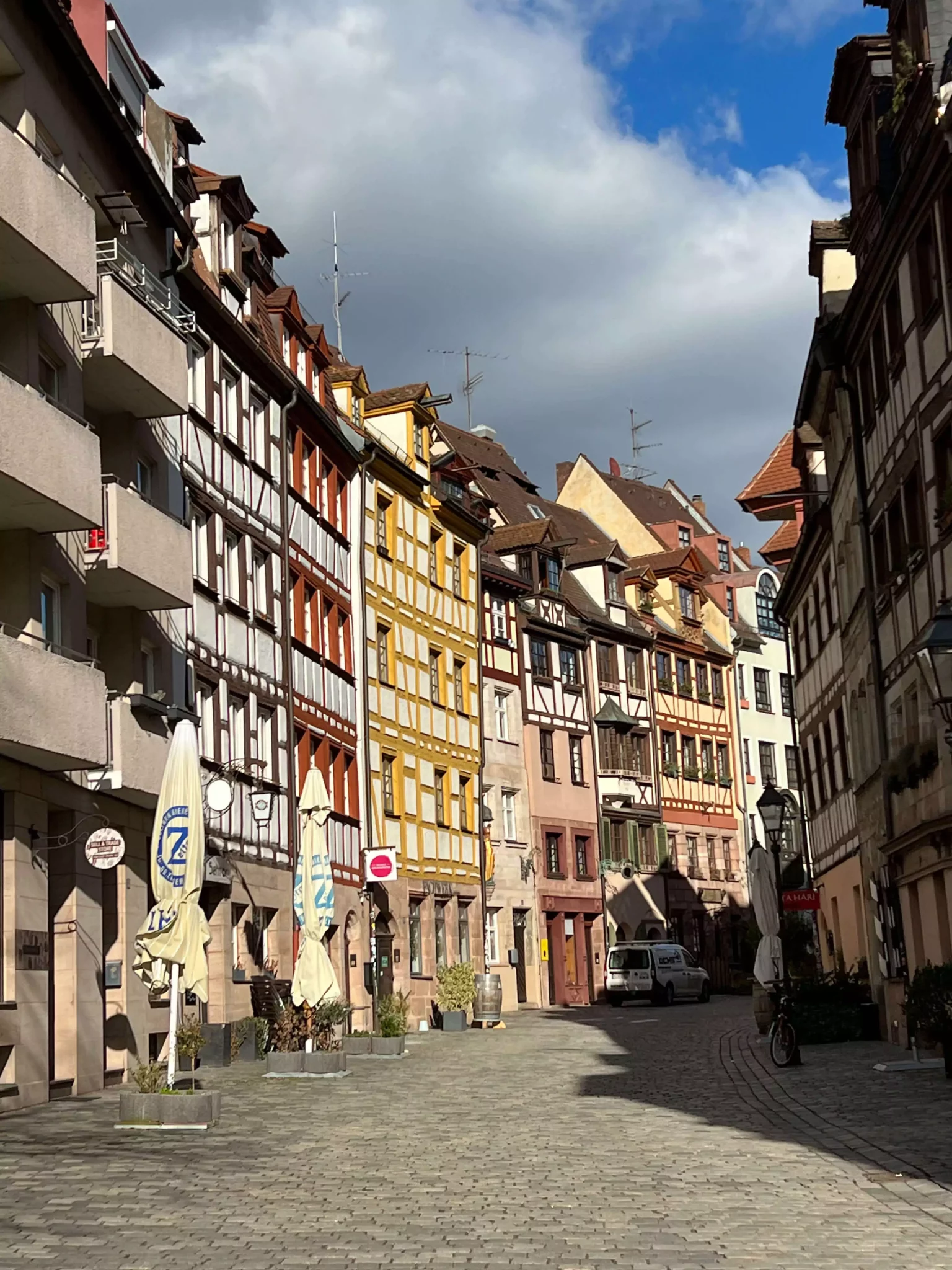
Nuremberg’s Old Town is the historical heart of the city, renowned for its well-preserved medieval architecture, charming streets, and rich cultural heritage. Divided by the Pegnitz River, the Old Town is a fascinating mix of past and present, where you can explore centuries-old landmarks, vibrant markets, and modern shops and cafes. The charming Weißgerbergasse street showcasing some of the best-preserved medieval homes.
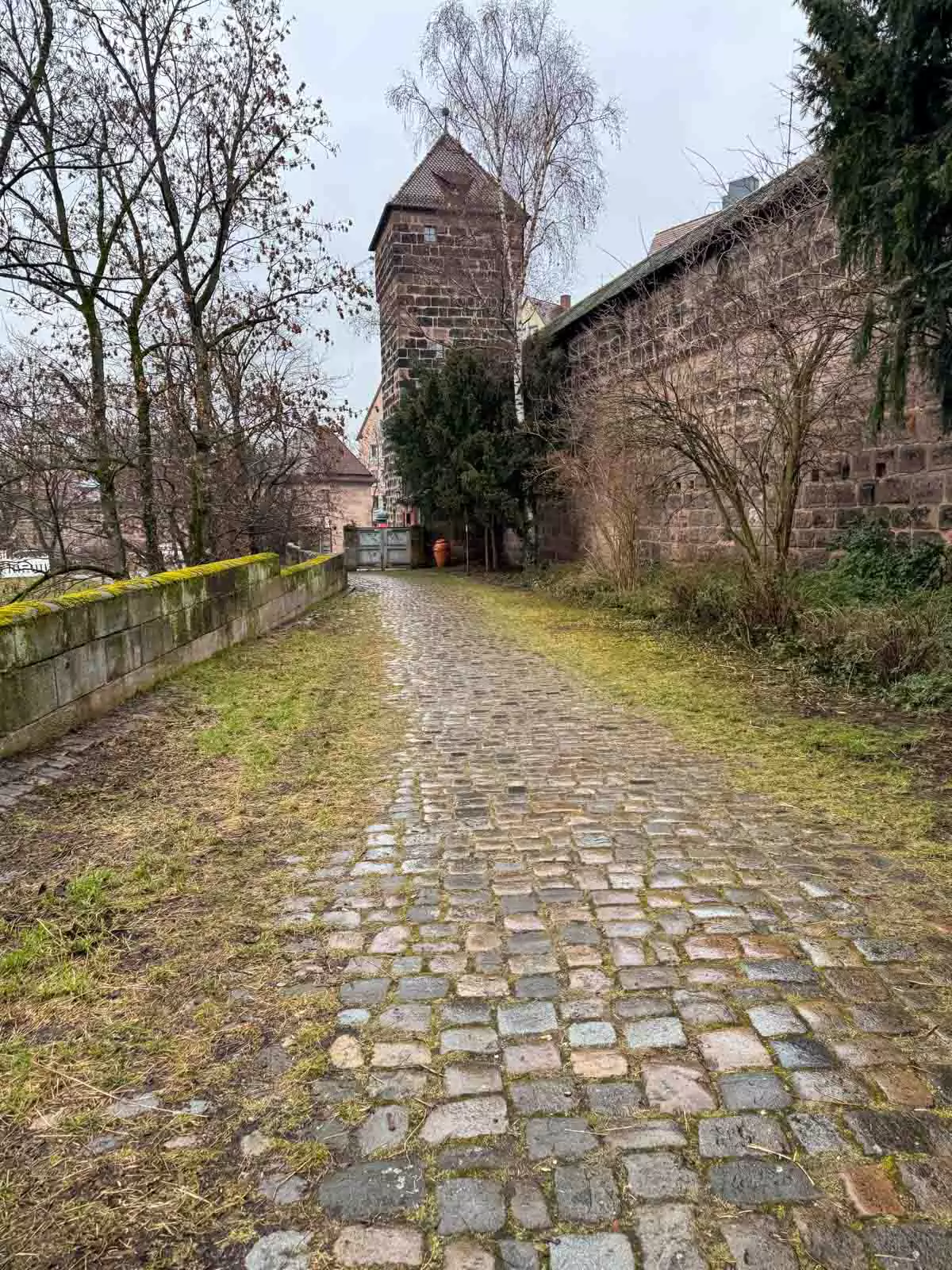
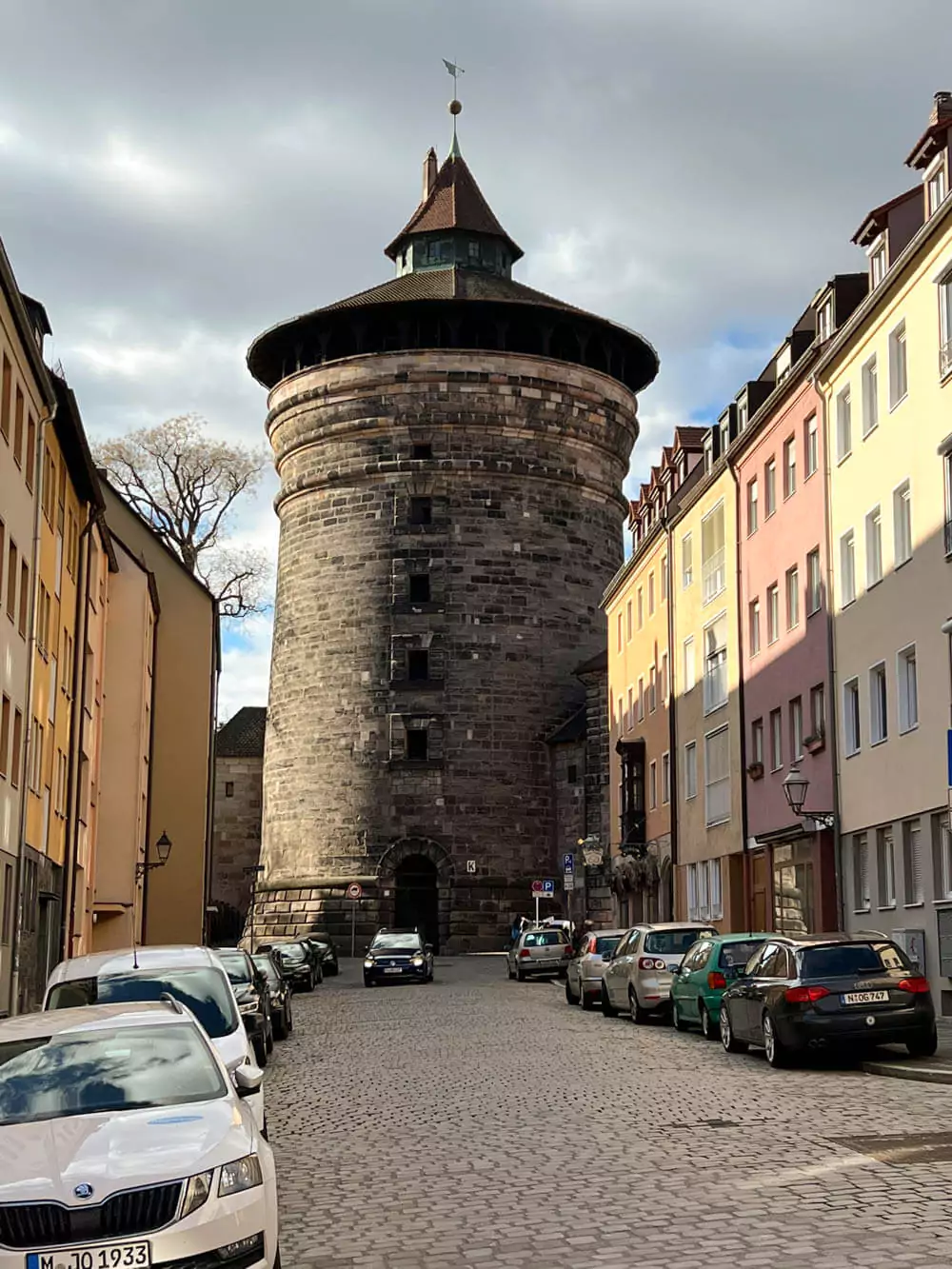
The Old Town is surrounded by well-preserved city walls and towers, including the round tower at the Tiergärtnertor and the Luginsland Tower. Walking along the walls provides a unique perspective on the city’s medieval defenses.
The Old Town is easily walkable, with most attractions located within a short distance of each other. The area is also well-connected by public transportation, making it convenient to explore.
4. Visit the City Walls and Towers
If you love exploring medieval cities, Nuremberg’s city walls and towers are a must. These fortifications are among the best-preserved in Germany and give you a real feel for the city’s historic layout.
You can walk along parts of the wall, which wrap around the Old Town, and stop at some of the most iconic towers—like the round Tiergärtnertor Tower, located near Albrecht Dürer’s house, or the massive Luginsland Tower, which was built for keeping an eye on potential enemies (and maybe even rival nobles).
It’s an easy addition to your walking route through Nuremberg and a great way to take in some panoramic views of the city.
5. St. Lorenz Church (Lorenzkirche)
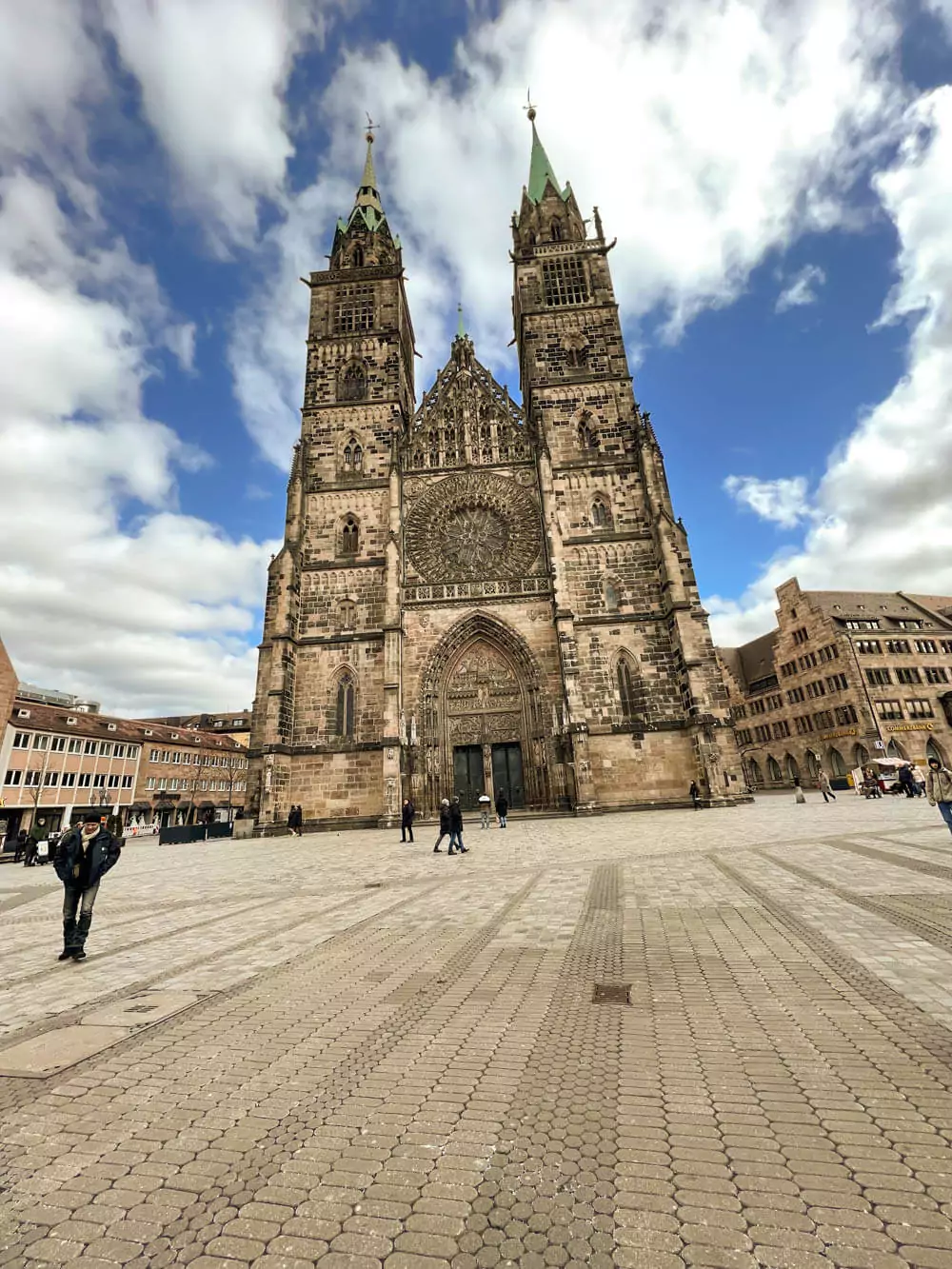
St. Lorenz Church, or Lorenzkirche, is one of the most significant and impressive Gothic churches in Nuremberg, Germany.
Inside, you can admire the beautiful stained glass windows, the large organ, and the intricately carved altarpiece by Veit Stoss.
St. Lorenz Church is a prime example of Gothic architecture, with its soaring spires, intricate stone carvings, and large rose window. The construction of the church began in the mid-13th century and continued into the 15th century, resulting in a building that is both grand and intricately detailed.
The church is easily recognizable by its two towering spires, which reach a height of 80 meters (262 feet). These spires are visible from many points in the city and are a defining feature of Nuremberg’s skyline.
St. Lorenz Church is centrally located in Nuremberg’s Old Town, making it easily accessible on foot or by public transportation. The nearest U-Bahn station is Lorenzkirche (U1 line).
Admission: Entrance to the church is generally free, but donations are welcome. There may be a small fee for guided tours or access to special exhibitions.
6. Hauptmarkt
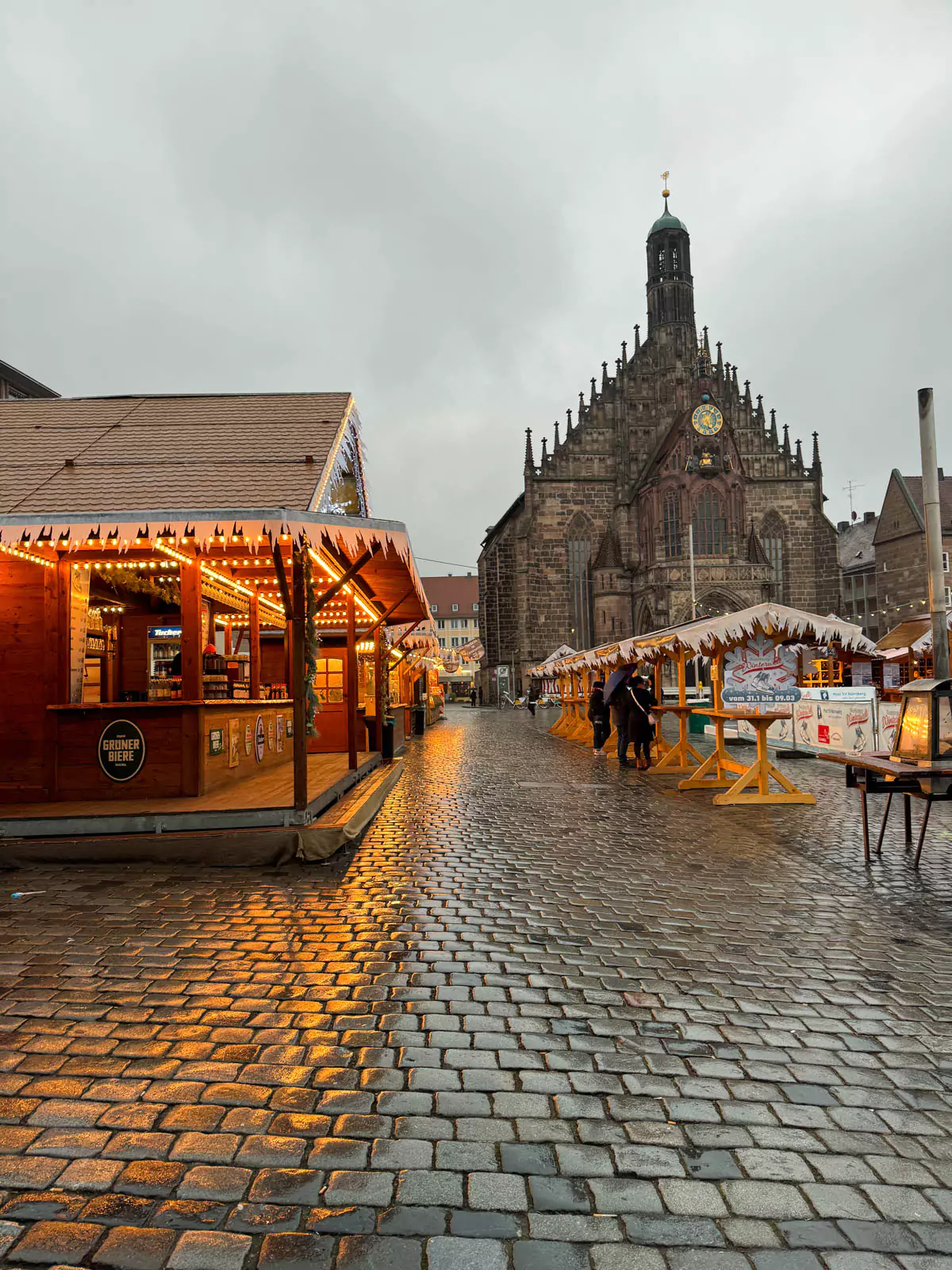
The Hauptmarkt is the main market square in Nuremberg’s Old Town, home to the Schöner Brunnen (Beautiful Fountain) and the Frauenkirche (Church of Our Lady). The square hosts daily markets selling fresh produce, flowers, and local specialties.
The Hauptmarkt has been the central market square of Nuremberg since the Middle Ages. It was established in the 14th century when the city became an important trade center within the Holy Roman Empire.
The Hauptmarkt hosts a daily market where you can find fresh produce, flowers, and local specialties like Franconian sausages, honey, and traditional baked goods.
The Christkindlesmarkt, or Nuremberg Christmas Market, held every year during Advent, is one of the oldest and most famous Christmas markets in the world. The market is known for its traditional handcrafted gifts, ornaments, and festive foods like Lebkuchen (gingerbread) and Glühwein (mulled wine).
According to the Nuremberg Tourism Board, the Christmas Market attracts over 2 million visitors annually!
7. Schoner Brunnen
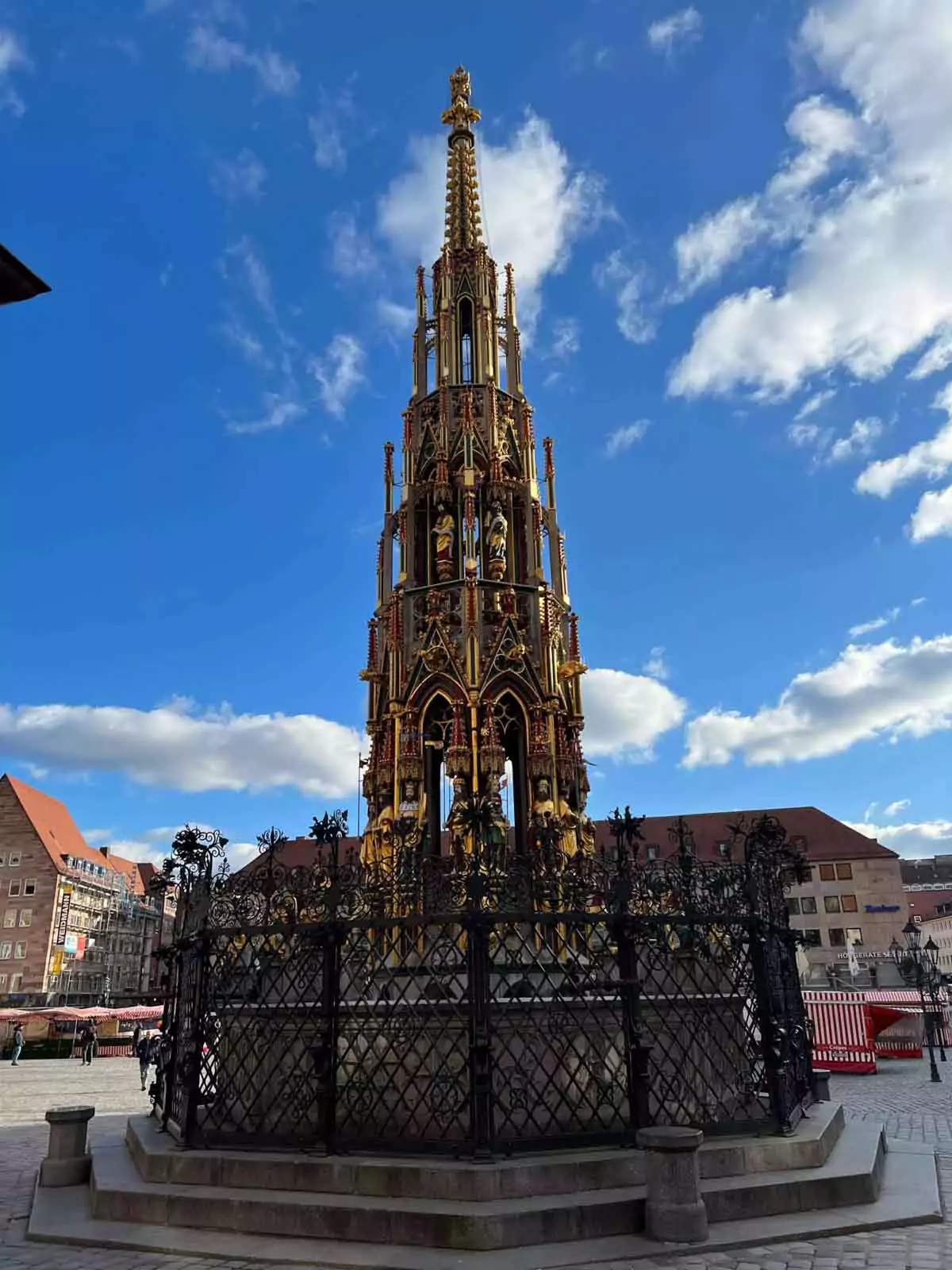
The Schöner Brunnen, or “Beautiful Fountain,” is one of Nuremberg’s most famous landmarks, located in the heart of the city’s historic Hauptmarkt (Main Market Square).
The fountain was built between 1385 and 1396 and is an exquisite example of Gothic art. It was originally intended to be a pinnacle for a church, but it was ultimately placed in the market square, where it has become one of the city’s most beloved symbols.
The fountain represents the city’s prosperity and artistic heritage during the Middle Ages when Nuremberg was one of the most important cities in the Holy Roman Empire.
One of the fountain’s most famous features is the golden ring embedded in the iron fence surrounding it. According to local legend, turning the ring three times will bring good luck or grant a wish.
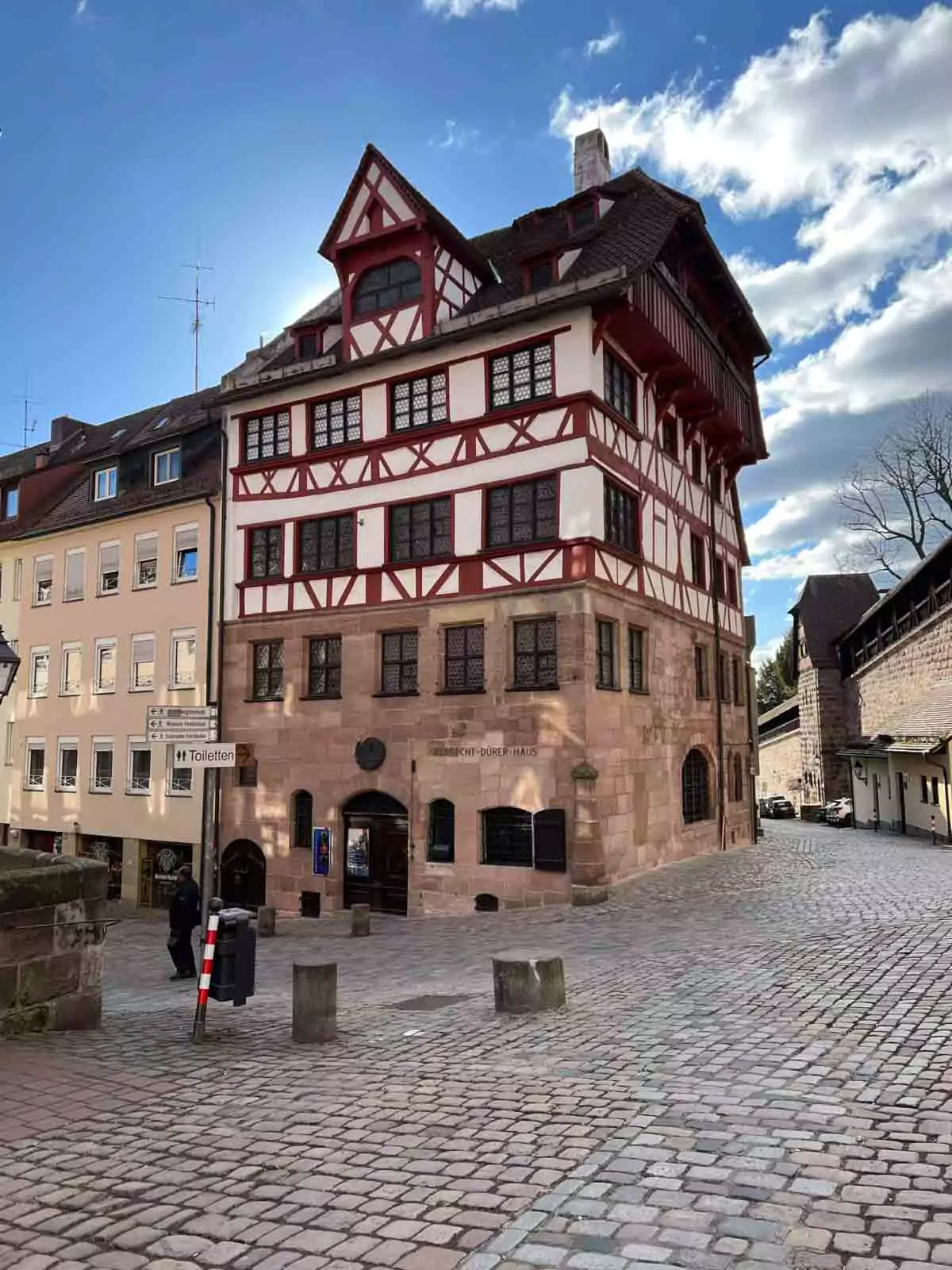
8. Albrecht Dürer’s House (Albrecht-Dürer-Haus)
Albrecht Dürer’s House is one of the most important cultural landmarks in Nuremberg, Germany. This historic home was the residence of the renowned Renaissance artist Albrecht Dürer, who lived and worked here from 1509 until his death in 1528. The house is now a museum dedicated to Dürer’s life and work.
The museum offers guided tours that provide detailed insights into Dürer’s life and work. These tours are available in multiple languages and are highly recommended for a deeper understanding of the exhibits. It’s free with a Nuremberg Card or you can pay €6 to go inside.
Just outside the building is the rabbit statue nuremberg!
Admission Fees: General admission is usually around €6.00 for adults, with reduced rates for students, seniors, and children. Family tickets and combination tickets with other Nuremberg museums are often available.

9. Documentation Center Nazi Party Rally Grounds
The Documentation Center is housed in the unfinished Congress Hall, a massive structure that was intended to be a venue for party meetings. The permanent exhibition, titled “Fascination and Terror,” uses photographs, documents, films, and artifacts to explore the causes, consequences, and realities of the Nazi dictatorship. It’s free with a Nuremberg Card or you can pay €6 to go inside.

The rally grounds cover approximately 11 square kilometers and include several notable structures, such as the Zeppelin Field, the Grandstand, and the remains of the Congress Hall. You can explore these sites, many of which have been preserved or partially restored to serve as historical reminders.
The Zeppelin Field, with its grandstand and podium where Hitler delivered speeches, is particularly haunting. Today, it serves as a sobering reminder of the scale of Nazi propaganda and the fervor it created.
Opening Hours: The Documentation Center is typically open daily from 9:00 AM to 6:00 PM, but it’s advisable to check the official website for the most current hours and any special closures.
Admission Fees: The entrance fee is generally around €6.00 for adults, with reduced rates for students, seniors, and groups. Audio guides are often included in the ticket price, and guided tours may have an additional fee.
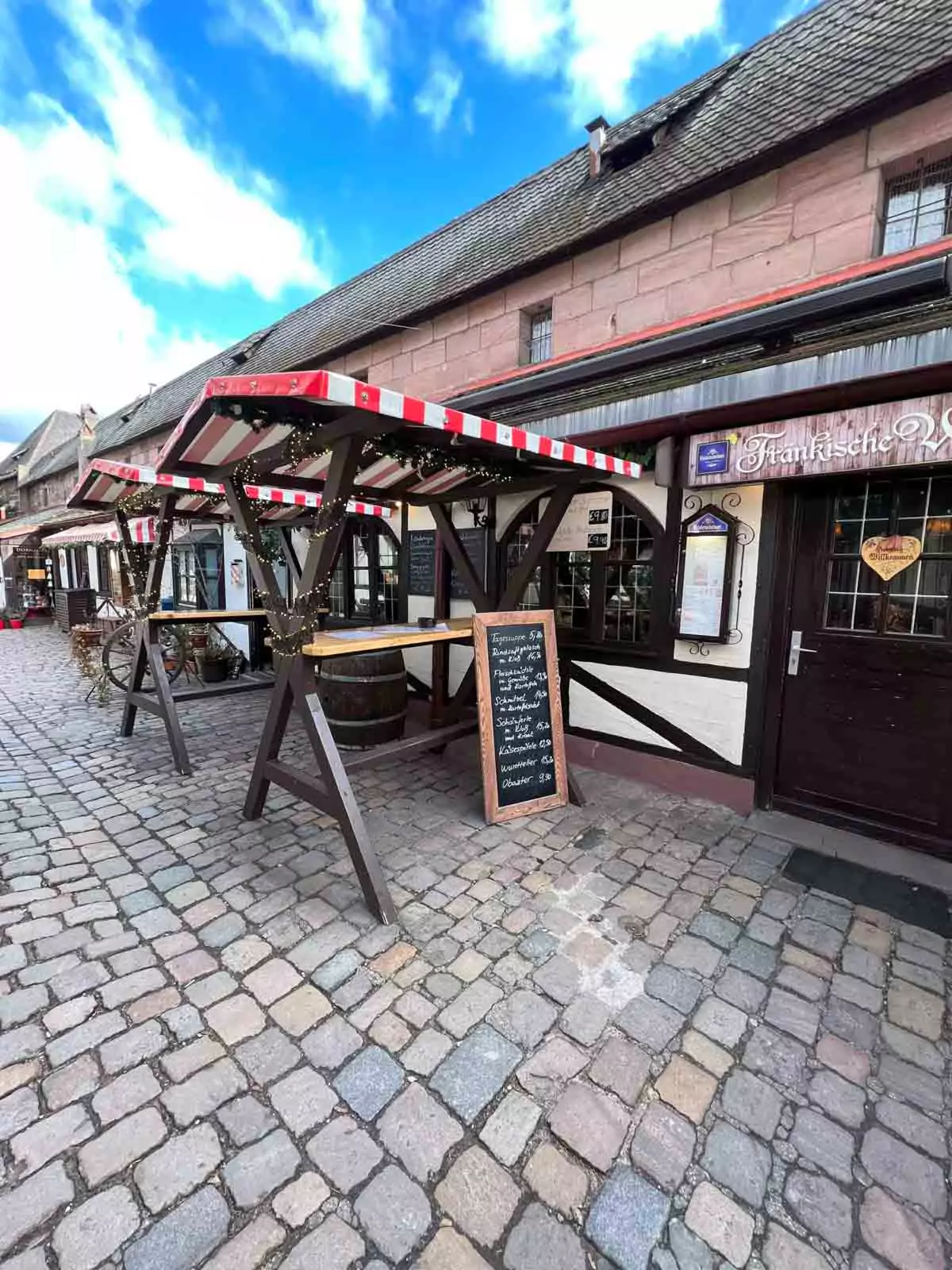
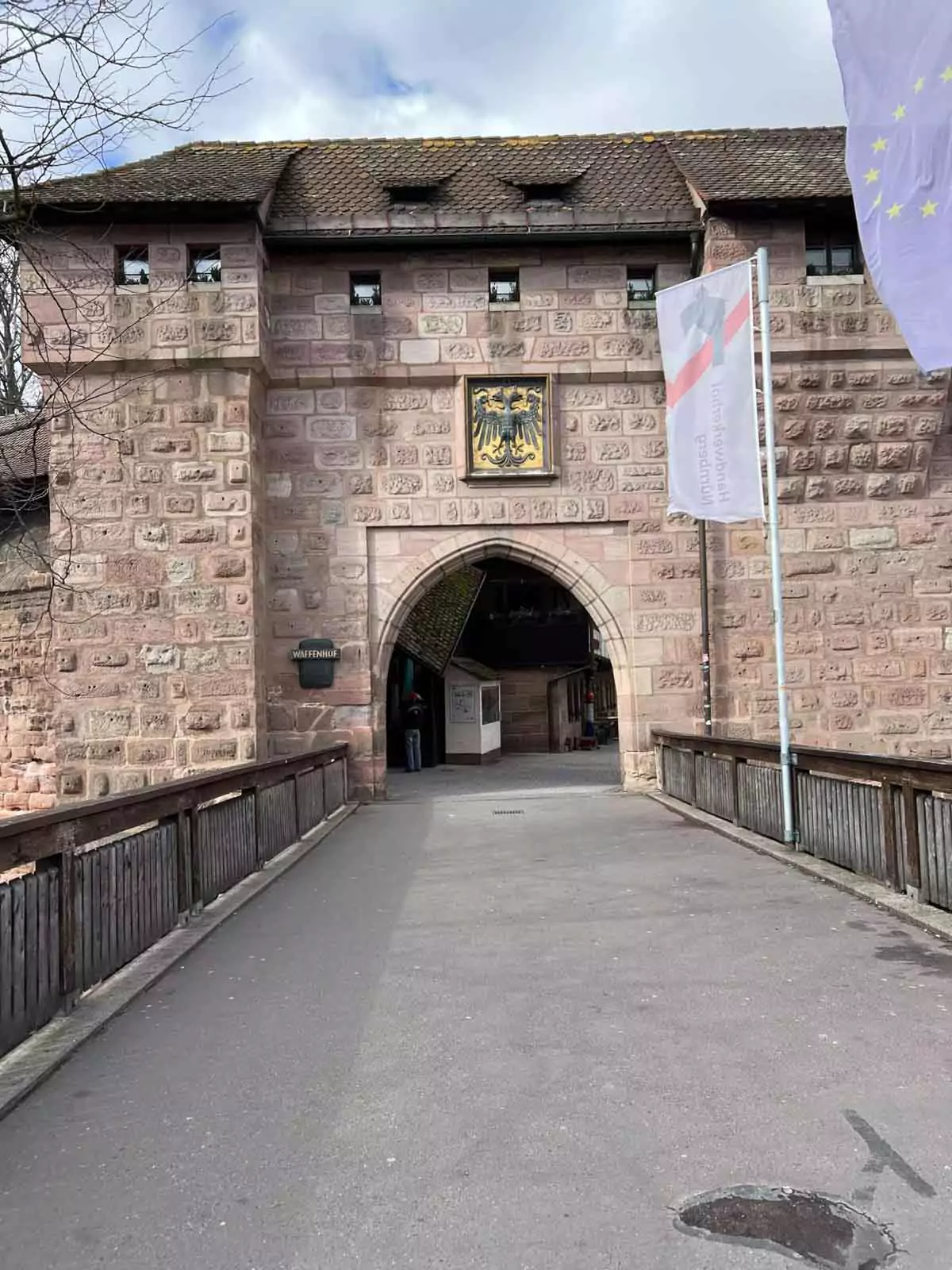
10. Handwerkerhof
The Handwerkerhof is a charming craft village located in the heart of Nuremberg, near the city’s main train station.
The Handwerkerhof is housed within the old armory and moat area of Nuremberg’s city walls, providing an authentic medieval backdrop. The cobblestone streets, half-timbered buildings, and stone towers create a picturesque and historically rich atmosphere.
Despite being located in the bustling city center, the Handwerkerhof feels like stepping back in time. It’s a peaceful retreat where you can enjoy the sights, sounds, and smells of a bygone era.
The Handwerkerhof is home to numerous small shops where artisans practice traditional crafts. Visitors can watch skilled craftsmen at work, creating everything from handmade pottery and leather goods to glassware, wooden toys, and goldsmithing.
The Handwerkerhof also features a selection of traditional Franconian restaurants and cafes. You can enjoy local specialties such as Nürnberger Rostbratwurst (Nuremberg sausages), served with sauerkraut and potato salad, or savor a slice of freshly baked Lebkuchen (gingerbread).
The Handwerkerhof was established in 1971 as part of the city’s efforts to preserve and celebrate traditional crafts. It serves as a living museum where the skills and trades that have been passed down through generations continue to thrive.
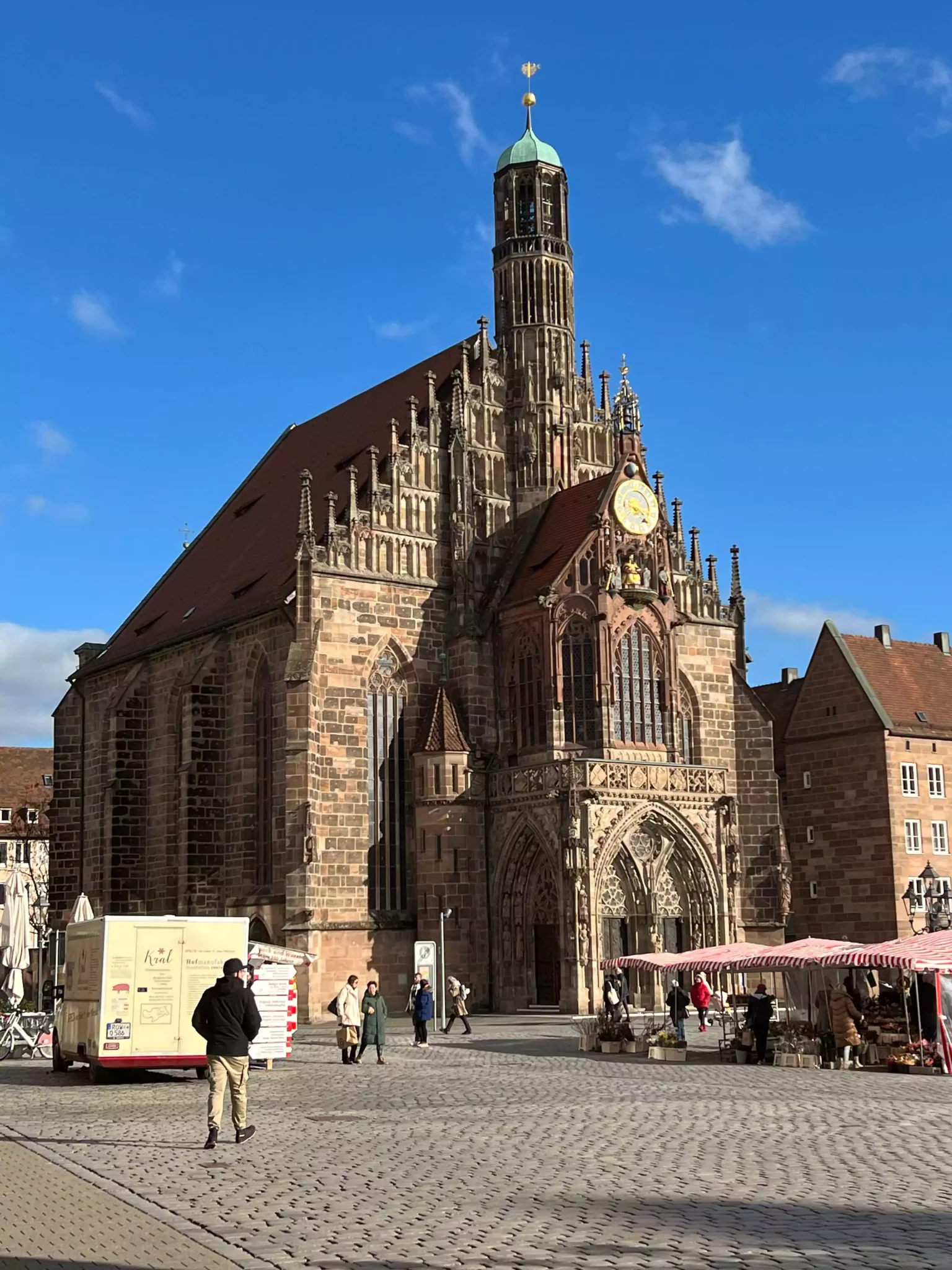
11. Frauenkirche (Church of Our Lady)
Located on the Hauptmarkt, Frauenkirche is a Gothic church is known for its ornate façade and beautiful interior.
The Frauenkirche was commissioned by Emperor Charles IV and built between 1352 and 1362 on the site of a former synagogue, after the Jews were expelled from the city. It was intended as an Imperial Chapel and is a prime example of Gothic architecture in Germany.
The Gothic design reflects the high level of craftsmanship typical of the Gothic style and serves as a focal point in the bustling Hauptmarkt.
The Frauenkirche is renowned for its mechanical clock, known as the Männleinlaufen. Installed in 1509, the clock performs a daily show at noon, where figurines representing the seven Electors of the Holy Roman Empire circle around Emperor Charles IV.
During the Christmas season, the church’s location at the Hauptmarkt makes it a central part of the Nuremberg Christmas Market (Christkindlesmarkt).
Don’t leave Nuremberg without trying a plate of Drei im Weggla (Nuremberg sausages in a bun) or a slice of Lebkuchen (gingerbread) at Hauptmarkt!
Admission: Entrance to the Frauenkirche is generally free, though donations are appreciated. There may be a small fee for guided tours or access to special exhibitions.
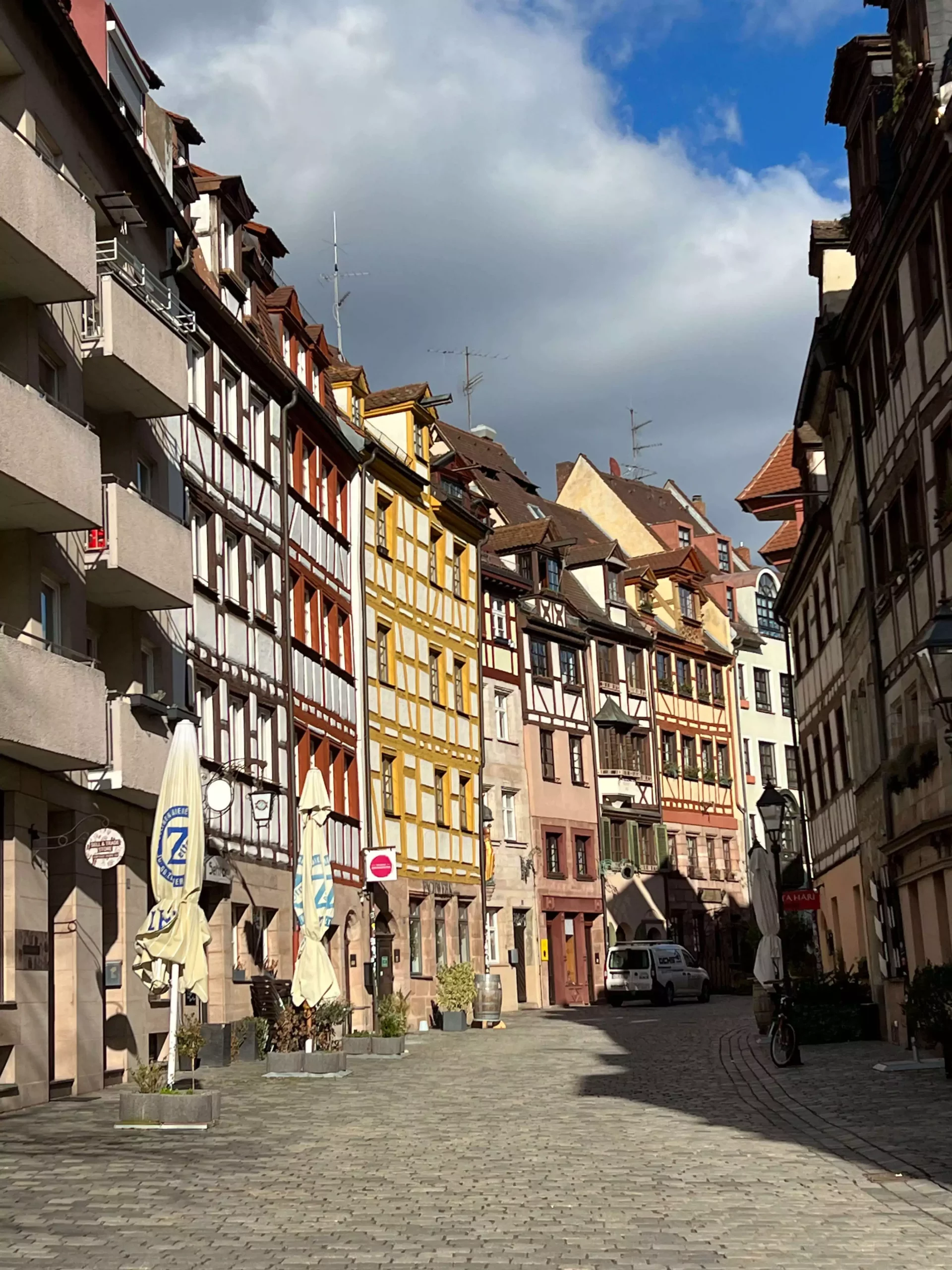
12. Stroll through the Weissgerbergasse
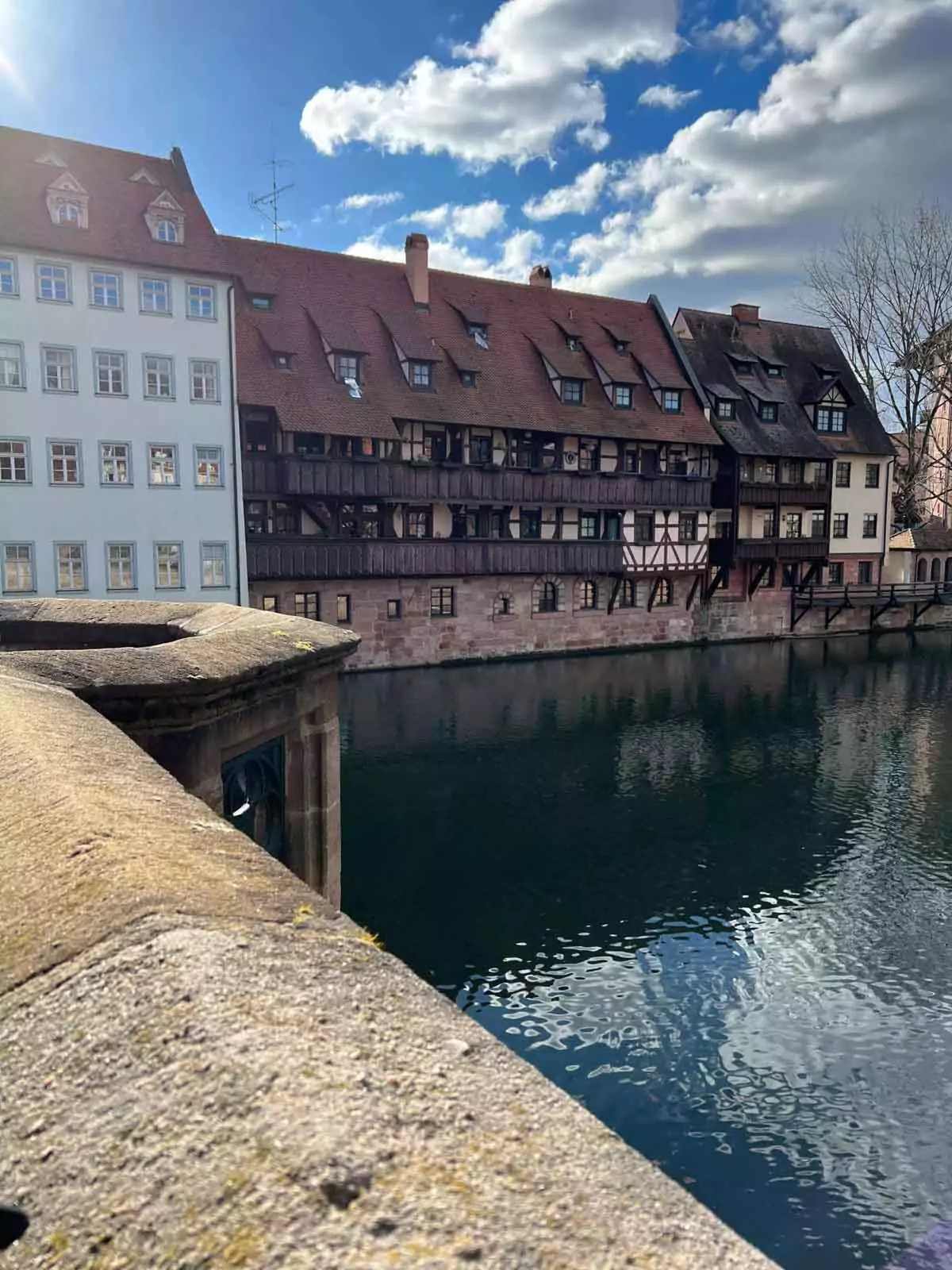
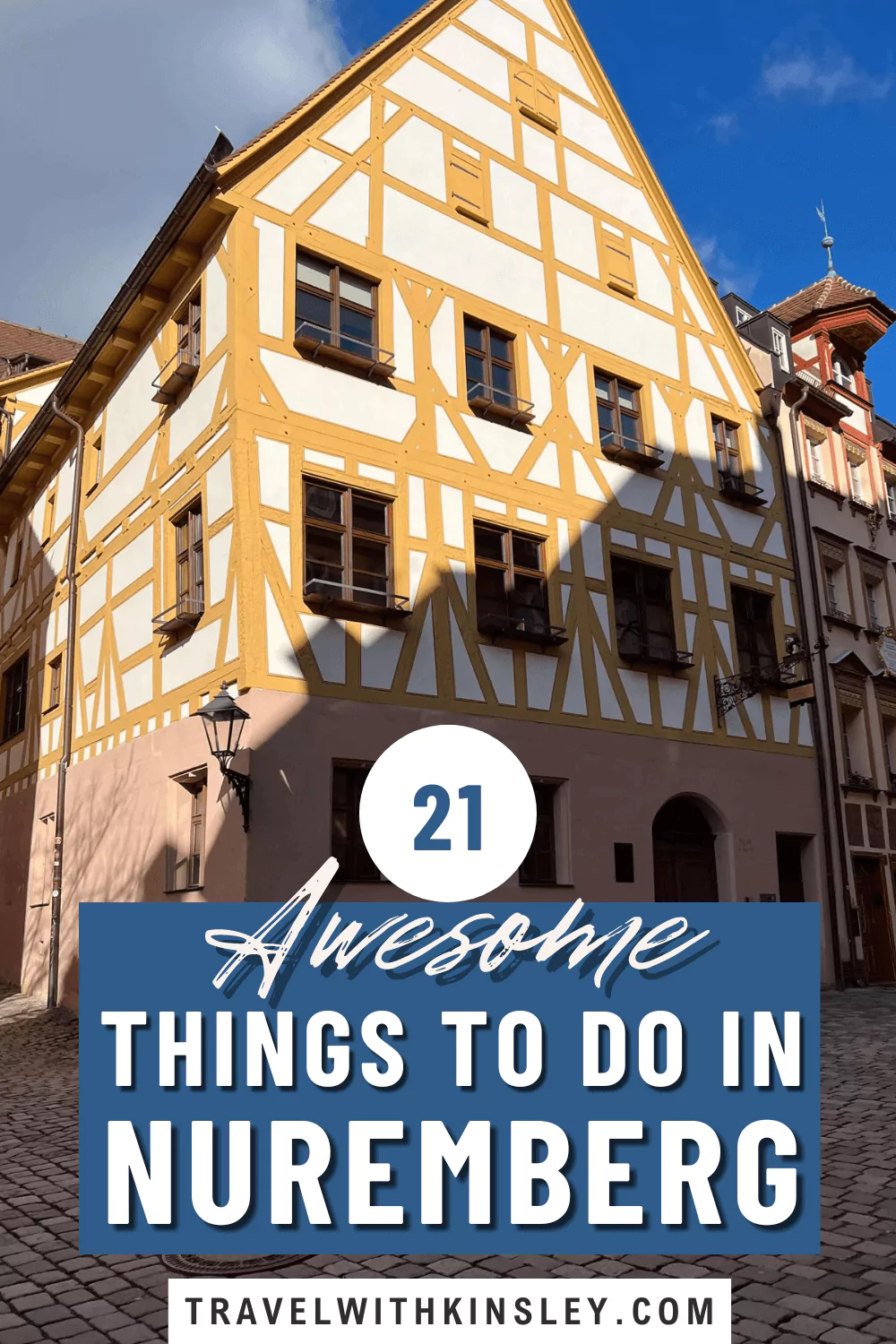
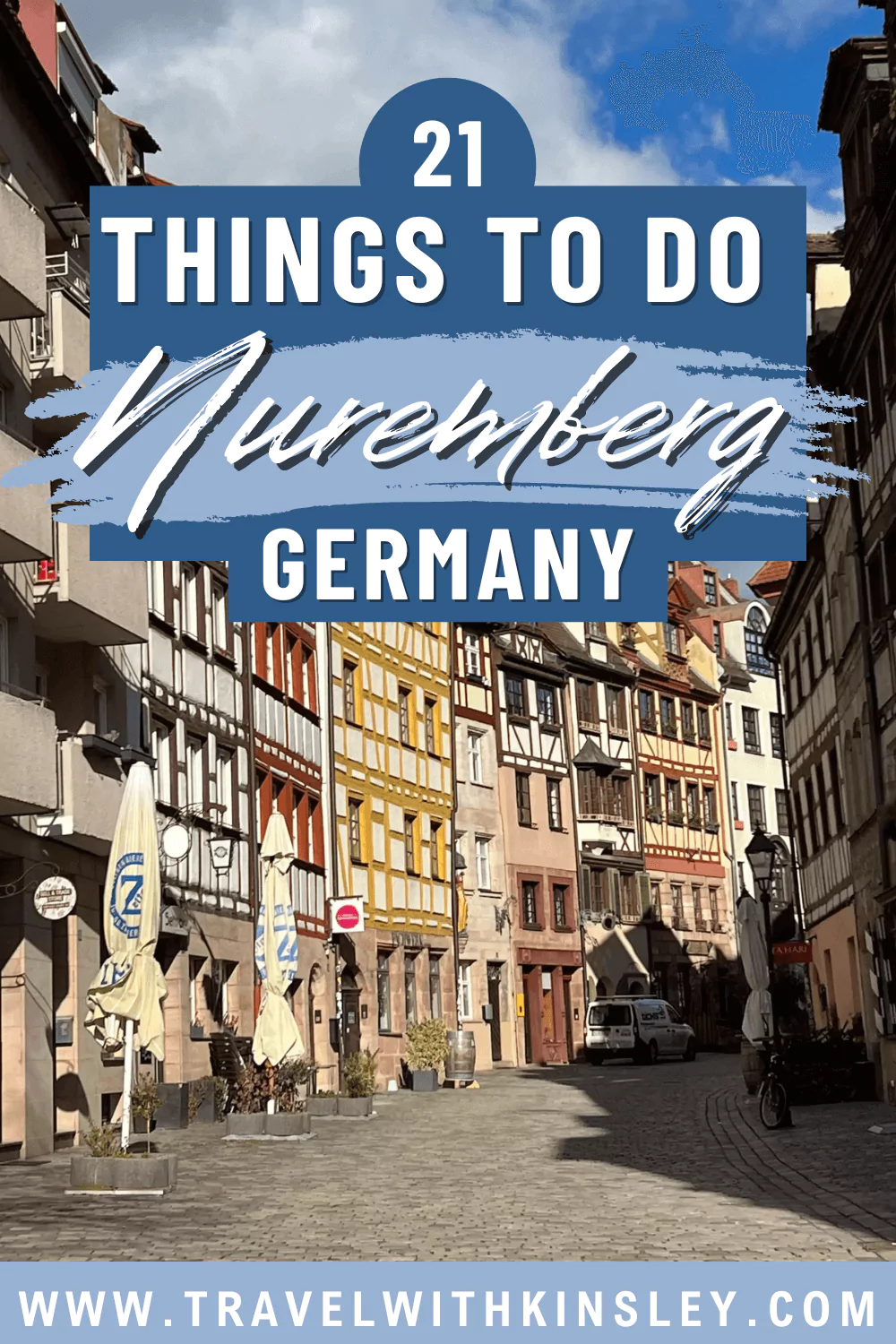
Weißgerbergasse is lined with some of the best-preserved half-timbered houses in Nuremberg. These colorful, multi-story buildings date back to the 16th and 17th centuries and were originally the homes and workshops of tanners and craftsmen.
The name “Weißgerbergasse” translates to “White Tanners’ Lane,” referring to the tanners who lived and worked on this street. Their trade involved processing leather, which was an important industry in medieval Nuremberg.
The street’s narrow, cobblestone path, combined with the colorful half-timbered houses, creates a fairy-tale-like atmosphere. It’s one of the most photogenic spots in Nuremberg.
Weißgerbergasse is located in the northern part of Nuremberg’s Old Town, just a short walk from major landmarks such as Nuremberg Castle and the Albrecht Dürer House.
The street is pedestrian-friendly, making it easy to explore on foot. It’s also accessible by public transportation, with nearby tram and bus stops.
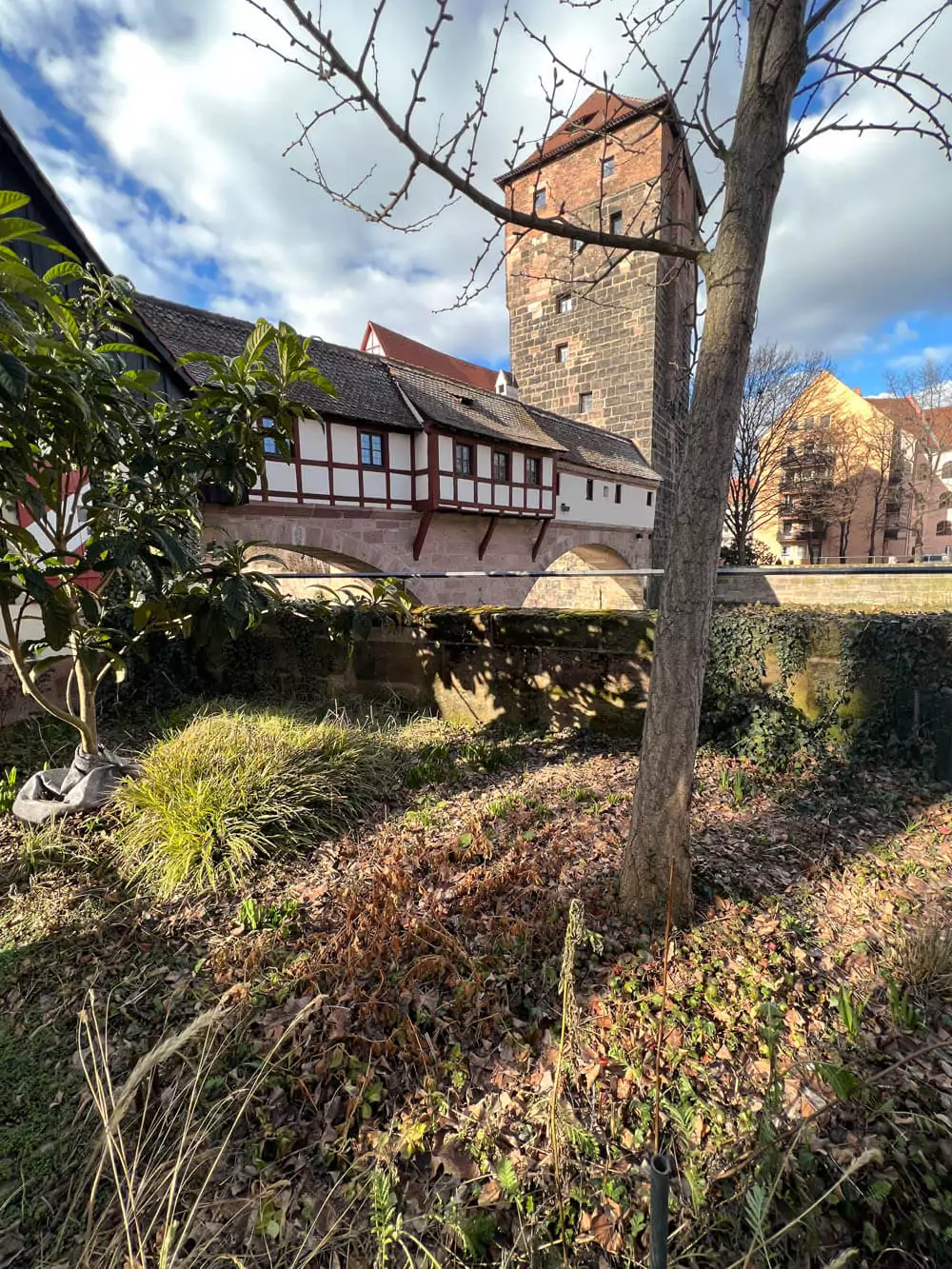
13. Weinstadel
The Weinstadel is one of the most iconic and picturesque buildings in Nuremberg, Germany. It’s notable for being one of the largest and longest half-timbered buildings in Germany, stretching over 48 meters (157 feet) along the Pegnitz River.
The Weinstadel, which translates to “Wine Depot,” was built between 1446 and 1448. It originally served as a facility to house lepers during Holy Week, a tradition that continued for about 100 years.
The Weinstadel can be visited year-round, but it’s especially beautiful in the early morning or late afternoon when the light is softer, making for great photography opportunities.
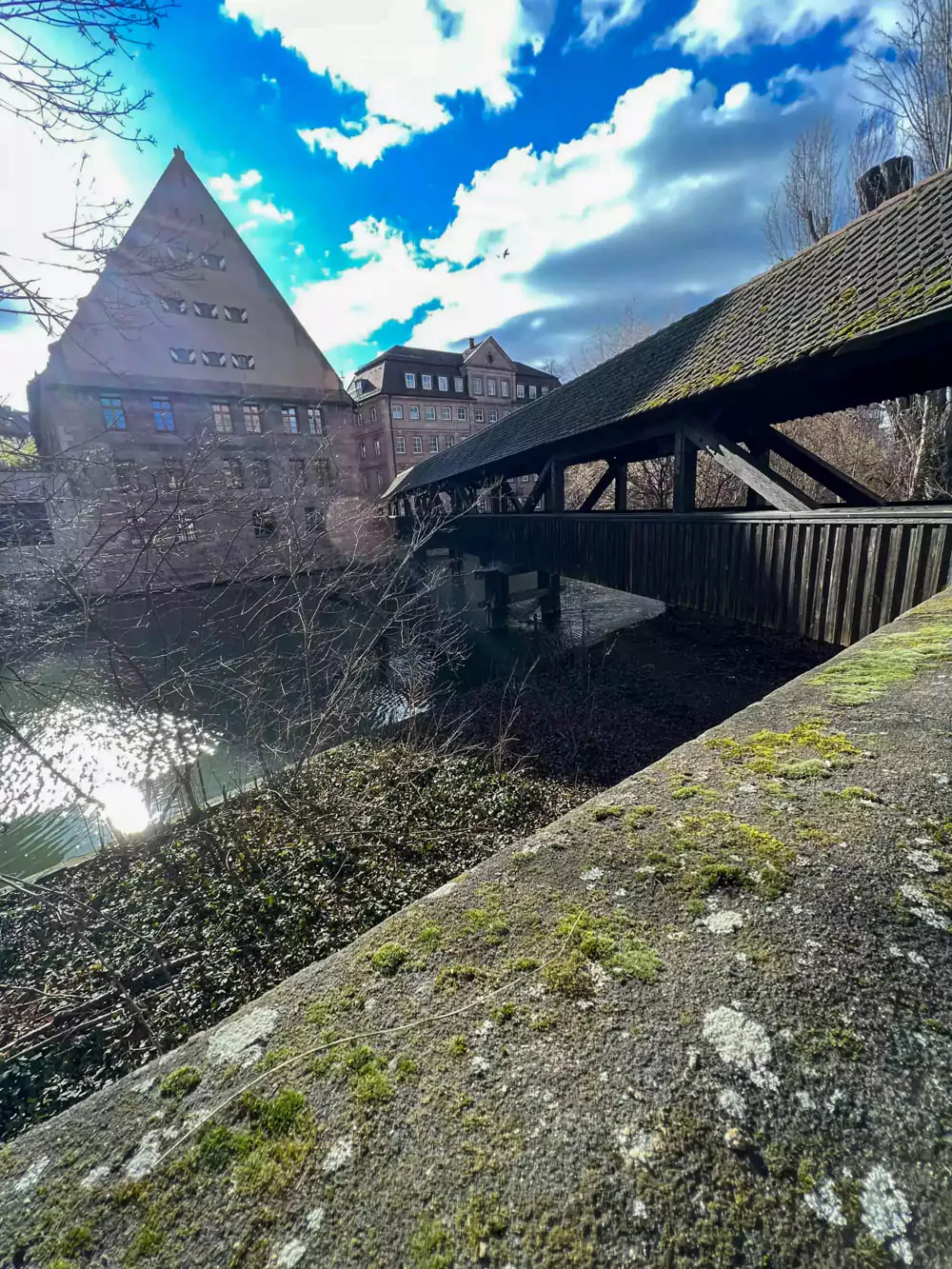
14. Henkersteg (Hangman’s Bridge)
One unexpected highlight of our trip was visiting Henkersteg (Hangman’s Bridge) — a lesser-known historical site with eerie medieval legends.
Adjacent to the Weinstadel is the Henkersteg, a wooden footbridge that dates back to 1457. The bridge is connected to the Henkerhaus (Hangman’s House), which now serves as a small museum dedicated to the history of crime and punishment in medieval Nuremberg. The museum is free with a Nuremberg Card or you can pay €3 to go inside.
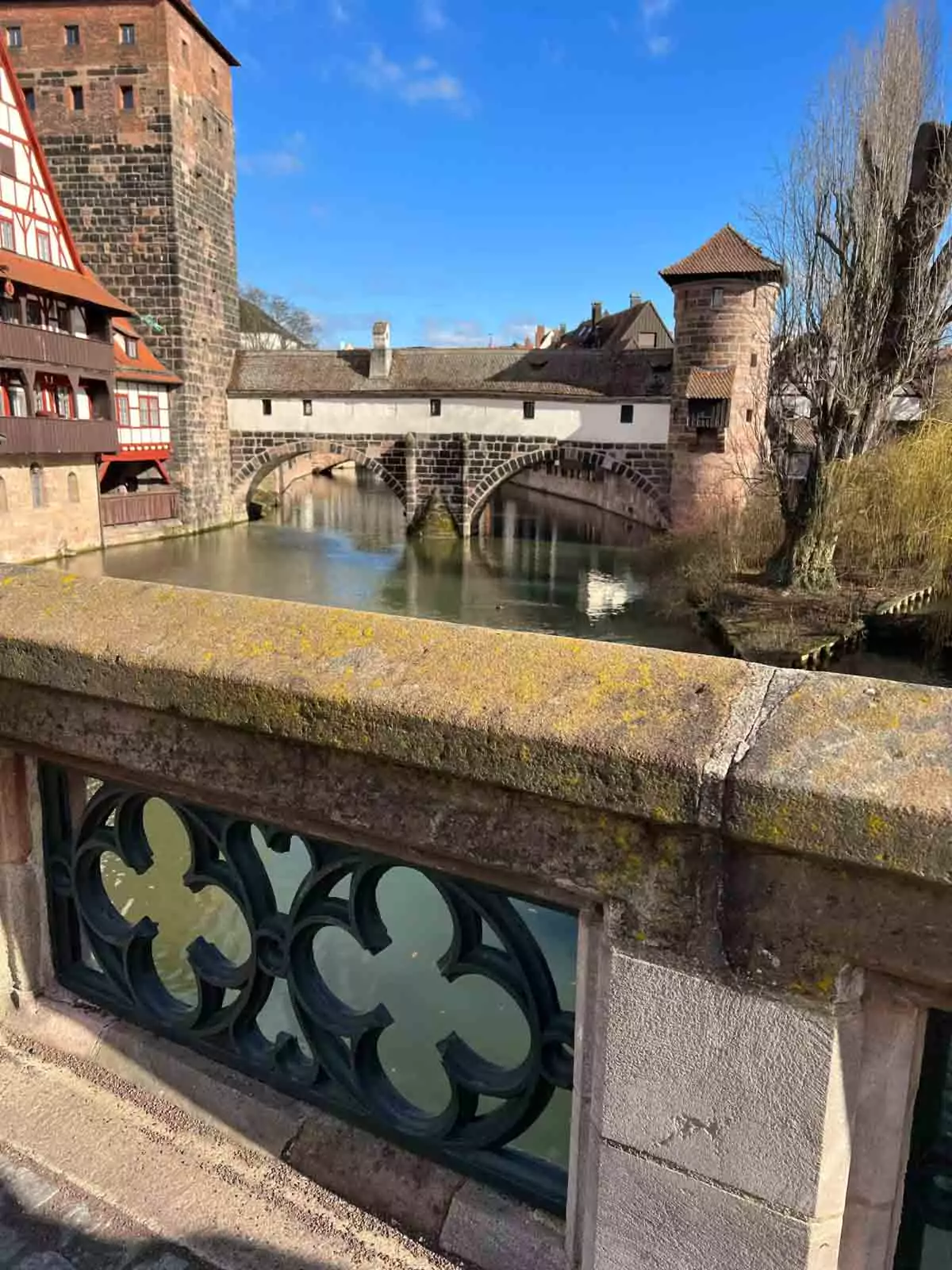
15. Maxbrücke (Max Bridge)
Located just a short stroll from the Weinstadel, Maxbrücke is one of the oldest stone bridges in Nuremberg—and it’s definitely worth a stop on your Old Town walk.
This spot gives you some of the best views of the river and historic buildings, especially if you’re into photography or just want to slow down and soak in the scenery. It’s a quiet, scenic moment in the middle of a busy sightseeing day, and a perfect place to snap a few photos before moving on.

16. Nuremberg Town Hall (Rathaus Nürnberg)
While walking through Nuremberg’s Old Town, the Nuremberg Rathaus definitely stopped us in our tracks—it’s an impressive building with serious historic presence. Even if you’re just passing by, it’s worth pausing for a quick photo.
But what most people don’t realize is that beneath this beautiful structure lies a darker part of the city’s past. With a Medieval Dungeons Guided Tour, you can actually head underground into the vaulted cellars, where prisoners were once held and interrogated during the Middle Ages. It’s chilling, fascinating, and a unique way to learn about Nuremberg’s legal history.
I took a guided tour in German because the woman at the information desk said that I can listen to an audioguide… it was a very awkward experience, haha.
If you’re already visiting Hauptmarkt, this stop is just a short walk away—perfect to squeeze into your Old Town sightseeing route.
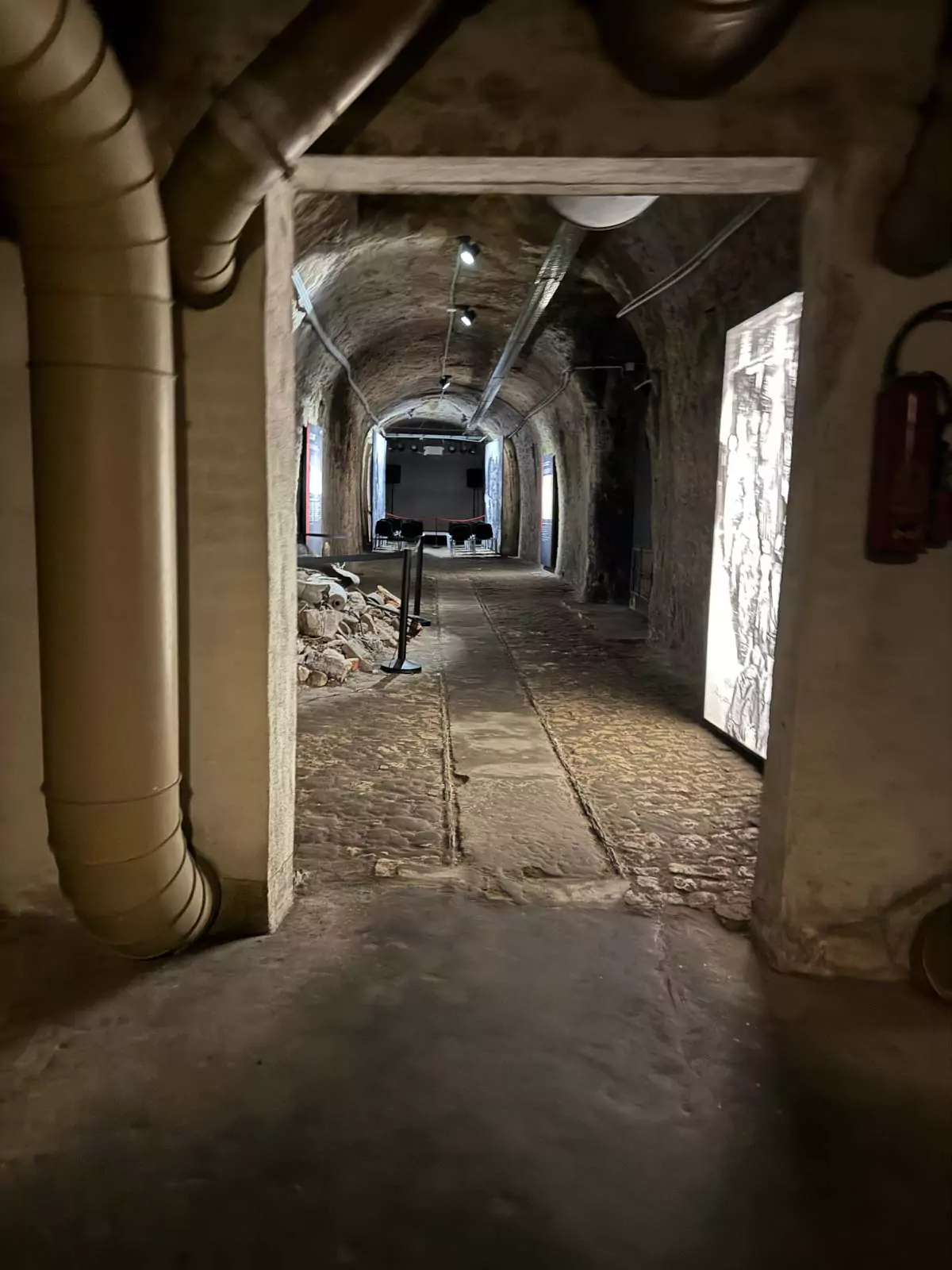
17. Explore Nuremberg’s Underground Tunnels
One of the most unique things to do in Nuremberg is heading below the city streets to explore its historic network of underground cellars and tunnels. Originally built for beer storage, these tunnels were later used as air raid shelters during World War II.
You can take a guided tour to learn how this underground system evolved over time and how it played a key role in protecting the city’s people and culture. If you’re into hidden history or want something a little different than the usual sightseeing, this is such a cool (and literally cool—it’s chilly down there!) experience to add to your Nuremberg itinerary.
18. Toy Museum (Spielzeugmuseum)
Nuremberg has a long tradition of toy making, and the Toy Museum celebrates this history with exhibits of toys from different eras, including antique dolls, model trains, and modern toys. It’s a fun and nostalgic experience for visitors of all ages. It’s free with a Nuremberg Card or you can pay €7.50 to go inside.
19. Nuremberg Zoo (Tiergarten Nürnberg)
Nuremberg Zoo is one of the largest zoos in Germany, home to a wide variety of animals, including polar bears, big cats, and dolphins. The zoo is set in a beautiful park-like setting with plenty of walking paths and natural enclosures.It’s free with a Nuremberg Card or you can pay €20 to go inside.
20. Tucher Mansion and Hirsvogel Hall
The Tucher Mansion is a beautifully preserved Renaissance-era home that belonged to one of Nuremberg’s wealthy merchant families. The adjacent Hirsvogel Hall, reconstructed after World War II, features stunning frescoes and is a prime example of Renaissance art and architecture. It’s free with a Nuremberg Card or you can pay €7.50 to go inside.
21. Trödelmarkt
Located on a small island in the Pegnitz River, Trödelmarkt is a charming area with small shops, cafes, and bridges. It’s a lovely spot for a leisurely walk and some shopping.
22. Nuremberg Trials Memorial (Memorium Nürnberger Prozesse)
Visit the site of the Nuremberg Trials, where leading Nazi officials were tried for war crimes after World War II. The museum includes the original Courtroom 600 and exhibits that detail the trials and their significance in international law. It’s free with a Nuremberg Card or you can pay €7.50 to go inside.

23. Germanisches Nationalmuseum
The Germanisches Nationalmuseum is the largest museum of cultural history in the German-speaking world. It houses an extensive collection of art and cultural artifacts, ranging from prehistoric times to the present, including medieval armor, religious artifacts, and Renaissance paintings. It’s free with a Nuremberg Card or you can pay €10 to go inside.
24. Take a Hop-on Hop-off Bus Tour
If you’re looking for a low-effort way to explore Nuremberg without doing a ton of walking, the Hop-on Hop-off bus tour is a great option.
What we loved most is that it covers the major sites both in and beyond the Old Town—including harder-to-reach places like the Memorium Nuremberg Trials (Justizpalast) and the Nazi Party Rally Grounds (Kongresshalle). Of course, it also stops at all the must-see spots in the historic center, like Hauptmarkt, Kaiserburg Castle, and more.
It’s perfect if you’re short on time or want to get a solid overview of the city without mapping out every step.
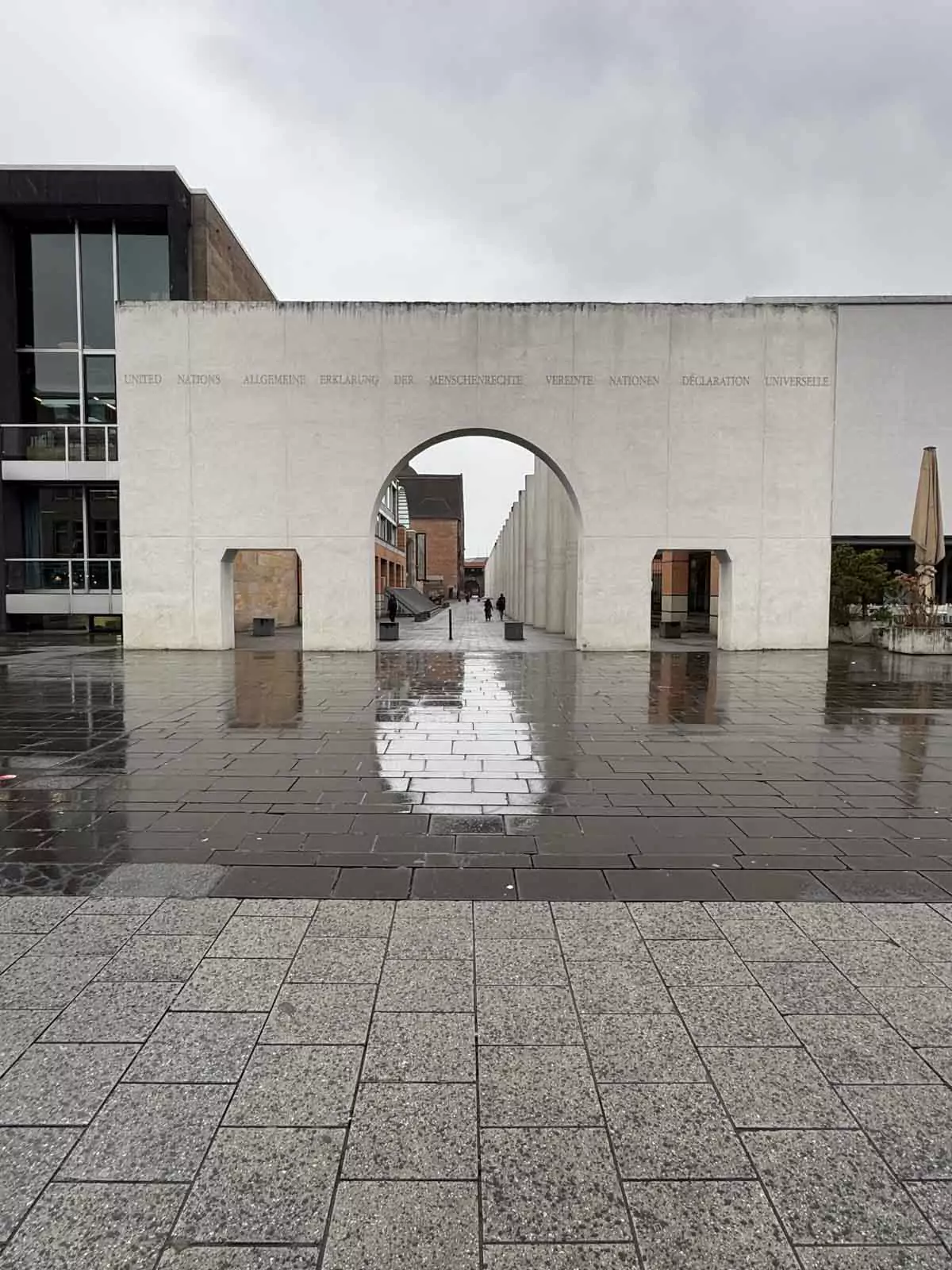
25. Walk the Way of Human Rights
If you’re planning to visit the Germanisches Nationalmuseum, make time to pause just outside at the Way of Human Rights. This striking outdoor monument is Nuremberg’s powerful reflection on its Nazi past and ongoing commitment to human rights.
Designed by Israeli artist Dani Karavan, the installation features a large white gate, 27 tall pillars, two engraved floor plaques, and an oak tree. Each element is inscribed with articles from the Universal Declaration of Human Rights, translated into different languages.
What stood out to us most is that it doesn’t tell you what to think—it invites you to reflect. It’s not flashy, but it’s impactful, especially in a city with such complex history. And because it’s located right outside the museum, it fits seamlessly into your day of exploring Nuremberg’s cultural and historical sites.
Practical FAQs for Visiting Nuremberg
What is the best time to visit Nuremberg?
The best time to visit Nuremberg is during the spring (April to June) and fall (September to October) when the weather is mild, and there are fewer crowds. The Christmas season is also popular due to the famous Nuremberg Christmas Market.
How many days should I spend in Nuremberg?
Spending 2 to 3 days in Nuremberg is ideal to explore the main attractions, including the Old Town, Nuremberg Castle, museums, and nearby sites.
How do I get to Nuremberg?
Nuremberg is well-connected by air, train, and road. The city has its own airport (Nuremberg Airport, NUE), and it is also easily accessible by train from other major German cities like Munich, Frankfurt, and Berlin.
Can I visit Nuremberg as a day trip from Munich?
Yes, Nuremberg is about 1.5 hours from Munich by train, making it a convenient day trip option.
Is Nuremberg easy to get around?
Yes, Nuremberg is easy to navigate on foot, especially in the Old Town area. The city also has an efficient public transportation system, including trams, buses, and an U-Bahn (subway) network.
What traditional foods should I try in Nuremberg?
Don’t miss out on trying Nuremberg’s famous bratwurst (Nürnberger Rostbratwurst), served with sauerkraut or potato salad. Lebkuchen (gingerbread) is another local specialty, especially during the Christmas season.
Is Nuremberg family-friendly?
Yes, Nuremberg offers many family-friendly attractions, such as the Nuremberg Zoo, the Toy Museum, and various parks and playgrounds. The city’s history and culture are also presented in an engaging way that can be interesting for children.
What are some good day trips from Nuremberg?
Popular day trips from Nuremberg include visiting the picturesque town of Rothenburg ob der Tauber, the Franconian Switzerland region, and the city of Bamberg, known for its historic architecture and smoked beer.
Is the Nuremberg Card worth it?
The Nuremberg Card is definitely worth it if you plan to visit multiple attractions and use public transportation during your stay. It offers free admission to over 50 museums and attractions in Nuremberg and nearby Fürth.
The card provides unlimited access to public transportation within Nuremberg and Fürth for the duration of its validity. This includes buses, trams, and the U-Bahn (subway), making it easy to get around the city without worrying about purchasing individual tickets.
The card is valid for 48 hours from the time of first use, giving you two full days to explore the city.

Where to stay in Nuremberg
Old Town (Altstadt): Staying in the Old Town places you in the heart of Nuremberg’s historical and cultural attractions. You’ll be within walking distance of major sights like Nuremberg Castle, St. Lorenz Church, the Hauptmarkt, and many museums. The Old Town is also packed with restaurants, cafes, and shops, offering a vibrant atmosphere.
- Hotel Victoria Nuremberg: A charming 4-star hotel located near the main train station, blending historic architecture with modern amenities.
- Hotel Drei Raben: A boutique hotel known for its unique themed rooms, each telling a story related to Nuremberg’s history and legends.
- Sorat Hotel Saxx: Located directly on the Hauptmarkt, this hotel offers modern rooms and easy access to the city’s main attractions.
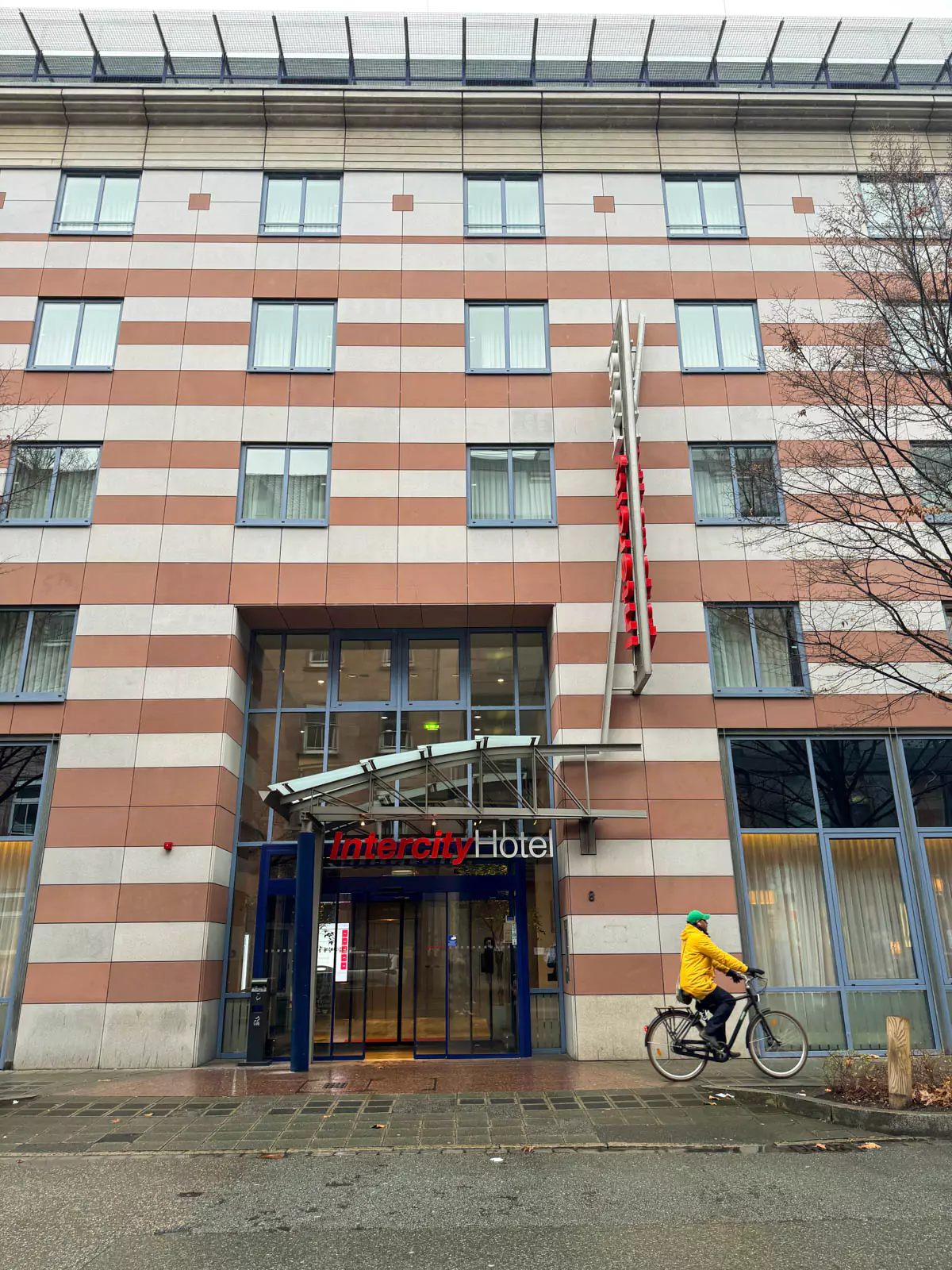
Near Nuremberg Central Station (Hauptbahnhof): Staying near the central train station is convenient if you’re planning to travel by train or need easy access to public transportation. The area is just a short walk from the Old Town and offers a range of accommodation options.
- NH Collection Nürnberg City: A modern 4-star hotel located close to the central station, offering comfortable rooms and amenities like a spa and fitness center.
- Scandic Nürnberg Central: This hotel is also near the train station and offers an indoor pool, fitness center, and spacious rooms.
- Le Méridien Grand Hotel Nürnberg: A luxury hotel located directly across from the train station, blending historic charm with modern comforts.
Gostenhof: Gostenhof is a trendy neighborhood just west of the Old Town, known for its artsy vibe, vibrant street art, and a mix of hip cafes, bars, and boutique shops. It’s a great area for those looking to experience a more local and creative side of Nuremberg.
- Design Hotel Vosteen: A boutique hotel with a retro design, located near the Old Town but within the Gostenhof district. It’s known for its stylish rooms and personalized service.
- DasPaul Hotel: A modern boutique hotel offering stylish, minimalist rooms and an on-site restaurant. It’s located on the edge of Gostenhof, close to the river and within walking distance of the Old Town.
What to Eat in Nuremberg
Nuremberg is a great place to try authentic Bavarian-Franconian dishes, especially if you love hearty, traditional flavors. Here are a few local specialties to look out for during your visit:
- 🌭 Nürnberger Rostbratwurst – Tiny sausages served with sauerkraut or potato salad.
- 🍪 Nürnberger Lebkuchen – Traditional gingerbread, especially famous during the Christmas Market.
- 🍺 Rauchbier (Smoked Beer) – A specialty beer from nearby Bamberg, often available in Nuremberg’s taverns.
- 🥨 Brezn (Pretzel) – A classic Bavarian snack, often paired with mustard.
If you’re looking for where to eat, we’ve got a list of favorite ” target=”_blank”>Nuremberg restaurants to help you try them all!
How Much Do You Know About Nuremberg?
Take this quick quiz and test your knowledge of this historic German city!
Final Thoughts
I hope you’ve enjoyed my guide to the top attractions and best things to do in Nuremberg. You can also read my itinerary for our trip if you’re looking into the time we spent there!
My favorite item from this list is number 1 – the castle! It really had the best views overlooking the Old Town.
Have you been to Nuremberg? What was your favorite thing do to? Let me know in the comments below!
More Germany Posts
- 9-Day Germany and Austria Itinerary
- How To See Nuremberg In One Day: The Ultimate Guide
- Munich to Neuschwanstein Castle In One Day
- Top Things to do in Nuremberg
- Nuremberg Food Guide – Where to Eat in Nuremberg, Germany
- Our Visit to the Nuremberg Rally Grounds
- Most Beautiful Castles in Germany
- Our Visit to the Nuremberg Castle
- Emma: Germany’s AI Travel Influencer & the Future of Travel
Like this post? Share it on Pinterest!
 |
 |
