Travel With Kinsley contains affiliate links and is a member of the Amazon Services LLC Associates Program, which means I may receive a cute little commission if you purchase through my links, at no extra cost to you. Please read full disclosure for more information.
There’s something magical about Yellowstone National Park—a place where geysers shoot sky-high, herds of bison roam freely, and the ground itself seems to breathe. If you’ve only got three days to explore this geothermal wonderland, don’t worry—we’ve packed the very best into one ultimate Yellowstone itinerary.
Whether this is your first visit or you’re returning for a second dose of nature’s drama, this guide is for adventurers, families, couples, and solo travelers alike who want to see the park’s top sights without feeling rushed.
As a seasoned traveler who’s navigated Yellowstone’s winding roads and unpredictable weather, I’ve created this itinerary to balance jaw-dropping sights with doable travel times—and a few underrated gems along the way.
Ready to chase geysers, hike into canyons, and stand in awe beneath vast open skies? Let’s hit the road!
Yellowstone National Park is an American icon—and for good reason. Spanning parts of Wyoming, Montana, and Idaho, it’s home to dramatic canyons, geysers that burst like clockwork, and more wildlife than you can shake a camera lens at.
This park is vast—over 2 million acres of it—so a little planning goes a long way. Whether you’re here for a long weekend or stretching it into a road trip across the Rockies, you’ll want to focus your time around Yellowstone’s major regions: the Upper and Lower Geyser Basins, the Grand Canyon of the Yellowstone, Hayden Valley, and Yellowstone Lake. Each area has its own highlights, hikes, and wow-factor views.
If you’re looking for that sweet spot between snowdrifts and summer crowds, aim for late spring (May–early June) or early fall (September–early October).
These shoulder seasons offer mild weather, fewer visitors, and active wildlife—think bison calves and bear sightings, minus the gridlock.
Summer (late June through August) is peak season, with everything open but everyone there. If you’re okay with crowds and don’t mind a fight for parking at Old Faithful, it’s still an unforgettable time to go.
Winter is magical, too—but it’s more for the adventurous. Only a few roads are open, and you’ll need snowshoes or a snow coach to get around. Yellowstone’s beautiful all year, but how you experience it depends on your tolerance for weather and humans.
Many of our park visits are part of a bigger goal: to see all 50 states. Follow our progress here.
Green marshland with a winding river
How to Get to Yellowstone National Park
Yellowstone doesn’t have a single “main” entrance—it has five. And which one you use depends on where you’re coming from and what you want to see first. Here’s a quick cheat sheet:
West Entrance (West Yellowstone, Montana): Most popular and closest to geysers like Old Faithful. Best if you’re flying into Bozeman or Idaho Falls.
South Entrance (Jackson, Wyoming): The scenic route through Grand Teton National Park. Great if you’re combining parks on a longer trip.
East Entrance (Cody, Wyoming): A quieter option with beautiful mountain views. Best for road trippers from Wyoming.
North Entrance (Gardiner, Montana): The only entrance open year-round. Ideal for winter access and close to Mammoth Hot Springs.
Northeast Entrance (Cooke City, Montana): Small but scenic, connecting to the Beartooth Highway (a drive that deserves its own post!).
Flying in? Bozeman Yellowstone International Airport (BZN) is your best bet for the North and West Entrances. Jackson Hole Airport (JAC) works well for the South. Renting a car is essential—there’s no public transport inside the park, and you’ll want the freedom to chase waterfalls (and geysers, and bison).
Yellowstone Itinerary: Day 1
Stop 1: Lamar Valley
Start early and head to Lamar Valley, especially if you’re hoping to spot wildlife. This area is known as “America’s Serengeti” thanks to its population of bison, elk, wolves, and grizzlies. Sunrise is the best time to catch animals in action—bring binoculars and keep your camera ready!
Stop 2: Undine Falls
After your wildlife fix, make a brief stop at Undine Falls, just off the Grand Loop Road near Mammoth. It’s a quick and scenic pull-off featuring a three-tiered cascade tucked into a forested canyon—perfect for a photo op and a stretch break.
Mammoth Hot Springs
Stop 3: Mammoth Hot Springs
Explore the terraces of Mammoth Hot Springs, a surreal landscape of steaming limestone formations. Walk the boardwalks and marvel at the ever-changing geothermal patterns—like nature’s own abstract art gallery.
Stop 4: Boiling River
If it’s open, take a dip in the Boiling River, where hot springs mix with the cold Gardner River to create a natural hot tub. It’s one of the few places in Yellowstone where swimming is allowed—just be cautious of strong currents and closures.
Norris Geyser Basin
Stop 5: Norris Geyser Basin
End your day at Norris Geyser Basin, the hottest and most volatile area in the park. Don’t miss Steamboat Geyser, the world’s tallest active geyser. Even when it’s not erupting, the steamy vents and technicolor pools here are unforgettable.
Katie and Zack at Old Faithful
Yellowstone Itinerary: Day 2
First Stop: Old Faithful
You can’t visit Yellowstone without witnessing the iconic Old Faithful. It erupts about every 90 minutes, so check the posted times and grab a coffee while you wait. The visitor center nearby has fantastic interactive exhibits.
Stop 2: Upper Geyser Basin
Stick around the area to explore the Upper Geyser Basin, home to more geysers than anywhere else on earth. Walk the loop trail to see Castle Geyser, Daisy Geyser, and the vibrant Morning Glory Pool.
Grand Prismatic Spring
Stop 3: Grand Prismatic Spring
This massive, rainbow-colored spring is Yellowstone’s showstopper.
Grand Prismatic Spring from Above:
For the best view, hike the short Fairy Falls Trail to the overlook. It’s a 1.5-mile round-trip and totally worth it for that stunning aerial shot of the spring’s vivid rings.
Grand Prismatic Spring from Ground Level
Then head to the Midway Geyser Basin boardwalk to see the spring up close. You won’t get the full color effect from ground level, but the steam rising from the turquoise water is mesmerizing.
Firehole
Stop 4: Firehole River
Wind down the day with a scenic drive along Firehole Canyon Drive. Stop for a swim in the Firehole River swimming area if conditions allow, or just admire the lava-carved canyon views.
West Thumb Geyser Basin
Yellowstone Itinerary: Day 3
Stop 1: West Thumb Geyser Basin
Kick off your final day at West Thumb, where geothermal features bubble right along the edge of Yellowstone Lake. Look out for the Abyss Pool and Fishing Cone—yes, people used to cook fish in it (please don’t try that now).
Yellowstone Lake
Stop 2: Yellowstone Lake
Drive along the scenic shoreline and take time to relax by the water. This is Yellowstone’s largest lake, and its peaceful views are the perfect way to slow down the trip’s pace.
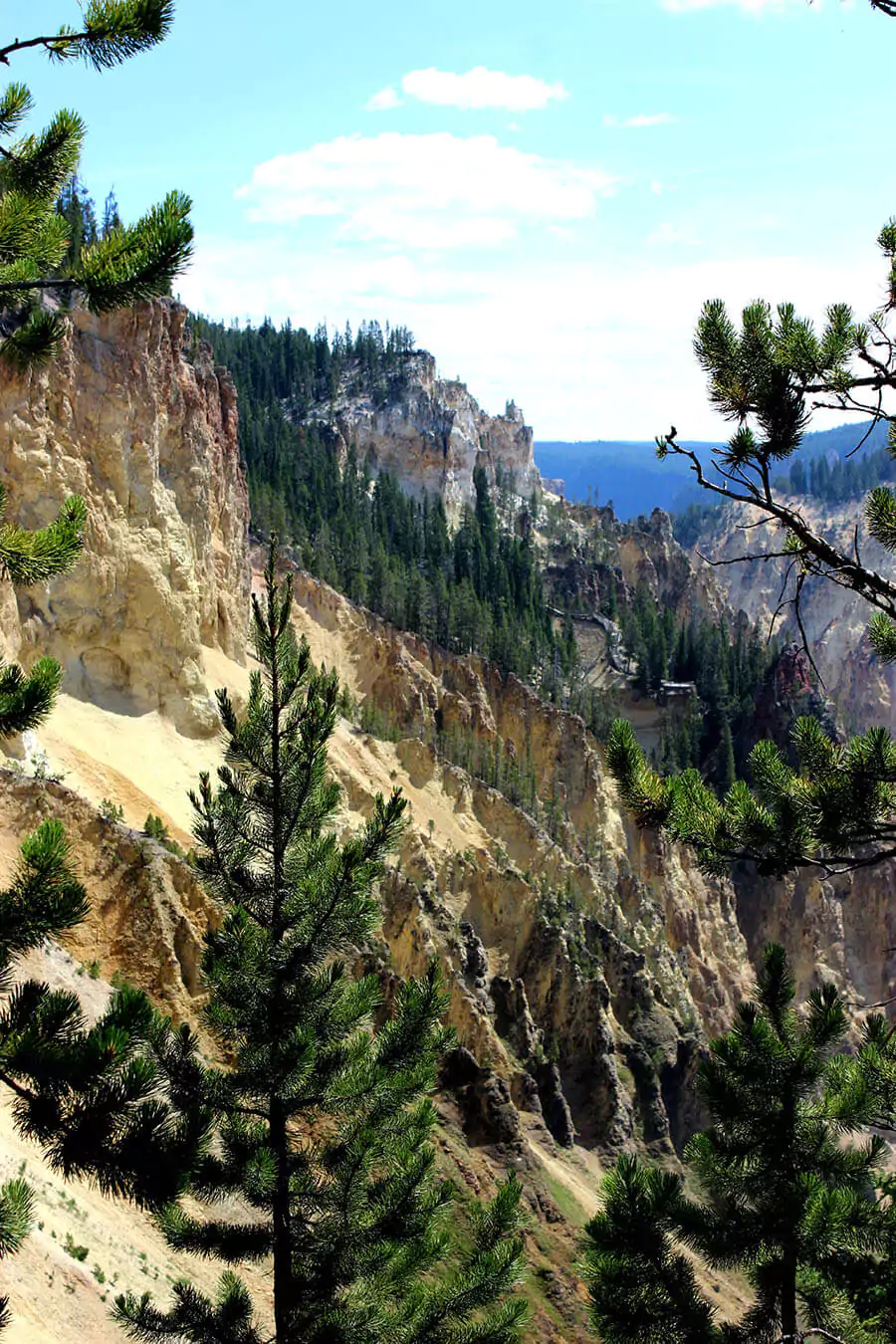
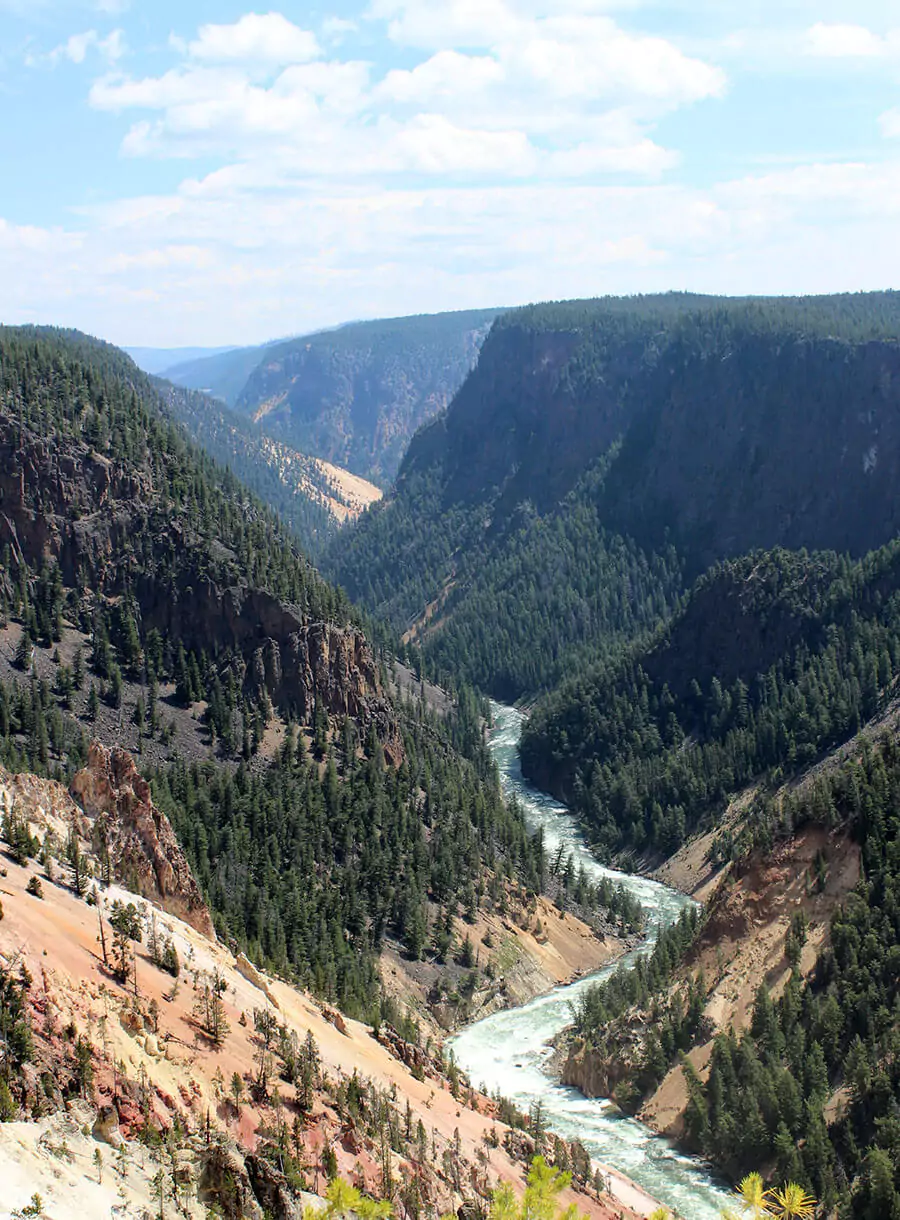
A deep ravine in the Grand Canyon of Yellowstone
Stop 3: Grand Canyon of Yellowstone
No visit is complete without seeing the park’s namesake canyon. Check out both the Upper and Lower Falls from viewpoints like Artist Point and Lookout Point. The views here are some of the most iconic in the park.
Stop 4: Hayden Valley
Finish your journey with another wildlife hotspot. Hayden Valley is a prime location for spotting bison herds and grizzlies, especially in the golden light of late afternoon. It’s a quiet, reflective end to an epic adventure.
Yellowstone Park Bus
Other Things to Do in Yellowstone National Park
Gibbon Falls: A cascading waterfall flowing over rocky ledges surrounded by dense pine forest in Yellowstone National Park.
Fairy Falls: A scenic 5-mile round-trip hike leads to this picturesque waterfall near Grand Prismatic Spring.
Dunraven Pass: This high mountain pass offers sweeping views and access to some of Yellowstone’s most peaceful trails.
Hike to the Peak of Mt. Washburn: One of the most rewarding hikes in the park with panoramic views from the top — especially stunning at sunrise or sunset.
Roosevelt Arch Roosevelt Arch: The iconic stone archway at the North Entrance in Gardiner, Montana, bearing the inscription “For the Benefit and Enjoyment of the People.”
Blacktail Plateau Drive: A 6-mile one-way dirt road with chances to spot bison, elk, and even bears in a more remote part of the park.
Artist Paintpots: A colorful hydrothermal area with bubbling mud pots and steaming vents — short hike required!
Fountain Paint Pot Trail: An easy, family-friendly boardwalk loop that takes you past all four types of thermal features in one compact area.
Tower Falls Tower Fall: A stunning 132-foot waterfall framed by volcanic pinnacles — don’t skip the nearby overlook.
Old Faithful in the morning
Best Things to Do in Yellowstone: On a Map
Old Faithful Lodge
Where to Stay in Yellowstone National Park
Choosing where to stay in and around Yellowstone really comes down to two things: how early you book and how much convenience you’re after.
Lodging inside the park gets you closer to the action (and those early morning geysers), but it books up fast—we’re talking 6 to 12 months in advance. Staying just outside the park, though, gives you more flexibility, often better amenities, and access to local towns with restaurants, shops, and creature comforts.
Lake Yellowstone Hotel
Best Lodging Inside Yellowstone National Park
If you want that “wake up next to a bison” feeling, staying inside the park is worth every penny. Here are a few of the most popular in-park lodges:
Old Faithful Inn: Iconic, historic, and just steps from the most famous geyser in the world. Book a room in the original log structure for that classic lodge feel.
Canyon Lodge & Cabins: Centrally located near the Grand Canyon of the Yellowstone. A modern option with over 500 rooms, which means slightly better availability.
Lake Yellowstone Hotel: Elegant and quiet, with sweeping lake views and a more upscale atmosphere.
Mammoth Hot Springs Hotel: Open year-round, located near the North Entrance—great for winter visits and easy access to Gardiner.
All in-park accommodations are managed by Yellowstone National Park Lodges—you’ll book everything through them. Pro tip: set a reminder the moment reservations open (typically May for the following summer).
Best Lodging Near Yellowstone National Park
Staying outside the park is a smart move if you’re booking last-minute or want more dining and grocery options. The best towns to base yourself in are West Yellowstone, Gardiner, and Cody (though Cody’s a bit of a drive). Here are a few solid picks:
Explorer Cabins at Yellowstone (West Yellowstone): Cozy, family-friendly, and within minutes of the West Entrance.
Yellowstone Gateway Inn (Gardiner): Spacious suites with kitchenettes—perfect for longer stays or road trippers with coolers.
Chico Hot Springs Resort (Pray, MT): A little further out but worth the detour for its historic charm and natural hot springs.
Best Place to Stay in West Yellowstone
West Yellowstone is the most convenient base for geyser country—and it’s got the biggest range of accommodations, from rustic cabins to modern motels. My top pick:
The Hibernation Station: Themed log cabins, perfect for couples or families, just a mile from the West Entrance. It’s kitschy, comfy, and checks all the “mountain lodge” boxes.
You’ll also find plenty of budget motels, RV parks, and rental cabins here—great for those planning a packed itinerary and just need a cozy crash pad.
Best Place to Stay in Gardiner
Gardiner is your gateway to the North Entrance and closest town to Mammoth Hot Springs. It’s more low-key than West Yellowstone but still packed with charm. Try:
The Ridgeline Hotel at Yellowstone: Modern rooms with views of the Yellowstone River and walking distance to downtown Gardiner. Bonus: indoor pool and hot tub for soaking after a long hike.
Gardiner is especially great if you’re visiting in spring or fall—you’ll get fewer crowds and easy access to wildlife-heavy Lamar Valley.
Camping at Yellowstone National Park
If you’re ready to trade Wi-Fi for wildlife and room service for starry skies, camping in Yellowstone is the ultimate way to experience the park. With 12 campgrounds and over 2,000 sites, there’s something for everyone—from backcountry adventurers to RV road trippers. Just like the lodges, campsites book up fast, so plan ahead if you’re visiting in peak season.
Most campgrounds are open from late May through early October, with a few opening earlier or staying open later depending on weather. Some require reservations, while others are first-come, first-served (translation: arrive early or risk disappointment). All official campgrounds are managed either by the National Park Service or by Yellowstone National Park Lodges.
Madison Campground: Centrally located and great for exploring the geyser basins. Very popular—book early.
Grant Village Campground: Near Yellowstone Lake and perfect if you want to mix boating or fishing into your itinerary.
Canyon Campground: Close to the Grand Canyon of the Yellowstone. Forested and scenic—one of the prettiest campgrounds in the park.
Mammoth Campground: The only campground open year-round. Great for North Entrance access and spotting elk right in camp.
Slough Creek and Pebble Creek: In the Lamar Valley, these are more remote and perfect for serious wildlife watchers.
A few tips for Yellowstone camping:
Reserve Early: Book through Recreation.gov or the Yellowstone Lodges website. Some campsites open for reservations six months in advance.
Be Bear Aware: This is bear country. Use bear-proof storage boxes and never leave food unattended—even toothpaste counts!
Pack for All Weather: Even in summer, nights get cold and sudden storms are common. Bring layers, tarps, and a solid tent.
Consider Altitude: Most campgrounds sit above 6,000 feet, so give yourself time to adjust if you’re not used to high elevations.
Want to get even closer to nature? Yellowstone also has hundreds of backcountry campsites—but those require a permit, a plan, and some wilderness know-how. For most travelers, the established campgrounds strike the perfect balance of rugged and manageable.
Fishing Bridge
Interesting Facts About Yellowstone National Park
Yellowstone is more than just geysers and bison—this park is wildly fascinating. Here are a few fun and surprising facts to impress your travel buddies (or justify your fourth trip back 😉):
It’s the world’s first national park. Yellowstone earned the title in 1872—long before “eco-tourism” was cool.
Half of the world’s geysers are here. Over 500 geysers bubble, steam, and explode across Yellowstone—making it the most active geothermal area on the planet.
The park sits on a supervolcano. No big deal… just a massive volcanic hotspot lurking beneath your hiking boots.
It’s bigger than some U.S. states. At 3,472 square miles, Yellowstone is larger than Rhode Island and Delaware combined.
Bison along roadYellowstone is home to all sorts of wildlife. Bears, wolves, moose, bison, elk—you’ll feel like you walked onto the set of a National Geographic special.
And here’s one for the trivia nerds: Old Faithful erupts every 44 to 125 minutes, but it’s still the park’s most reliable geyser. (Hence the name.)
Yellowstone Packing List
Packing for Yellowstone means prepping for sunshine, snowflakes, and a surprise hailstorm all in one day. Layers are key, and so is being ready for anything nature throws your way. Here’s a solid list to get you started:
Clothing: Moisture-wicking base layers, fleece or insulated jacket, waterproof rain jacket, hiking pants, warm hat and gloves (yes, even in summer), extra socks
Footwear: Waterproof hiking boots (broken-in!), camp shoes or sandals for around your lodging
Daypack Essentials: Reusable water bottle or hydration pack, trail snacks, park map (cell service is spotty), sunscreen, sunglasses, bug spray, bear spray (required in some areas)
Extras: Camera or binoculars, small first aid kit, power bank, headlamp or flashlight, National Park pass
If Camping: Tent, sleeping bag (rated for 30°F or lower), sleeping pad, camp stove, utensils, cooler, food storage containers (bear-safe!)
Optional but smart: a quick-dry towel, trekking poles, and a travel journal to record your “holy crap, that’s a grizzly” moments.
Lewis Falls
Other Important Notes for your Yellowstone Trip
Before you hit the road or hop on that flight, here are a few last-minute tips that can make or break your Yellowstone adventure:
Cell service is unreliable. Download offline maps and keep a printed itinerary handy.
Gas up often. There are only a few gas stations inside the park—and you don’t want to coast into Lamar Valley on fumes.
Stay on boardwalks and trails. The thermal features may look solid, but they’re not. Stepping off-trail can literally be deadly.
Wildlife has the right of way. Always keep your distance: 100 yards from bears and wolves, 25 yards from everything else. Bison look chill until they’re not.
Pack out your trash. Yellowstone doesn’t have garbage fairies. Leave no trace so the park stays wild and beautiful.
And finally: be flexible. Traffic jams caused by bison are real. So are sudden hailstorms and geysers going rogue. But that’s what makes Yellowstone magical—just roll with it and enjoy the ride.
Katie and her dad stand smiling next to the large wooden Yellowstone National Park sign
Final Thoughts
Three days in Yellowstone is just enough to fall completely in love with this wild and wondrous place. From bison herds in golden valleys to technicolor springs that look too vibrant to be real, every stop offers something uniquely breathtaking.
This itinerary is crafted to give you a rich experience—balancing iconic landmarks, hidden gems, and the flexibility to stop and simply enjoy the moment. Whether you’re an outdoor enthusiast or a first-time visitor chasing that bucket-list adventure, Yellowstone will leave you awe-struck.
Take the road less traveled, pack layers, and don’t forget your camera. The geysers are waiting.




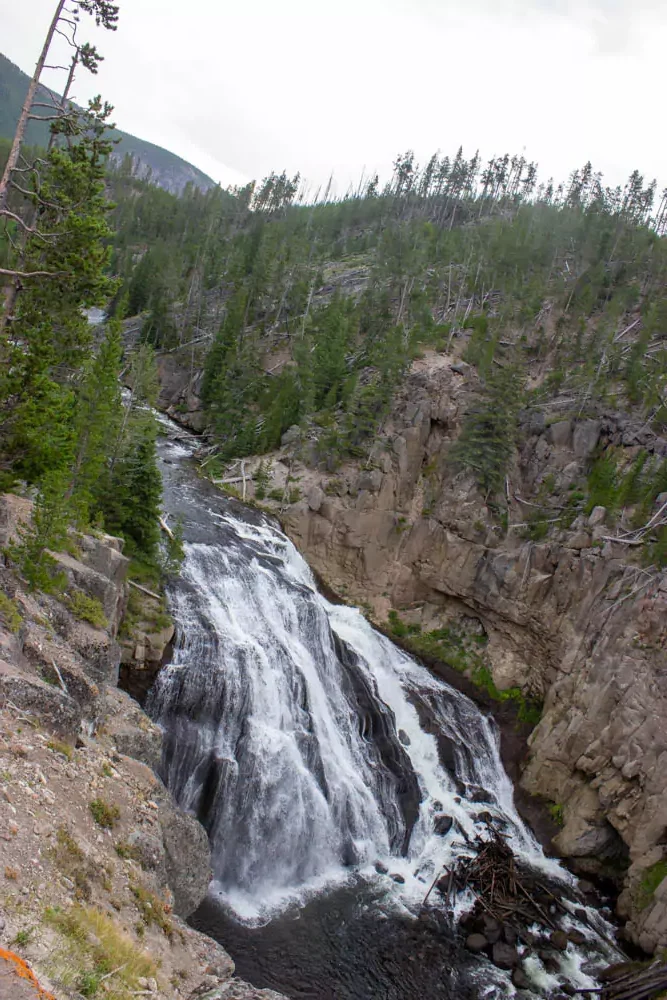 Gibbon Falls: A cascading waterfall flowing over rocky ledges surrounded by dense pine forest in Yellowstone National Park.


